

Audio By Carbonatix
The Governor of the Bank of Ghana has revealed that the International Monetary Fund (IMF) identified Ghana’s banking sector crisis as the nation’s most urgent challenge when he assumed office in 2017.
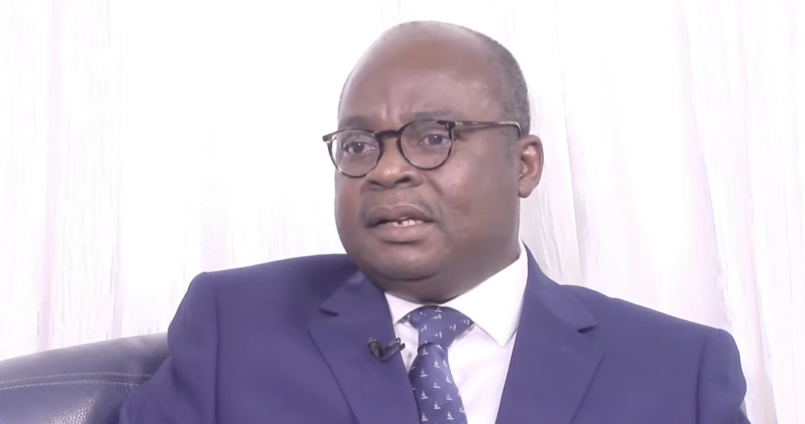
Speaking on Joy News’ PM Express Business Edition on Thursday, January 2, Dr Ernest Yedu Addison, detailed the IMF’s strong recommendation for swift and decisive action to stabilise the sector, which was on the brink of collapse at the time.
“This was a banking sector that was in a near state of collapse,” Dr. Addison recounted.
“People were queuing in order to withdraw money. The IMF made me aware that this was the most important crisis in the country at the time. The issue was to be as decisive as possible, to quickly work to clean that sector up.”
License Revocation and Sector Reforms
One of the key measures undertaken was the revocation of licenses for Capital Bank and UT Bank in August 2017, a move Dr Addison described as fulfilling “prior actions” to stabilise the sector.
“By 2019, the sector had been cleaned up in the sense that we had removed all the weak and insolvent institutions, both the banks and the Specialised Deposit-Taking Institutions (SDIs),” he said.
Dr. Addison elaborated on the comprehensive reforms implemented during this period, including raising the minimum capital requirement to ¢400 million and strengthening corporate governance.
“The banks were now being properly supervised and managed. Some of the things that happened which led to the license revocations, including insider trading and related party transactions, and lack of respect for Prudential rules, have been addressed through stronger scrutiny,” he stated.
These efforts, he noted, left the banking sector in a much better place by the end of 2019.
“They were much stronger, had enough capital, and were better positioned to support growth,” Dr Addison said.
The shift in lending patterns
Despite the reforms, Dr Addison highlighted a shift in lending patterns within the sector, particularly after the recapitalization process.
“We thought that additional capital would go into lending to the private sector. Interest rates had also started coming down—from 28% per annum to around 21-22%. But the banks did not lend to the private sector,” he explained.
This shift coincided with the onset of the COVID-19 pandemic, which led to increased government borrowing.
“Suddenly, government was doing all the borrowing in the economy, and the banks more or less lent the resources they had garnered from the recapitalization process to the government, acquiring government bonds,” Dr Addison said.
Debt crisis and its impact on banks
The governor further explained how the government’s debt crisis impacted the banking sector.
“When the government debt issue came up, and they could not access additional borrowing from the capital markets, we got into the debt crisis,” he said.
This situation, combined with the debt exchange program, led to significant losses for the banks, undermining the gains made during the sector’s cleanup.
A decisive but challenging journey
Reflecting on the journey, Dr Addison emphasised the importance of the IMF’s guidance and the decisive actions taken by the Bank of Ghana.
“By the end of 2019, we had addressed the fundamental weaknesses in the sector. The banks were in a better place, but external shocks like the pandemic and the government debt crisis created new challenges,” he said.
As Ghana continues to navigate these challenges, Dr. Addison’s insights underline the complex interplay between fiscal policy, external shocks, and the stability of the banking sector.
The Governor’s remarks serve as a reminder of the critical role decisive leadership and reforms play in safeguarding financial stability.
Latest Stories
-
Power restoration fault suspected in Kumasi Central Market fire
2 hours -
The 7-foot giant of Ngleshie Amanfro: Seven-foot Ghanaian Ephraim Saawa dreams of joining the national basketball team
3 hours -
Government promises support for Kumasi Central Market fire victims
3 hours -
Vibes The Movie: Big Ghun’s Ghanaian film earns five nominations at 2026 REFFA
4 hours -
MamaCare CEO warns unresolved conflicts among health workers could undermine maternal and neonatal care
4 hours -
Health professionals urged to translate medical knowledge into practice to save mothers
4 hours -
Conflicts among care providers linked to maternal, neonatal deaths – Expert
6 hours -
GIS marks 10th TIME conference, champions improved teaching practices
6 hours -
BRICS Or Balance? What Ghana’s bid really means
6 hours -
GPRTU wants full TRAFFITECH-GH implementation to start in 2027
7 hours -
Mahama announces plans to import electric wheelchairs for PWDs
7 hours -
KGL U17 Colts 2026: Western beat Prempeh Elite Academy to set up final final with Greater Accra Region
7 hours -
Late Solanke strike salvages 10-man Spurs draw at Man United
7 hours -
Gender Ministry to monitor welfare of Nana Akua Addo’s children amid domestic violence case
7 hours -
Benedict Okyere Yeboah: Ghana’s football problem goes beyond sacking a coach
7 hours