

Audio By Carbonatix
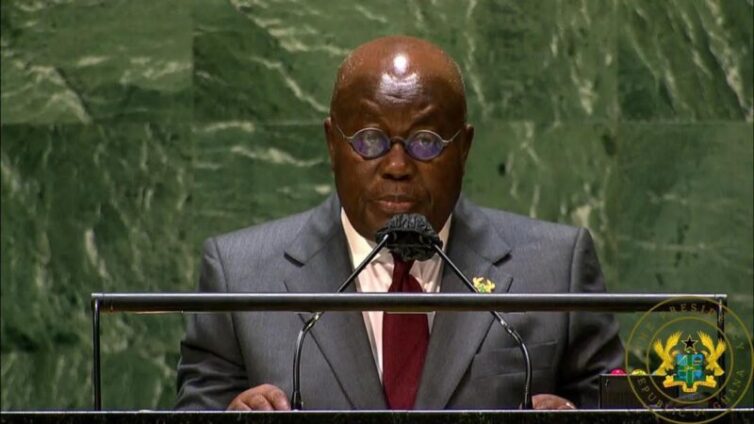
Ghana once hailed as a beacon of hope in Africa for its democratic governance and economic promise, now faces an existential environmental crisis. The destruction of its natural environment by illegal mining, popularly known as galamsey, is a stain on the conscience of the nation. It is impossible to ignore the glaring question: where does President Nana Akufo-Addo stand in this battle? Has he truly upheld his responsibility as a leader entrusted with safeguarding the nation’s future?
The Galamsey Crisis: A Wound on Ghana’s Environment
Galamsey has left a trail of environmental destruction across Ghana. Rivers that once provided clean water for millions are now toxic, polluted with mercury and cyanide from illegal mining operations. Farmlands have been ravaged, leaving farmers destitute and food security at risk. Forest reserves, vital for mitigating climate change, have been stripped bare, exposing the nation to desertification and the loss of biodiversity.
Despite the President’s repeated promises to eradicate galamsey, the scourge continues unabated. In 2017, Nana Akufo-Addo declared the fight against galamsey a personal priority, stating he was putting his presidency on the line to address it. However, seven years later, the devastating effects of galamsey persist, raising questions about the sincerity and effectiveness of his administration’s efforts.
The Cost of Inaction on Sustainable Development
Sustainable development is more than a buzzword; it is the cornerstone of a nation's future. It means balancing economic growth with environmental protection and social equity. Galamsey undermines all three pillars of sustainable development:
- Environmental Integrity: The destruction of forests, water bodies, and arable land severely compromises the ability of future generations to meet their needs. The country’s natural resources, which should serve as an inheritance for all Ghanaians, are being plundered for the benefit of a few.
- Economic Resilience: The short-term economic gains from galamsey are dwarfed by the long-term costs. The loss of agricultural productivity, the expense of rehabilitating destroyed ecosystems, and the health implications of polluted water sources place a heavy burden on the economy.
- Social Equity: Galamsey exacerbates inequality, as the benefits are concentrated among a small group of illegal miners and their enablers, while the costs—pollution, displacement, and poverty—are borne by rural communities.
By failing to tackle galamsey effectively, the government has not only jeopardized the environment but has also compromised Ghana’s ability to achieve the United Nations Sustainable Development Goals (SDGs), particularly those related to clean water, climate action, and life on land.
Unanswered Questions on Accountability
The government’s failure to eliminate galamsey cannot be attributed solely to the complexity of the issue. Several questions demand answers:
- What happened to the commitment of "putting his presidency on the line"?
- Why have influential figures allegedly linked to galamsey been left unpunished?
- How has the inter-agency task force failed to make lasting progress, despite substantial resources?
These unanswered questions suggest that political will, rather than technical capacity, is the missing ingredient. Leadership requires the courage to make unpopular decisions and enforce laws without fear or favor, even when it means confronting powerful interests within one’s own party or government.
A Plea to Conscience
President Nana Akufo-Addo still has the opportunity to salvage his legacy by addressing the galamsey crisis with renewed vigor. History will not judge him kindly if he fails to act decisively in the face of this environmental catastrophe.
Leadership is not just about speeches and policies; it is about results. Ghana’s environment, its people, and its future depend on the decisions made today. It is time for the President to reflect deeply on his conscience, to stand firm against the forces that perpetuate galamsey, and to ensure that the nation’s resources are preserved for generations to come.
In the words of the late Kofi Annan, “You are never too young to lead, and you should never doubt your capacity to triumph where others have not.” President Akufo-Addo must embrace this spirit and lead the charge to end galamsey once and for all. The question remains: will he rise to the challenge, or will he be remembered as the leader who let Ghana’s future slip through his fingers?
*******
OSAGYEFO Ernest De-Graft Egyir
Founding CEO, Chief Executives Network Ghana and Ghana CEO Summit.
Latest Stories
-
Women and children among those killed in Sudanese army shelling of wedding celebration
57 seconds -
President Mahama is not sincere with Ghanaians on LGBTQ bill matter – Hassan Tampuli
19 minutes -
Gov’t to establish Prison Industrial Hub to equip inmates with income-generating skills – Prison Service boss
38 minutes -
Alhassan Tampuli donates cement, roofing sheets to support storm victims in Gushegu
38 minutes -
Alhassan Tampuli appeals for urgent support for storm victims in Gushegu
41 minutes -
The hypocrisy must stop; pass Anti-LGBTQ+ Bill now – Alhassan Tampuli to Mahama
45 minutes -
Imprisonment should be rehabilitative, not punitive – Ghana Prisons boss at UNGA
1 hour -
Ga Adangbe traditional priests petition Mahama over McDan aviation licence revocation
1 hour -
Anti-LGBTQ Bill: NDC’s arrogance is worrying – Hassan Tampuli
1 hour -
Let’s give OSP time to mature, not to scrap it – Hassan Tampuli
2 hours -
Nigeria convicts 386 Islamist militants in mass trials
2 hours -
Djibouti president wins election with 97.8% of vote, state media says
2 hours -
We don’t have mandate to deduct tax from rent allowance of security services personnel – Interior Ministry clarifies
2 hours -
Ablakwa receives Presidential Special Envoy on Reparations to advance global agenda
2 hours -
Christina Koch becomes first woman to travel around the moon on Artemis II
2 hours