

Audio By Carbonatix
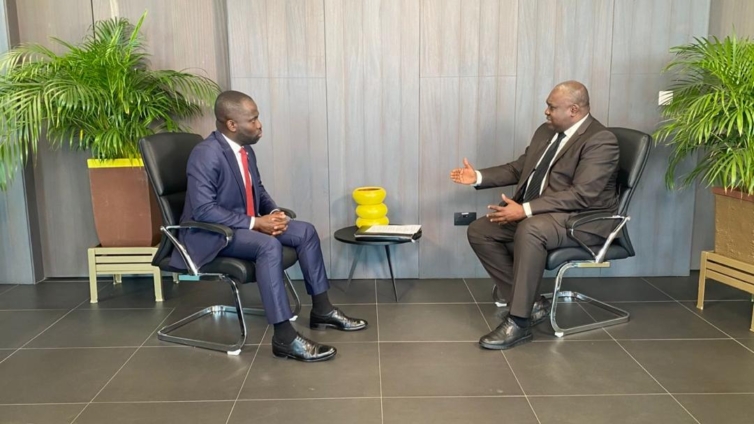
The Director of Research at the Bank of Ghana, Dr Philip Abradu-Otoo, has stressed that decisions on Ghana’s key policy rate are anchored in the performance of the real economy, not just abstract financial models.
“The things that go into arriving at a decision as to where to put the key policy rate of a central bank involve many factors. The committee in arriving at this decision discusses issues about the real sector of the economy,” he said on Joy News’ PM Express Business Edition.
He explained that the real economy means taking account of how both businesses and consumers are coping with ongoing adjustments.
“So when we talk about the real sector of the economy, we are talking about how businesses are faring. We’re talking about how consumers are also faring, and whether consumers are feeling the pinch of economic adjustment that is taking place, whether spending in the economy is at a level that is consistent with what the fiscal authorities, for instance, might expect, because the more we spend, the more the fiscal authorities are also able to extract revenues for development purposes.”
According to him, the Bank of Ghana relies on a broad set of data to measure the pulse of the real sector.
“The Bank of Ghana has developed its own way of gauging how the real sector of the economy is performing, and periodically, the Ghana Statistical Service also comes out with figures on how the overall economy is performing.
"So when we talk about the real sector of the economy, it’s about what you and I are doing in the economy. It’s about what businesses are doing in the economy.
"And we try to gauge the tempo of all these activities in the economy, imports, exports, all these things fit under the real sector of the economy.”
Inflation, he noted, remains a central part of the analysis.
“We try to look at what is going on with respect to prices, inflation, you call it inflation. And then we try to even look at what the forecast of all these indicators looks like, especially for inflation, and are we getting close to our target?”
Dr Abradu-Otoo said the Bank also examines the health of the financial system itself.
“We also look at even the banking sector, are they positioned in a way to help support growth in the economy, because the main job of the banks in the country is to support growth. Okay, so are banks well-positioned to deliver growth in the economy?”
He stressed that risks are always factored into the final decision.
“Having done that, we then look at the risks surrounding all these things, and then we try to put all these things together in a framework to decide as to whether going forward, we should be confident about ourselves, and whether going forward we think that the risks are very minimal, and whether we can then reposition our key policy rate to deliver continued growth sustainably. I think the keyword is sustainable manner.”
Latest Stories
-
Ghana ranked joint 6th in 2026 Absa Africa Financial Markets Index
58 minutes -
Demand and savings deposits decreased in August 2026, but currency outside banks increased by 4%
1 hour -
Fiscal policy implementation poses downside risk to inflation – BoG
2 hours -
Organised Labour should seek fair adjustment, not excessive pay rise – Labour consultant
2 hours -
BoG maintains medium-term inflation target of 8 ± 2%
2 hours -
Sammi Awuku urges NPP Germany to unite ahead of 2028 elections
3 hours -
The Inconvenient Truth: We cannot pray for the cure while protecting the disease
3 hours -
MTN Ghana trains civil society organisations on artificial intelligence
4 hours -
GoldBod FX framework aims to make dollar supply predictable – Acheampong
5 hours -
How does a Ghanaian team make it to the BAL?
5 hours -
Ghana’s investment climate presents opportunities for industrial growth and job creation.
5 hours -
‘I paid thousands to a company for jobs that never came’
5 hours -
SSNIT intensifies informal sector enrolment drive with Techiman float
5 hours -
Ghana seeks long-term mining investments that benefit local communities – Armah-Kofi Buah
6 hours -
GHATOF demands compensation for 85 businesses affected by La Pleasure Beach demolition
6 hours