


Audio By Carbonatix
A Changsha man recently made news headlines in China after it was reported that he became hooked on cold medication 10 years ago and has taken over 30,000 pills since then just to satisfy his addiction.
The 48-year-old man, surnamed Wang, was featured in a viral Pear video in which he explains that he first bought an unspecified brand of cold medicine about a decade ago, to treat a headache.
He took a couple of them and they were very effective, so every time he felt even a slight discomfort he always popped some more pills, which made him feel a lot better.
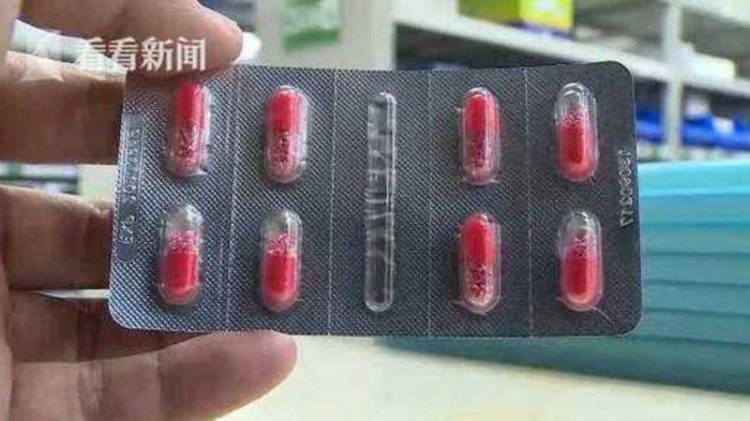
The problem was that in time, he had to increase the dose to get the same results, and he reached a point where he took between 8 to 12 of these pills every day just to function normally. In recent years, the man’s addiction to the pills had gotten so bad that if he went too long without taking some, he would start to get melancholic, then become inexplicably irritated. He also experienced physical symptoms, like headaches and a general feeling of discomfort.
Wang’s family had long been pressuring him to see a doctor about his addiction, but he only recently agreed to get himself committed to the Second People’s Hospital, in China’ Hunan Province, where doctors diagnosed him with drug addiction. After analyzing the brand of medicine he had been taking over the last 10 years, doctors found that it contained considerable amounts of caffeine, which over long periods of time can cause the same type of strong addiction as nicotine and alcohol.
In the video, Wang says that over the last 10 years, he has taken over 30,000 pills to satisfy his craving, but that he is now trying to beat his addiction under medical supervision. He is gradually decreasing the dose of medicine and taking anti-anxiety and anti-depression medication to minimize the symptoms of withdrawal.
Doctors said that caffeine-containing medicine like the one taken by Wang do not cause addiction when consumed over short periods of time, but they can definitely get people hooked in the long run. Patients who regularly take such medicine and experience the same symptoms described by Wang are advised to seek medical attention before the addiction becomes too strong.
Latest Stories
-
Manager remanded over $1m auto fraud
4 hours -
Mr President, Ghana was mentioned at the UN; why aren’t we talking about it?
4 hours -
US Marine arrested over murder of woman in Okinawa, Japan
4 hours -
Accra to convene Africa’s regulators and markets on tokenisation at AVAS 2026
4 hours -
Indian police accused of sexually harassing journalists at protest
4 hours -
Jeffrey Archer returns to his former school library
4 hours -
France to close up to 500 schools on Monday over student protests
5 hours -
The Paradox of Plenty — When every smartphone becomes a newsroom
5 hours -
Australia investigating Flydubai co-pilot’s links to country
5 hours -
GTA sensitises taxi drivers in ‘Know Ghana’ tourism campaign
6 hours -
Archbishop Agyinasare calls for responsible speech amid growing social media abuse
6 hours -
‘It will be inexcusable for gov’t not to honour payment of teachers’ arrears by 30th October’ – Haruna Iddrisu
6 hours -
Forbes’ World’s Best Employers 2026: No Ghanaian firm ranked among 900 companies
6 hours -
Electronic processing of teachers’ data: ‘The decision is the Controller’s’ – GES boss
6 hours -
Teachers’ Strike: Haruna Iddrisu questions paper-based processing of promoted teachers’ data
6 hours