

Audio By Carbonatix
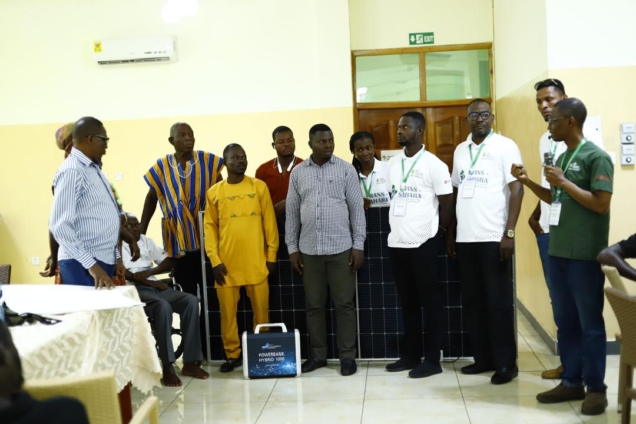
The Trans Sahara Project has engaged stakeholders in Tindongo through a collaborative co-design workshop aimed at fostering inclusive agricultural development.
The workshop, part of the project's inclusive approach to community development, was designed to engage local stakeholders in identifying key problems and collaboratively exploring practical solutions.
Speaking at the event, Ms. Rosina Lamisi Musa, Nabdam District Coordinating Director, highlighted that the co-design workshop demonstrates the project’s commitment to finding solutions that truly work.
“We’ve seen projects come and go. We’ve seen researchers arrive with solutions to problems they think we have. But you have called us, you have asked us about the problems we face, and you have observed for yourself. Most importantly, you have asked us about the solutions we believe we need, and you have given us expert advice to help refine them. This tells us that you are ready to find out what really works for our community.
The Trans-Sahara Living Lab is a community-led initiative that applies the Water-Energy-Food-Ecosystem (WEFE) Nexus approach to restore degraded landscapes, enhance water and energy security, and build climate-resilient livelihoods through co-created, sustainable solutions.
The project focuses on developing innovative methods for establishing an agroforestry plot referred to as a living lab. This plot will serve as a demonstration site for assessing and promoting sustainable practices in land use, water management, and renewable energy.
The Regional President for Persons with Disabilities noted the inclusive nature of the project, highlighting the consideration of the needs of persons with disabilities.
“It is not common to see projects or researchers come to us to truly listen to our voices when designing solutions for our community. This doesn’t happen often. That is why we are so excited that this project has taken the time to hear our thoughts, value our perspectives, and invite us to suggest solutions that will shape the future of our communities,” he said.
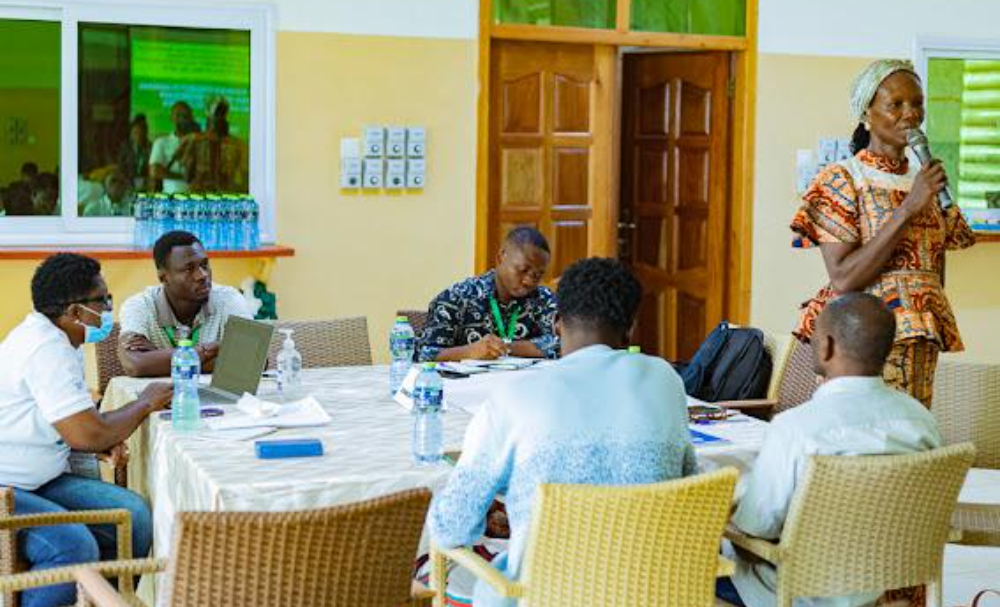
Principal Investigator, Dr. Ing. Alexander Boakye Marful explained that the planning and design workshop was an opportunity to work hand in hand with the community to create solutions that reflect their realities and aspirations.
“This planning and design workshop is about more than ideas on paper it is about building solutions together. By listening to the community, understanding their realities, and combining their insights with our expertise, we can design interventions that are practical, inclusive, and truly sustainable,” he said.
The workshop brought together a wide range of stakeholders, with institutions such as the Ghana National Fire Service, the Forestry Commission, the Forum for Natural Regeneration (FoNAR), the Nabdam District Assembly, representatives of the Tindana, and NEDCo also in attendance.
To support effective coordination and ensure the integration of water, energy, food, and ecosystem considerations, a WEFE-Nexus Committee was established. This committee brings together representatives from the participating institutions, community leaders, and technical experts to guide the implementation of the project.
Founder and Team Lead of the Forum for Natural Regeneration (FoNAR), Mr. Sumaila Saaka Seidu, spoke about the uniqueness of the project, noting that it goes beyond conventional interventions.
“For us at FoNAR, regeneration is not just about planting tree it is about restoring hope, dignity, and productivity to our lands and our people. What makes this project unique is the fact that it puts communities at the center. We are not just beneficiaries; we are co-creators of solutions. That is the only way to ensure that when the project ends, the practices and innovations will continue to thrive in our communities,” he said.
The Trans-Sahara Project is a consortium led by Technische Universität München (TUM), under the leadership of Dr. Daphne Gondhalekar, and funded by the European Union through the Horizon Europe Framework Programme. The project aims to advance agroforestry management in the Greater Northern African Region using a Water-Energy-Food Ecosystem (WEFE) Nexus-based approach.
The Assemblyman of the Tindongo community, Mr. John Nagrouge expressed his excitement about what the project seeks to contribute to the community.
The project is implemented by the Kwame Nkrumah University of Science and Technology (KNUST) through the Technology Consultancy Centre (TCC) under the leadership of the Director General Prof. Francis Davis.
The project is expected to run for three years, giving enough time to test, refine, and scale up the proposed solutions for sustainable farming and land management.
Latest Stories
-
NACOC addressing inherited gaps in fight against drug trafficking – Deputy Director-General
10 minutes -
Taekwondo goes to school as GTF launches five-region youth campaign
13 minutes -
The issues Mourinho is struggling to fix at Real Madrid
20 minutes -
Hundreds throng EducationUSA College Fair in Kumasi in pursuit of abroad studies
23 minutes -
Drug bust: NACOC should be part of port inspection team – Twum-Barimah
26 minutes -
Ward appointed Liverpool’s sporting director
26 minutes -
This isn’t the first cocaine bust; NPP must stop the politicisation – NACOC deputy boss
30 minutes -
Drug bust case: Only Customs officers, MPS officials in scanning room – NACOC
2 hours -
I don’t mind being insulted; I have a crocodile skin – President Mahama
2 hours -
Samson’s Take: Verify the badge – and verify the story
2 hours -
President Mahama explains why Ghana must rethink regulation of TikTok, other new media platforms
2 hours -
Rule of law must be protected – GBA condemns EOCO action against Baffour Awuah
4 hours -
950,000 barrels of Sankofa crude head to TOR as GNPC deepens domestic refining
4 hours -
Scales of deception removed – Annoh-Dompreh attacks new cocoa price
4 hours -
Young Positivist Writes : My Experience with GCLP
5 hours