

Audio By Carbonatix
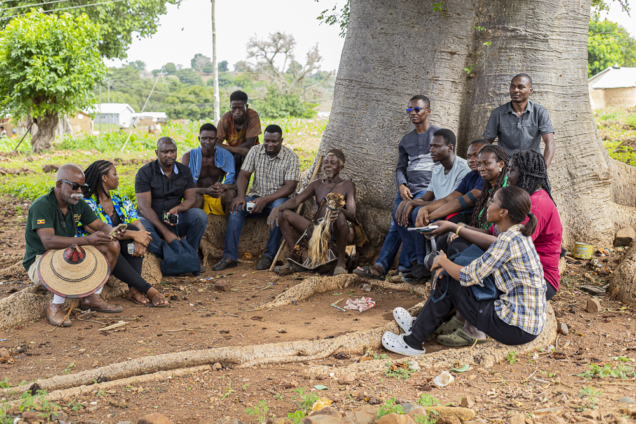
The Tindongo community in the Upper East Region has been officially selected as the site for the Trans Sahara Living Lab, a key initiative under the Trans Sahara Project aimed at addressing climate resilience, sustainable development, and local innovation in arid and semi-arid regions of Africa.
The selection follows a rigorous evaluation process carried out by a team of researchers from the Trans Sahara Project.
Tindongo was shortlisted and eventually chosen based on a series of criteria, including its environmental characteristics, community engagement potential, local leadership structures, and readiness to participate in co-creation and innovation processes.
According to Dr. Ing. Alexander Boakye Marful, the Principal Investigator of the project at Kwame Nkrumah University of Science and Technology (KNUST), the decision to select Tindongo was based on a combination of technical assessments and extensive community consultations.
“We were impressed by the enthusiasm and openness of the Tindongo people, their resilience in the face of environmental challenges, and their willingness to collaborate in creating solutions that work for their context,” he said.
The Trans Sahara Living Labs are expected to be established in Ghana, Ethiopia, and Tunisia, with each country selecting a host community through a rigorous evaluation process.
These labs will serve as real-world environments for testing sustainable technologies, fostering community-led innovation, and implementing capacity-building programs tailored to local needs.
Activities will include water conservation initiatives, renewable energy demonstrations, climate-smart agriculture training, and digital inclusion efforts, all tailored to local needs and knowledge systems.
The Tindana, a traditional leader in the Tindongo community, expressed optimism about the project’s potential impact.
“We will be glad if you implement all you have said to us today. As a community we are ready to partner with you and make sure this project excels. And we’re glad that this partnership offers us an opportunity to find new, sustainable ways of adapting and thriving.
The Living Lab approach is designed to bring together researchers, policymakers, local leaders, and residents in a collaborative space where ideas can be tested and refined in real-life settings
The project team is committed to maintaining transparency and inclusivity throughout the process, ensuring that the voices of residents remain central to the initiative.
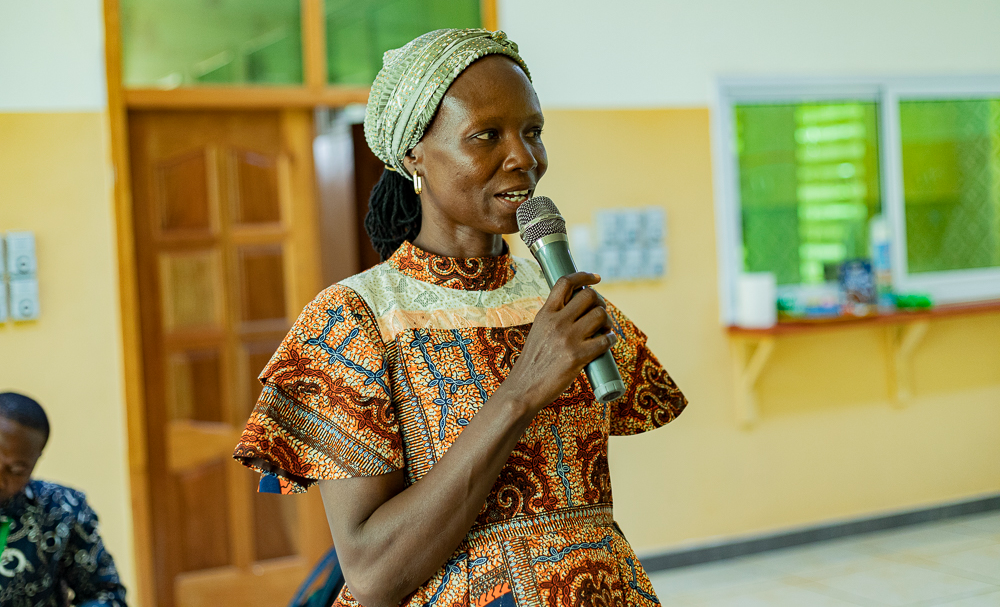
The Nabdam District Coordinating Director, Ms. Rosina Lamisi Musah, expressed her enthusiasm about the initiative and affirmed the district’s full support for the successful implementation of the project’s activities.
“I’m happy that the team finally settled on our community. We know that this project will bring good this to the people of Tindongo and in turn the district. As a district we are ready to support the team with whatever they will need for the project to be a success,” she said.
The Trans Sahara Project is a consortium-led initiative aimed at advancing sustainable agroforestry management across the Greater Northern African Region using a Water-Energy-Food Ecosystem (WEFE) Nexus-based approach.
The project is coordinated by the Technische Universität München (TUM) under the leadership of Dr. Daphne Keilmann-Gondhalekar and is funded by the European Union through the Horizon Europe Framework Programme.
As part of its mission, the project seeks to establish a network of Living Labs across the region to serve as platforms for innovation, knowledge exchange, and community-based solutions.
In Ghana, the project is implemented by the Kwame Nkrumah University of Science and Technology (KNUST), through the Technology Consultancy Centre (TCC), under the leadership of the Director General, Professor Francis Davis. With the selection of Tindongo, the community will now serve as the model site for the Ghana chapter of the Living Lab network.
The implementation of the Living Lab activities is set to begin in the coming months, with initial groundwork already in progress. As part of preparations, a comprehensive stakeholder mapping exercise has been completed, identifying key local actors, institutions, and knowledge holders.
This foundational work will inform an upcoming co-design workshop, where stakeholders will collaboratively define the specific activities of the Living Lab ensuring that community perspectives, priorities, and expertise remain at the heart of the project’s design and execution.
The project is expected to run for three years, giving enough time to assess, refine, and scale up the proposed solutions for sustainable farming and land management across Africa.
Latest Stories
-
Drug cartels may be seeing Ghana as easy route – Lenin Anane Agyei
35 minutes -
Ghana risks gaining notoriety as drug-trafficking hub – Bobby Banson
44 minutes -
Government dismissed my drug trafficking warning, then tried to arrest me – Ntim Fordjour
46 minutes -
Day Two: 3rd Republic Bank-JoyNews Habitat Fair Clinic underway at Junction Mall
46 minutes -
NACOC addressing inherited gaps in fight against drug trafficking – Deputy Director-General
58 minutes -
Taekwondo goes to school as GTF launches five-region youth campaign
1 hour -
The issues Mourinho is struggling to fix at Real Madrid
1 hour -
Hundreds throng EducationUSA College Fair in Kumasi in pursuit of abroad studies
1 hour -
Drug bust: NACOC should be part of port inspection team – Twum-Barimah
1 hour -
Ward appointed Liverpool’s sporting director
1 hour -
This isn’t the first cocaine bust; NPP must stop the politicisation – NACOC deputy boss
1 hour -
Drug bust case: Only Customs officers, MPS officials in scanning room – NACOC
2 hours -
I don’t mind being insulted; I have a crocodile skin – President Mahama
3 hours -
Samson’s Take: Verify the badge – and verify the story
3 hours -
President Mahama explains why Ghana must rethink regulation of TikTok, other new media platforms
3 hours