

Audio By Carbonatix
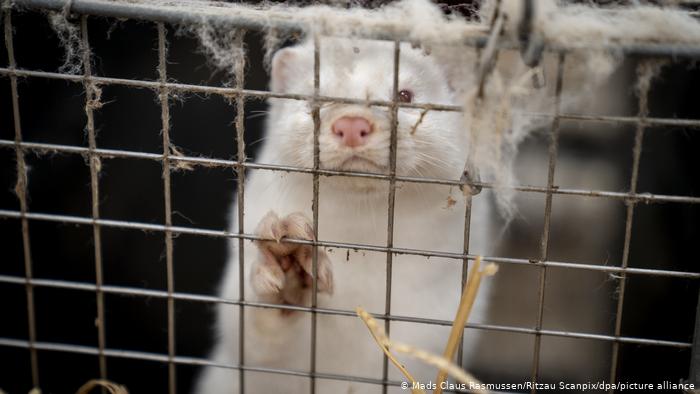
All non-residents coming from Denmark will no longer be allowed into the UK, the government announced. Denmark ordered a nationwide mink cull after a mutated version of the coronavirus was transmitted to humans.
The United Kingdom issued an immediate travel ban for all non-residents traveling from Denmark following outbreaks of a mutated version of the coronavirus at Danish mink farms.
The new measures, announced early Saturday morning, went into effect at 0400 GMT/UTC.
"This decision to act quickly follows on from health authorities in Denmark reporting widespread outbreaks of coronavirus in mink farms," Transport Secretary Grant Shapps said on Twitter.
"Keeping the UK public safe remains our top priority," he added.
DENMARK update:
— Rt Hon Grant Shapps MP (@grantshapps) November 7, 2020
From 4am on 7 November, British Nationals or residents who are returning to the UK directly or indirectly from Denmark will need to self-isolate with other members of their household until two weeks have passed since they were last in Denmark.
Under the new rules, British citizens and permanent residents returning from Denmark — either directly or indirectly — will need to quarantine with others in their household for 14 days.
The ban does not apply to freight drivers and other transporters. The restrictions will be reviewed after a week.
The UK initially responded to the news on Thursday by announcing that all travelers would be required to self-isolate
Denmark defends measures
On Wednesday, Denmark announced that a mutated version of the coronavirus had been transmitted from minks to humans, infecting 12 people in the north of the country.
The government ordered a nationwide cull of the country's roughly 17 million farmed minks. They also announced strict new lockdown rules to contain the spread.
Danish officials warned that the mutated strain could threaten the effectiveness of any future COVID-19 vaccine.
The World Health Organization (WHO) has said there is currently no evidence that any of the known coronavirus mutations pose an increased threat to humans.
The Danish government, however, defended the strict order to slaughter the country's farmed minks, saying it would not take any risk.
Denmark's infections diseases institute has identified five variants of the virus stemming from mink, but only one, known as cluster 5, showed "reduced sensitivity" towards antibodies.
There have been several cases of coronavirus outbreaks at mink farms in the Netherlands as well, which prompted 100 farms to temporarily shut in late August.
Latest Stories
-
Education Minister orders probe into illegal SHS online class fees
47 seconds -
Barcelona vs Atlético Madrid: Date, Time and Everything You Need to Know About the Champions League Quarterfinal
5 minutes -
Monthly Indicator of Economic Growth slows to 7.5% in January 2026
7 minutes -
The Reputation Bomb: Why fraud in the digital age destroys more than freedom
8 minutes -
Mahama nominates 5 to Ghana’s Fiscal Council to strengthen economic oversight
23 minutes -
Enterprise Insurance crowns first “Insure Na Chilli” winner: Jonathan Syme set for ultimate football experience
25 minutes -
Bear with us over temporary outages as ECG begins transformer upgrade programme – Energy Ministry
52 minutes -
President Mahama has not broken promise on anti-LGBTQ bill — Akwatia MP
1 hour -
Education Minister promises swift fix to Aburi Girls’ SHS water crisis
2 hours -
Top Australian soldier charged with war crimes to remain in jail on remand
2 hours -
US journalist Shelly Kittleson released after kidnap in Iraq, officials say
2 hours -
Starmer to visit Middle East after US and Iran reach ceasefire deal
2 hours -
Telcos and regulators are failing Ghana on Mobile Money fraud
2 hours -
Discussions on petroleum taxes review ongoing with Finance Minister – Jinapor
2 hours -
BMW Club Ghana partners National Road Safety Commission for “Stay Alive” Easter road safety campaign
3 hours