

Audio By Carbonatix
A U.N. committee said countries are legally obliged to consider reparations for the transatlantic slave trade and take other measures to address the enduring legacy of racial discrimination, it says, that persists today.
Guidance published on Monday by the Committee on the Elimination of Racial Discrimination stated that the obligations arise from a legally binding 1965 convention on racial discrimination, not from the legal standards that existed when the slave trade took place.
The committee described the approach as a "paradigm shift" away from debates over historical responsibility, which governments have often used to resist reparations claims.
"States Parties must implement comprehensive reparatory measures for people of African descent, covering all aspects of remedies," said the U.N. document, which may be cited in courtrooms.
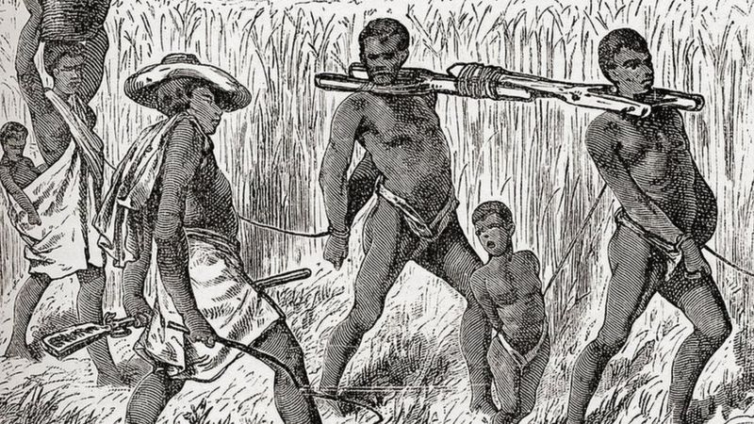
At least 12.5 million Africans were taken and sold between the 15th and 19th centuries in what the Committee on the Elimination of Racial Discrimination called the largest forced displacement in history.
Calls for reparations - ranging from official apologies to financial compensation - have gained momentum internationally, though opponents argue states and institutions should not be held responsible for historical crimes. The European Union and Britain abstained from a U.N. resolution on slavery in March.
Some states have sought to dodge claims for justice in courtrooms by arguing that there were no international laws outlawing the slave trade at the time - the so-called intertemporality principle.
But the U.N. document argues that, regardless of whether slavery and the slave trade were illegal under the laws of the day, countries remain responsible under current international obligations to tackle their continuing effects.
"Irrespective of the legal characterisation of the original historical acts, States Parties remain bound by their present obligations under the Convention to address structural inequalities," the U.N. document states.
Financial compensation alone is not sufficient, it adds, urging "transformative" measures, including opening archives, revising public memorials, and establishing independent truth commissions.
Pela Boker-Wilson, a committee expert from Liberia who helped draft the document, said she expects states to move beyond broad expressions of regret and review policies and laws.
"We are calling on state parties to take concrete and meaningful action," she told Reuters. "We want to affirm the dignity of those whose suffering was denied, whose suffering was minimised or forgotten."
Latest Stories
-
Supreme Court rejects Solomon Asamoah’s bid to overturn Sky Train ruling
1 minute -
Nungua Traditional Stool, WT Plastics partner to establish factory, create 1,400 jobs
3 minutes -
Mahama describes Ghana’s religious diversity as its greatest treasure, defends fairness to all faiths
8 minutes -
Police to arrest motorists who use pedestrian footbridges – ACP Obeng
9 minutes -
KNUST announces revised reopening dates, lectures begin October 19
22 minutes -
GoldBod, military engineers partner to reclaim galamsey-damaged Tano Nimri Forest
23 minutes -
NACOC educates 450 Koforidua SHS students on dangers of drug abuse
23 minutes -
First-year students stranded as Obuasi SHTS remains closed over misconduct probe
25 minutes -
Court halts promotion of 40 police officers pending IGP’s appeal
28 minutes -
Gender Ministry deploys teams nationwide to monitor LEAP cash grant payments
33 minutes -
GNFS contains Somoco warehouse fire; bushfire near TTU in Takoradi
33 minutes -
Recurring teacher-student sexual abuse cases give cause for worry – Salaga South MP
37 minutes -
D-Black shocked as only 16 radio and TV stations pay music royalties
42 minutes -
Former SIC Savings and Loans MD Amma Frimpomaa Dwumah honours EOCO invitation
55 minutes -
Meta removes 3.7 million accounts in international fraud crackdown linked to UK, US victims
57 minutes