

Audio By Carbonatix
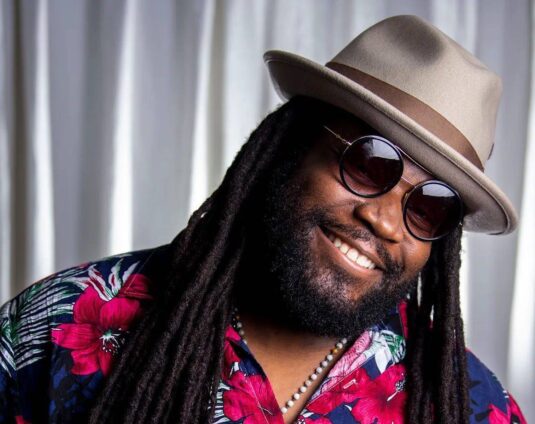
International reggae musician Gramps Morgan has disclosed that nearly half of his ancestry traces back to Ghana, describing the discovery as a powerful confirmation of his connection to the African continent and the legacy of the trans-Atlantic slave trade.
The celebrated Jamaican artiste made the revelation in Accra on Thursday during the High-Level Consultative Conference on “Next Steps” under the United Nations Resolution on Enslaved Africans, a gathering that brought together political leaders, diplomats, academics, civil society actors and members of the African diaspora to discuss pathways towards justice, reparations and historical reconciliation.
Addressing participants at the conference, Gramps Morgan said a DNA ancestry test conducted as part of his personal search for identity showed that a significant portion of his roots originated from Ghana.
“I am one of the children of the Trans Atlantic Slave Trade. I have done research to find out the truth. When I did a DNA test, I found out that I am 46% Ghanaian. So let the truth be told,” he said.
The revelation drew applause from participants at the event, many of whom viewed it as a poignant reminder of the enduring ties between Africa and descendants of enslaved Africans scattered across the globe.
Gramps Morgan, a member of the internationally acclaimed Morgan Heritage family and one of reggae music’s most recognisable voices, explained that tracing his ancestry was part of a broader effort to understand his heritage and reconnect with his historical roots.
His comments resonated strongly with discussions at the conference, which focused on the historical injustices of slavery and the continuing impact of those injustices on African descendants around the world.
The musician said the DNA findings had deepened his appreciation of Ghana’s role in the history of the African diaspora and reinforced his sense of belonging to the continent.
Observers at the conference noted that his testimony reflected the experiences of many descendants of enslaved Africans who have increasingly turned to genealogy and DNA testing to reconnect with ancestral homelands lost through centuries of forced displacement.
Support for Reparations
Gramps Morgan also used the occasion to reaffirm his support for the growing international campaign for reparatory justice for descendants of enslaved Africans.
The call for reparations has gained momentum in recent years, with Ghana emerging as one of the leading voices advocating global recognition of the enduring consequences of slavery, colonialism and racial exploitation.
By linking his personal ancestry discovery to the broader historical experience of the African diaspora, the reggae star underscored the importance of truth-telling, historical accountability and meaningful efforts to address the legacy of slavery.
His endorsement adds to a growing list of influential voices from the diaspora supporting initiatives aimed at securing justice and redress for communities affected by centuries of human exploitation.
The Accra conference formed part of ongoing international efforts to advance discussions arising from United Nations resolutions concerning the descendants of enslaved Africans.
Participants examined strategies for strengthening cooperation between African nations and the diaspora while exploring practical measures to address historical injustices and promote cultural reconnection.
For many delegates, Gramps Morgan’s testimony served as a vivid illustration of the living links between Africa and millions of people across the Caribbean, the Americas and beyond whose ancestors were forcibly removed from the continent during the slave trade era.
His declaration that he is “46% Ghanaian” was widely seen as a symbolic affirmation of those enduring bonds and of Ghana’s growing role as a destination for descendants seeking to reconnect with their ancestral roots.
Latest Stories
-
Global InfoAnalytics poll puts John Boadu, Justin Kodua and Titus Glover ahead in NPP executive race
12 minutes -
Ghana to establish skills development university with $50m from German support package
18 minutes -
Baffour Awuah under EOCO investigation over alleged financial loss and money laundering – Deputy AG
25 minutes -
How healthy is Ghana’s health sector?
30 minutes -
HACSA Tech4Girls graduates 80 young women with digital and technology skills
31 minutes -
Arrest of Manhyia South MP should involve Parliament, not police station – Kpebu
1 hour -
Two Nigerians sentenced to 189 months in US prison over $2.4m cyber fraud
1 hour -
Cristiano Ronaldo leaves Portugal’s training camp after rift with Head Coach
1 hour -
Ghana Energy Awards opens nominations for landmark 10th anniversary edition
1 hour -
Aayalolo contra-flow: Are we treating the symptom instead of the disease?
2 hours -
GTEC orders Colleges of Education to begin 2026/2027 admissions despite fees approval delay
2 hours -
Legal reforms must solve real problems, improve justice – Bagbin
2 hours -
Ofori-Sarpong named Alumni President of the Year, honoured for PRESEC dormitory project
2 hours -
Germany commits $132m to Ghana for skills development and training university – Pelpuo
2 hours -
‘Influence should go beyond visibility’ – Taadi Banyinba GH launches The TB Impact
2 hours