

Audio By Carbonatix
Usibras Ghana Limited, one of the country’s largest cashew processing companies, has announced plans to relocate its operations to the Ivory Coast, citing persistent challenges that have crippled its ability to sustain production.
The company, which has run a 24-hour production cycle for more than a decade, says Ghana’s cashew supply can no longer sustain industrial-scale processing.
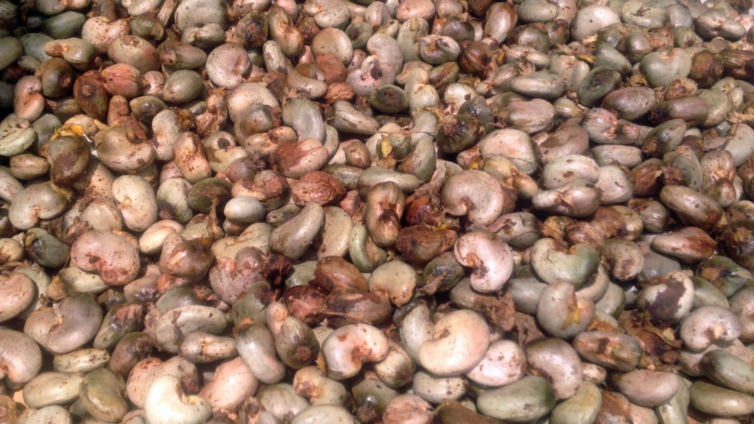
With a plant capacity of 35,000 metric tonnes per year, Usibras managed to secure only 7,000 MT of raw cashew nuts in 2025.
Management also pointed to the rising cost of electricity and other utilities, unfavourable export tariffs—particularly the 15% duty on products exported to the United States—and the difficulty of keeping operations continuous as reasons for the move.
Economic and Social Fallout
The relocation of Usibras could have far-reaching consequences for Ghana’s economy and social structure.
Already, the company has begun cutting back its 700-strong workforce after exhausting the limited volumes of raw nuts available. A complete shutdown would leave hundreds of households without income.
Cashew farmers also stand to lose a key buyer, raising fears of market disruptions and discouraged production.
Ghana’s export earnings could take a hit as well, with Usibras being one of the few processors generating significant foreign exchange inflows through its banking operations.
Industry watchers warn that the exit of Usibras could weaken the Association of Cashew Processors in Ghana, of which the company is a major player, and harm service providers who depend on the processor for business.
Contributions to SSNIT and PAYE tax revenues would also decline, reducing government income.
Call for Government Action
Usibras’ looming departure underscores systemic problems in Ghana’s cashew industry.
A factory with the capacity to process 35,000 MT, securing only 7,000 MT this year, signals a supply crisis, the company warned.
It has urged government to act swiftly by enforcing rules to protect local processors, adopting tax policies similar to Ivory Coast to make the sector more competitive, and establishing a task force to regularise operations in the cashew industry.
Without urgent intervention, Ghana risks not only losing Usibras but also damaging investor confidence in its agribusiness sector.
Latest Stories
-
NCCE crowns the Constitution Week celebration with a competition
55 minutes -
Northern Ghana receives life-saving dialysis machines, but urgently needs personnel
1 hour -
Ghana assumes leadership of RMU board, pledges reforms
1 hour -
World Cup 2026: Nine African nations reach knockout stage as Tunisia bows out
1 hour -
China commends Ghana for pursuing energy self-reliance
1 hour -
PSWU urges Fair Wages Commission to expedite payment of agreed allowances
1 hour -
Mahama demands strict quality checks before road payments
2 hours -
Dr Abu Sakara Foster enskinned as Kakulasewura of Mankuma
2 hours -
Mahama urges residents to constantly check their blood pressure
2 hours -
Croatia vs Ghana: We wanted to win, not settle for a draw — Thomas-Asante
3 hours -
UMAT lecturer calls for tax relief to drive rooftop solar adoption in Ghana
3 hours -
13-year-old Nana Akua Adomaa Adu-Mante publishes debut novel, inspires young readers
3 hours -
Clinton Consultancy named Ghana’s leading law firm in Global 100 Awards
4 hours -
Austria and Algeria through after six-goal thriller
4 hours -
Magic Messi strikes again in Argentina victory
4 hours