

Audio By Carbonatix
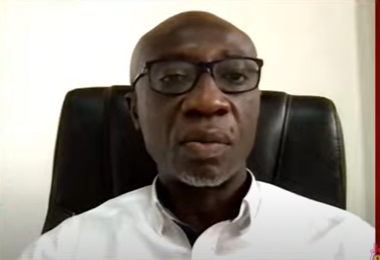
Professor of International Law and Human Rights at the University of Ghana School of Law, Kwadwo Appiagyei-Atua, has raised concerns about the practical impact of the recent United Nations resolution on slavery, warning that enforcing it will be a major challenge.
Speaking in an interview on Joy FM’s Super Morning Show on Thursday, March 26, Prof Appiagyei-Atua questioned both the process used to pass the resolution and the likelihood that it will lead to meaningful outcomes.
He explained that while the resolution may appear significant, the route taken through the UN General Assembly presents limitations.
“My concern is the process… the means that the AU is adopting to deal with this matter, because going through the General Assembly system is something that has been done before,” he said.
He pointed out that although the General Assembly is often seen as the most democratic arm of the UN, where each country has one vote regardless of size or contribution, its decisions do not carry legal force.
“When votes are cast on issues such as this, they are not binding, they are not legally binding,” he said, adding that such resolutions are largely “recommendatory.”
Prof Appiagyei-Atua also drew attention to the voting pattern on the resolution, noting that while 123 countries supported it and only three voted against, a significant number abstained. He said that abstentions should not be overlooked.
“The abstention is more or less a diplomatic way of saying no to the resolution. So, I don’t see much difference between that and those who voted against,” he said.
He said that the stance of powerful countries is what ultimately matters. In his view, the fact that major global powers either voted against the resolution or abstained raises serious doubts about its implementation.
“Implementation is going to be difficult because the big powers voted against it or abstained. And that is how the UN General Assembly resolutions and declarations work,” he stated.
Drawing on history, Prof Appiagyei-Atua said similar efforts in the past had failed under comparable circumstances.
He referenced initiatives from the 1970s, when newly independent states pushed for a new international economic order linked to issues of slavery and colonialism. “It came to naught because the big powers, the former colonial masters, voted against it,” he said.
He said that while such resolutions may be w
“These resolutions are passed… but implementation becomes difficult. That is the same situation we are in now,” he noted, describing the resolution as “beautiful” but hard to enforce.
When asked directly whether the lack of support from powerful countries would affect cooperation, Prof Appiagyei-Atua said. “Definitely, yes. They will not cooperate because it is not legally binding on them."
He further explained that even in cases where international law is binding, enforcement remains weak.
“Even if it is legally binding, international law is difficult to implement. If they refuse to comply, there is nothing you can do against them because of the power they hold on the international plane,” he added.
This comes after the United Nations General Assembly approved a landmark resolution, spearheaded by Ghana, that formally declares slavery and the transatlantic slave trade as one of the greatest injustices against humanity and calls for reparations.
The resolution passed with 123 member states voting in favour, 3 against, and 53 abstentions.
The text of the resolution recognizes the transatlantic slave trade as a horrific tragedy that inflicted centuries of suffering, violence, and economic exploitation on millions of Africans and people of African descent.
Latest Stories
-
World Cup visa scandal: Sports Ministry not shielding anyone – Sports Minister’s special aide
5 minutes -
World Cup visa scandal: Over 30 people misrepresented as GTA board members to US Embassy – Vincent Assafuah alleges
6 minutes -
Fire destroys wooden structure near Yesu Mo Villa at Bush Road
8 minutes -
NDC threatens sanctions over oversized campaign posters, gives aspirants 5 days to comply
1 hour -
Star Oil paid GH¢2.7bn in taxes, levies in nine months of 2026
1 hour -
Samson’s Take: The rule of law is cheaper before the bulldozer
1 hour -
GRA blames system failure for delay in issuing receipt over passenger’s customs duty
2 hours -
Livestream: Newsfile discusses World Cup visa scandal, beach demolitions, education strikes, BRICS bid
2 hours -
NC-PTAs welcomes end of teachers’ strike, urges parents to prepare children for Monday
2 hours -
Government procures over 2,000 transformers as Ghana’s electricity access hits 89.13% – Energy Minister
2 hours -
UTAG-UG threatens strike on October 19 over unpaid allowance
2 hours -
Let The Constitution direct Chieftaincy to deliver “All Development Is Local”
4 hours -
John Jinapor outlines renewable energy, nuclear power priorities for 2027
4 hours -
Ghana explores centre of excellence for hearing, communication and cochlear implant care
5 hours -
Schizophrenia-related disorders lead mental health cases recorded in Ghana
5 hours