

Audio By Carbonatix
The Association of Ghana Industries (AGI) has strongly opposed the latest utility tariff increases, arguing that utility providers should focus on addressing inefficiencies and operational losses rather than transferring the burden to consumers and businesses.
Speaking in an interview on Joy FM's News Night on Thursday, June 25, on the recent tariff adjustments announced by the Public Utilities Regulatory Commission (PURC), the Dean of the Greater Accra Regional Branch of AGI, Tsonam Cleanse Akpeloo, questioned the basis for the increment, insisting that the economic indicators traditionally used to justify tariff reviews do not support the latest increase.
The AGI official contended that the financial difficulties facing utility providers such as the Electricity Company of Ghana (ECG) and Ghana Water Limited stem largely from operational inefficiencies, including technical, commercial and distribution losses.
"Our view is that the utility companies should rather be focusing on tackling the losses. We are fully aware that these losses constitute about 30 per cent of the challenges they have to deal with. It appears to us that instead of dealing with their own losses, they would rather find comfort in easily passing them on to the general consumer," he said.
Mr. Akpeloo described the approach as unfair to businesses, particularly manufacturers who depend heavily on electricity to sustain operations.
He warned that the cumulative effect of multiple tariff adjustments since the beginning of the year is placing enormous pressure on businesses that require long-term planning and cost predictability.
"For us in industry, we plan ahead. We really need time to plan for the year. When you look at the different increments we have witnessed since January and consider their cumulative effect, the burden on industry is enormous," he noted.
The AGI Dean further revealed that electricity costs account for approximately 30 per cent of total production costs for many manufacturers, making any increase in tariffs a significant concern for the sector.
He also expressed concern that the tariff hikes could undermine the government's flagship 24-hour economy initiative, which seeks to encourage businesses to operate around the clock to boost productivity, employment and economic growth.
"In an era of a 24-hour economy, where we are encouraging companies to work around the clock and produce for the nation, increasing electricity tariffs sends the wrong signal. Electricity is one of the most important inputs for businesses operating at night," he said.
Mr. Akpelo urged regulators and utility providers to prioritise efficiency improvements and loss reduction measures instead of imposing additional costs on consumers and businesses.
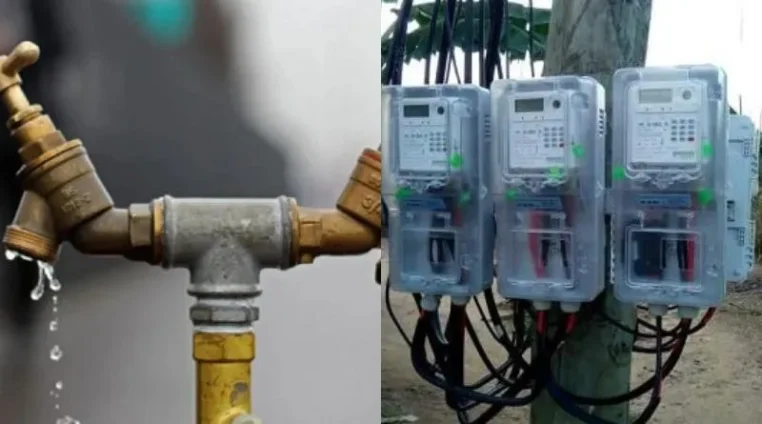
His comments add to growing opposition from minority in parliament, labour unions, consumer groups and business associations following PURC's announcement of a 3.49 per cent increase in electricity tariffs and a 0.85 per cent increase in water tariffs, effective July 1, 2026.
Latest Stories
-
Power restoration fault suspected in Kumasi Central Market fire
54 minutes -
The 7-foot giant of Ngleshie Amanfro: Seven-foot Ghanaian Ephraim Saawa dreams of joining the national basketball team
2 hours -
Government promises support for Kumasi Central Market fire victims
2 hours -
Vibes The Movie: Big Ghun’s Ghanaian film earns five nominations at 2026 REFFA
2 hours -
MamaCare CEO warns unresolved conflicts among health workers could undermine maternal and neonatal care
3 hours -
Health professionals urged to translate medical knowledge into practice to save mothers
3 hours -
Conflicts among care providers linked to maternal, neonatal deaths – Expert
4 hours -
GIS marks 10th TIME conference, champions improved teaching practices
4 hours -
BRICS Or Balance? What Ghana’s bid really means
5 hours -
GPRTU wants full TRAFFITECH-GH implementation to start in 2027
5 hours -
Mahama announces plans to import electric wheelchairs for PWDs
5 hours -
KGL U17 Colts 2026: Western beat Prempeh Elite Academy to set up final final with Greater Accra Region
5 hours -
Late Solanke strike salvages 10-man Spurs draw at Man United
6 hours -
Gender Ministry to monitor welfare of Nana Akua Addo’s children amid domestic violence case
6 hours -
Benedict Okyere Yeboah: Ghana’s football problem goes beyond sacking a coach
6 hours