

Audio By Carbonatix
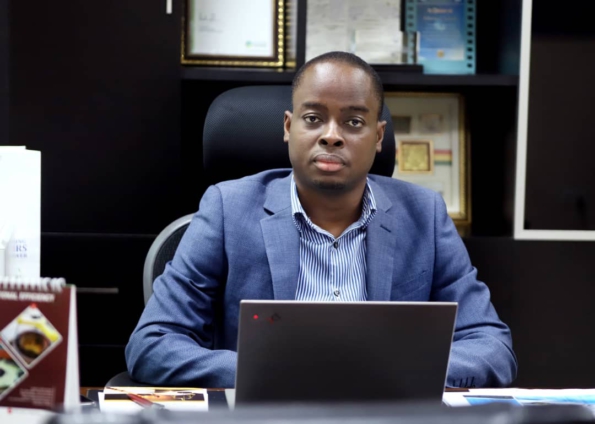
The Executive Secretary of the Public Utilities Regulatory Commission, Dr. Ishmael Ackah, says the Commission had taken Ghana’s current economic situation into consideration when coming up with new utility tariffs.
According to him, this was to ensure that consumers were not overly burdened by the increment and the utility companies had enough to operate on.
It will be recalled that the Electricity Company of Ghana and the Ghana Water Company Limited had earlier demanded a 148% and 334% increment in tariffs, however, following consultations with the PURC the figures were reduced to 27.15% and 21.55% respectively.
The PURC says the agreed percentages, even though it is a lot less than the utility companies expected, will be enough to sustain the companies’ operations while minimizing the burden on consumers.
Speaking on JoyNews’ PM Express, the PURC Executive Secretary said, “When you look at this decision, three main factors were considered. In fact, the effect of all these variables, everything and even this decision on the consumer was the first one.
“The utility related factors which was the second one, then the general macroeconomic conditions, exchange rate, inflation was the third one. So we placed all these three variables on a table and we decided to see how we can minimize the impact on the consumer without also negatively affecting the utilities’ role to serve the consumer.
“So yes the utility should be able to serve but the consumer should not suffer too much. So we did a number of things again and when you come to the consumer's end, apart from all these breaking down, taking some out, reducing, zeroing and all that was to make sure that the impact of the tariff was not too much on the consumer.”
He added that the rather significant increment in the tariffs is due to the delay of the process.
“Again, we should also remember that the last time we did any adjustment was in 2019, so over time some of these factors have built up. In fact, people were a little surprised it had built up to this point so it was almost inevitable. We needed to make a decision,” he argued.
According to Dr. Ackah, this tariff will cover the next four years with periodic adjustments.
Latest Stories
-
World Cup visa scandal: Mahama will act on corruption allegations – Abass Nurudeen
42 seconds -
Abass Nurudeen accuses Minority of ‘scandal scavenging’ over World Cup visa controversy
2 minutes -
US Embassy recognised NSA, GFA and GTA as separate entities for visa applications – Sports Minister’s aide
9 minutes -
Only 30% of Ghanaian teachers satisfied with their jobs – CAPCOE data reveals
20 minutes -
Communities affected by construction of Akosombo Dam urge government to speed up compensation process
41 minutes -
World Cup visa scandal: Sports Ministry not shielding anyone – Sports Minister’s special aide
1 hour -
World Cup visa scandal: Over 30 people misrepresented as GTA board members to US Embassy – Vincent Assafuah alleges
1 hour -
Fire destroys wooden structure near Yesu Mo Villa at Bush Road
1 hour -
NDC threatens sanctions over oversized campaign posters, gives aspirants 5 days to comply
2 hours -
Star Oil paid GH¢2.7bn in taxes, levies in nine months of 2026
2 hours -
Samson’s Take: The rule of law is cheaper before the bulldozer
2 hours -
GRA blames system failure for delay in issuing receipt over passenger’s customs duty
3 hours -
Livestream: Newsfile discusses World Cup visa scandal, beach demolitions, education strikes, BRICS bid
3 hours -
NC-PTAs welcomes end of teachers’ strike, urges parents to prepare children for Monday
3 hours -
Government procures over 2,000 transformers as Ghana’s electricity access hits 89.13% – Energy Minister
3 hours