

Audio By Carbonatix
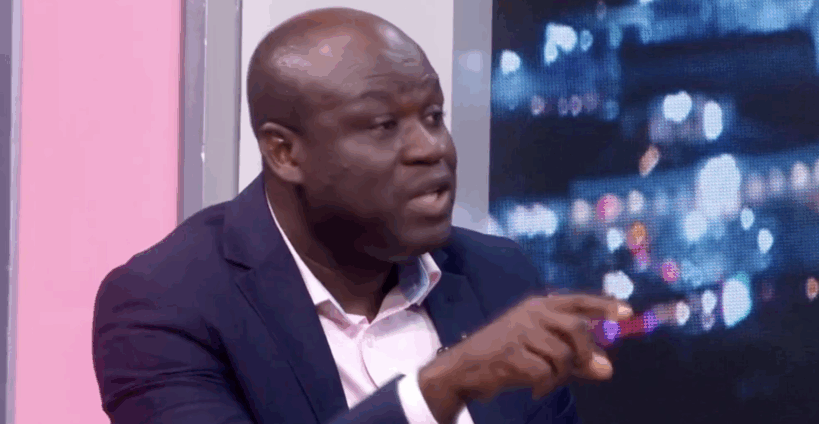
The Ghana National Chamber of Commerce and Industry (GNCCI) says government’s overhaul of the Value Added Tax system marks the end of years of frustration for local businesses.
Chief Executive Mark Badu Aboagye says the business community has pushed for this reform for almost four years and is now relieved to see it finally delivered.
“Largely, this is one of our major concerns for the past three to four years, and in all the budgets, one of our major input is for the VAT to be reformed,” he said.
He recalled that businesses were excited when government first hinted at a reform last year.
“We were happy when it was announced last year that we’re going to see a reformation and possibly a reduction in the effective batch rate,” he explained.
But that optimism faded when nothing changed for almost a year. For him, the latest budget brings closure.
“Unfortunately, it took almost a year, and then just this budget you’ve seen that it’s actually been reformed. So we are happy about it. I think one of our major issues, our major problems, has been resolved for us.”
He says the impact on businesses will be immediate because the old system was too difficult for many to work with.
“So for our members, our complaint largely was that it was so complex,” he said. The structure itself was a stumbling block.
“I mean, it’s a VAT that you see the Standard VAT being combined with straight line levies. In fact, the competition itself was a challenge for most of our members, so some of them are not saying that they don’t want to pay, but how to even compute it was also, was a challenge.”
Mr Badu Aboagye said businesses also struggled because key levies became a direct cost.
“Now we have said that the straight line level was translating into a direct cost to the businesses. So you see a direct cost of the one we pay for the NHIL, the one we pay for the get fund and also the almighty COVID level. These are levees that you cannot claim an input vacuum. So it became a direct cost to businesses,” he said.
He believes the consolidation changes everything.
“Now that we have consolidated and it is part of the Standard VAT, now becomes a VAT that a business person can also claim an input VAT, so it doesn’t become a direct cost to businesses again,” he added.
He said price effects will come later, but the system is now clearer.
“So there we are going to have there and how it affects prices. We’re going to discuss secondly. Now is simplified.
"So when you pay your 20% you know how to calculate your output, VAT, your input VAT, and how to do your deduction and the ones that you have to pay to government, obviously, you have to also pay to government.”
Latest Stories
-
Ghana International School and Coral Reef Innovation Africa sign landmark MoU to establish innovation center of excellence
3 minutes -
Ghana poised to lead Africa’s green aviation revolution, says GCAA Director-General
3 minutes -
Chinese dance group’s tour triggers bomb threat against Australian PM
14 minutes -
Senegal PM proposes doubling prison sentence for same-sex relations
16 minutes -
Clement Apaak defends dog and cat meat consumption, rejects health and ethical criticism
18 minutes -
Minority leader Alexander Afenyo-Markin urges government to enable, not control economy
18 minutes -
Mercy to the World scales up Ramadan feeding campaign, targets over 25,000 people
21 minutes -
Four arrested for posing as security operatives in illegal anti-galamsey extortion
21 minutes -
We want perfection in officiating – Kurt Okraku tells referees
36 minutes -
We’re not opposed to development; we are against illegality — Minority
37 minutes -
Residents of Sokoban wood village protest dusty road, cite rising respiratory cases
48 minutes -
Full text: Frank Annoh-Dompreh’s speech on defending constitutional governance and ensuring accountability in DACF use
50 minutes -
Minority vows to defend constitution amid DACF allocation dispute
50 minutes -
Emergency command centre needed to fix Ghana’s health response — Prof Beyuo
58 minutes -
Minority proposes automatic DACF allocation mechanism
1 hour