

Audio By Carbonatix
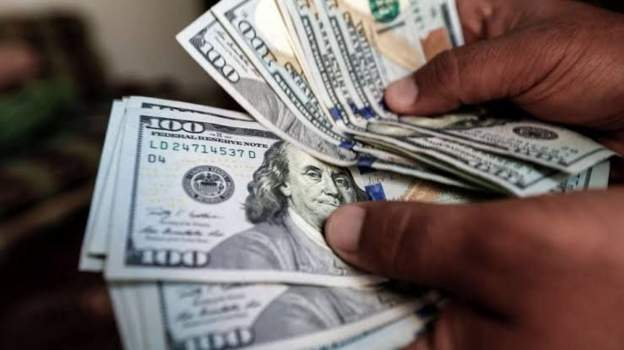
Over the past several months, the United States (US) Dollar (USD) has shown signs of relative weakening against a basket of global currencies.
While exchange rates fluctuate naturally, this trend appears to be influenced by broader geopolitical and economic shifts, notably trade tensions, fiscal policies, and the growing momentum behind de-dollarization.
This presents a unique opportunity for many developing economies to assert greater financial sovereignty, diversify their reserves, and promote local currency usage in international trade.
Several factors contribute to the dollar’s current trajectory. Namely, Donald Trump’s aggressive tariffs imposed on trading partners such as China, Canada, and the European Union have weakened trust in the stability of the U.S.
The U.S.-China trade war, for instance, saw tariffs ranging from 25% to over 200% on key Chinese exports, prompting retaliation and a shift away from the dollar-denominated trade.

Countries like China, Russia, and the broader BRICS bloc (Brazil, Russia, India, China, and South Africa) are leading efforts to reduce dependence on the USD in global trade.
In May 2025, EBC Financial Group reported that several nations were formalizing plans to settle international transactions in their national currencies or through alternative arrangements like barter or digital currencies.
Developing nations are actively diversifying their foreign exchange reserves by investing in commodities such as gold, oil, and diamonds. This reduces reliance on USD-denominated assets and provides a hedge against currency volatility.
As the USD loses some of its hegemony in global finance, developing nations have a chance to recalibrate their monetary strategies by strategically diversifying their reserves and managing capital inflows effectively, which have witnessed currency appreciation.
For instance, in the past two months, Ghana’s Cedi has appreciated by approximately 16% against the USD, buoyed by the government’s gold accumulation program and reduced dependence on dollar-based imports.
Tunisia’s Dinar, Botswana’s Pula, and Libya’s Dinar have also demonstrated resilience, driven by tight capital controls, robust natural resource exports, and inflation management (Fitch Ratings, April 2025).
Ghana’s case is instructive. As the second-largest gold producer in Africa, the country launched a domestic gold purchase program in 2023 to shore up reserves.
As of May 2025, Ghana’s gold reserves rose from 8 tons to 31.01 tons as of March 2025, a significant achievement attributed to the Central Bank’s strategic gold buying and the implementation of GoldBod, a gold-export monitoring initiative that enhances foreign capital retention.
This policy strengthens the Cedi, improves trade balances, and enables the country to rely less on USD-denominated assets.
Many African and BRICS countries are now conducting trade using local or partner currencies. The Bilateral Currency Swap Agreements (BCSAs), such as those between China and African trading partners, allow countries to bypass the USD and settle trades in yuan, rand, or other regional currencies.
This reduces foreign exchange costs and cushions against USD volatility.
Currency appreciation, if not supported by productive economic structures, can hurt exports and widen trade deficits.
To ensure sustainable benefits, developing economies must establish factories to produce import substitutes, particularly in sectors like agriculture, pharmaceuticals, and consumer goods.
They should avoid overspending, manage inflation, and ensure independent central banking operations.
Efficiently utilizing gold, oil, and other natural resources to back national currencies can attract foreign investment.
The declining dominance of the U.S. dollar is more than a transient phenomenon; it represents a structural shift in global finance.
Developing economies must capitalize on this momentum to strengthen their currencies, assert monetary independence, and integrate more meaningfully into international markets.
Ghana’s example highlights how resource-backed economic planning, when coupled with sound fiscal management and regional trade realignment, can transform a potential global challenge into a growth catalyst.
This is the time for developing countries not just to react but to lead.
Latest Stories
-
Minority calls for the immediate suspension of Ghana-Colombia maritime agreement
5 minutes -
Ghanaian professional Sydney Hushie appointed UNFPA Chief of Digital Centre of Excellence
10 minutes -
GHS urges health managers to use community scorecards to improve healthcare delivery
17 minutes -
Ekyeamamfrom-Pivot irrigation project 90% complete but stalled over unpaid certificates
20 minutes -
When the Gavel speaks, where is the choir that once sang for Wontumi?
21 minutes -
NPP does not need a new chairman: It needs a brand architect
24 minutes -
GNFS contains fire at Avenor North Industrial Area in Accra
27 minutes -
NITA appoints Anthony Owusu-Ansah as Acting Deputy Director-General
33 minutes -
RANA warns Salomey Bafoh case could have chilling effect on free expression
34 minutes -
Who is the ‘hero’ Indian pilot who was stabbed on Israel-bound flight?
51 minutes -
NPP External Branches demand 90-day roadmap for ROPAA implementation
52 minutes -
No sustainable digital economy without trust, cybersecurity – CSA
55 minutes -
SSNIT increases stake in Société Générale Ghana to 24.36%
58 minutes -
Ghana-Colombia port deal sparks fresh cocaine trafficking security concerns
58 minutes -
EOCO moves to search Baffour Awuah’s office, residence after interrogation
1 hour