

Audio By Carbonatix
The recent wave of sexual harassment cases in Ghana’s education sector, from the KNUST senior high school scandal to the Labone SHS French teacher charged with indecent assault, has rekindled an uncomfortable but vital conversation.
A longstanding pattern of abuse sustained by silence, weak enforcement and societal denial. Our schools, which are supposed to be spaces of knowledge acquisition, are increasingly becoming unsafe for students, especially young girls.
This article argues that the persistence of sexual harassment and assault in Ghana’s education system reflects deep institutional and societal failures. It examines how abuse of power, societal denial and weak accountability continue to endanger young girls. It also calls for decisive reform to prioritise student safety and dignity across all levels of education.
Ghana’s Criminal and Other Offences Act 1960 (Act 29) criminalises sexual harassment and assault. Termed as ‘indecent assault’ in section 103, a person commits this offence if, without the consent of the other person, that person forcibly makes a sexual bodily contact with the other person, or sexually violates the body of the other person, in a manner not amounting to carnal or unnatural carnal knowledge.
Yet, enforcement within the educational institutions is weak. Schools tend to respond with transfers, suspensions, or inaction rather than legal action. They often protect the institution’s image over the student’s welfare. Thereby, allowing predators to re-emerge in new classrooms with fresh titles.
In a teacher-student relationship, consent cannot be genuine when one party wields academic and disciplinary authority over the other. It is an abuse of authority that undermines the very principles education should uphold, which are safety, trust and respect. Victims are dissuaded from reporting, are accused of misunderstanding the teacher’s conduct or warned about running someone’s career.
The courts themselves reflect how fragile justice can be. In the case of Republic v. John Kenneth Arthur (2023), a chemistry teacher at Aggrey Memorial SHS was charged with indecent assault after a student alleged that he had fondled her breasts and inserted his fingers into her private part. The court acquitted and discharged him, ruling that the evidence was “circumstantially so weak and based on hearsay”.
While the legal reasoning aligned with the principle of proving guilt beyond a reasonable doubt, it revealed the systemic difficulty victims face. That sexual harassment often escapes punishment, not necessarily because the offence did not occur, but because victims are unable to meet the burden of proof threshold, which is expected in a system built around physical evidence and witnesses that rarely exist.
The failure, however, extends beyond the law. It is social. It is in how society speaks or refuses to speak about harassment. It is in how victims are blamed and questioned on their behaviour and moral standards. Public reactions to the KNUST SHS incident, for instance, included jokes and attempts to rationalise harassment. This casualness stems from years of downplaying misconduct as ‘temptation’ or ‘manly weakness’.
Perhaps, the most striking reflection of this culture came from the President of the Ghana National Association of Teachers, Rev. Isaac Owusu, who said on national television, that “if you [male teachers] want to do the 'thing', we have beautiful female teachers who are single”.
This remark shows the misunderstanding surrounding sexual harassment. It reduces a criminal issue to misplaced attraction. It suggests that sexual misconduct results from unmet desires rather than a violation of ethics, boundaries and human dignity. When a national education leader treats sexual harassment as a matter of choice of partner, and even with that, suggesting female co-workers as new objects for male sexual attention and satisfaction, it trivialises the suffering of victims and reinforces impunity among perpetrators.
The way forward requires structural change and accountability. The Ghana Education Service must set up independent complaint desks in every school, backed by counsellors and legal support for victims. Teachers found guilty of harassment should face permanent disqualification from the profession. Schools should mainstream education on consent, gender respect and professional ethics to prevent abuse before it occurs. As long as school systems lack independent reporting mechanisms and transparent sanctions, misconduct will continue unchecked.
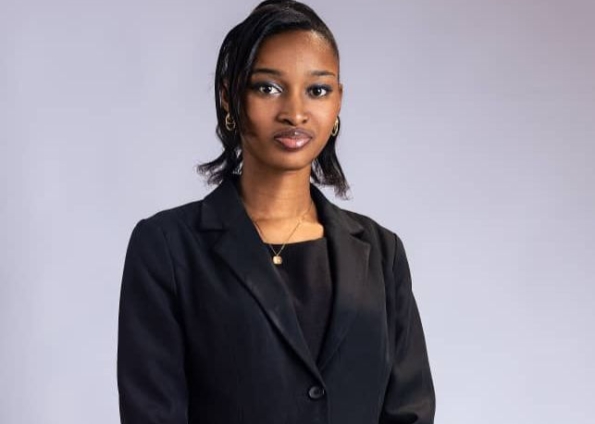
The author, Emmanuella Kwatia, is an LLB Candidate, UPSA Law School. She can be reached via email: ellakwatia233@gmail.com
Latest Stories
-
Tiptoe Lane’s tech takeover: The story behind Ghana’s booming informal phone market
44 minutes -
Abanga vows to use social media to counter NDC messaging ahead of 2028 elections
46 minutes -
Okai Mintah seeks Sabah Zita Benson’s support for NDC National Youth Organiser bid
1 hour -
Okai Mintah vows to strengthen NDC campaign machinery ahead of 2028
1 hour -
Mother of four and Jasikan teacher among new Telecel M’ahitti Promo winners
1 hour -
International Youth Shakers Conclave 2026 set to bring global young leaders to London
1 hour -
Gov’t is committed to addressing teachers’ conditions of service, deprived-area allowance – Education Minister
1 hour -
GoldBod’s structure encouraging galamsey – Afenyo-Markin
1 hour -
Tullow starts selling Jubilee, TEN crude to Ghanaian refineries
1 hour -
Local Government Service authorises rationalisation, redistribution of staff
1 hour -
PURC assures consumers of working to ensure quality services in Northern Region
1 hour -
Ghana develops US$4.28bn water financing framework
2 hours -
Christian Council calls for protection of mission schools’ religious identity
2 hours -
Mahama holds discussions with India’s External Affairs Minister
2 hours -
Even when you cough, they come after you — Abanga accuses Mahama govt of criminalising free speech
2 hours