

Audio By Carbonatix
New figures have revealed people were scammed out of £612m through investment fraud last year, with criminals now using famous faces to gain trust.
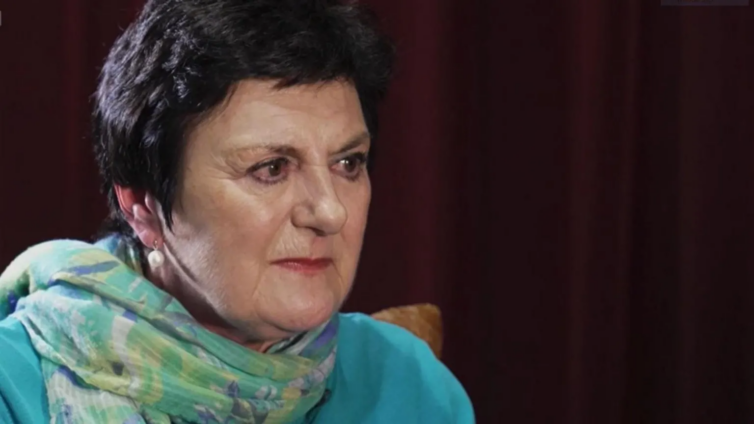
Ann Jensen, from Salisbury in Wiltshire, fell victim to a fake investment opportunity she thought was being promoted by Prime Minister Sir Keir Starmer.
Once the fraudsters had persuaded Ms Jensen to take out a £20,000 loan to prove her financial fluidity, she never heard from them again.
She described the realisation she had been scammed as having a "physical reaction" as though her "body had gone to liquid".

Investment scammers trick people into thinking they are putting their money into a financial scheme that will grow, such as cryptocurrency, when they are just taking off with their cash.
Ms Jensen told BBC Morning Live how she got hooked on one of these fraudulent schemes after scammers used deepfake technology to mimic the Prime Minister.
“It was Keir Starmer talking about the benefit of this wonderful investment opportunity," she said.
"That if you put in £200 you could start to make money on crypto trading. I clicked on it.”
The fraudsters convinced Ms Jensen her initial investment had grown to more than £2,500 and persuaded her to take out a loan to prove she had enough funds to make more cryptocurrency, assuring her she would get this money back.
But once the cooling-off period for the loan had passed Ms Jensen could no longer get in contact with the fraudsters.
“[The shock] was a physical sensation," she said.
"It felt as though my whole body had gone to liquid or air."
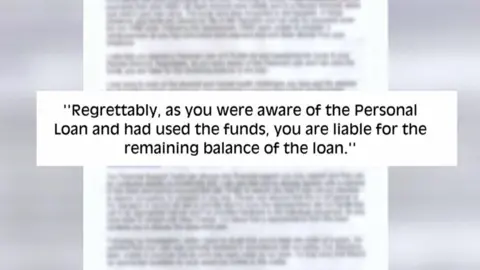
Ms Jensen's bank said that she is liable for the loans and she owes them £23,000.
She has agreed to pay it back in instalments for the next 27 years.
“I never actually admitted to feeling stupid, because I don’t believe I am," she said.
"But I do believe I was a victim of a crime, and I hadn’t actually processed that until afterwards. It’s tainted me for life.”

Spotting a scam
Dr Jan Collie, an expert in cybersecurity at The Open University, explained how the criminals are hooking people in with artificial intelligence (AI).
"When it’s someone as well-known as Keir Starmer, there’s lots of video that exists of him," she said.
"They throw it into the AI engine and it learns his mannerisms, facial expressions and then it can clone the voice.
"People are more inclined to believe personalities, it feels more comfortable and seems more real.”
Dr Collie advised there are certain things to look for when spotting one of these cons, such as pixelation and unrealistic or mismatched movements.
Latest Stories
-
Who gave Gbande the EOCO remote control?
2 minutes -
Ghana begins review of 1999 National Land Policy, targets new framework by 2027
42 minutes -
Tiptoe Lane’s tech takeover: The story behind Ghana’s booming informal phone market
2 hours -
Abanga vows to use social media to counter NDC messaging ahead of 2028 elections
2 hours -
Okai Mintah seeks Sabah Zita Benson’s support for NDC National Youth Organiser bid
2 hours -
Okai Mintah vows to strengthen NDC campaign machinery ahead of 2028
2 hours -
Mother of four and Jasikan teacher among new Telecel M’ahitti Promo winners
2 hours -
International Youth Shakers Conclave 2026 set to bring global young leaders to London
2 hours -
Gov’t is committed to addressing teachers’ conditions of service, deprived-area allowance – Education Minister
3 hours -
GoldBod’s structure encouraging galamsey – Afenyo-Markin
3 hours -
Tullow starts selling Jubilee, TEN crude to Ghanaian refineries
3 hours -
Local Government Service authorises rationalisation, redistribution of staff
3 hours -
PURC assures consumers of working to ensure quality services in Northern Region
3 hours -
Ghana develops US$4.28bn water financing framework
3 hours -
Christian Council calls for protection of mission schools’ religious identity
3 hours