


Audio By Carbonatix
YouTube has lifted restrictions from videos showing Swaziland's reed dance, which feature bare-breasted women.
A spokesperson for the video-sharing platform told the BBC that YouTube allows nudity when "culturally relevant or properly contextualised".
Users who had uploaded reed dance videos were angered when it was classified as age-restricted content.
YouTube has denied accusations of racism, saying it was keen to be culturally sensitive.
The move was in response to a campaign led by Lazi Dlamini, the head of TV Yabantu, an online video production company, featuring Africa's "finest culture... as seen, and recorded by the African people".
Its YouTube channel - which launched in 2016 - had been adding up to 4,000 new subscribers every month until the platform started to flag its content as inappropriate, South Africa's Mail and Guardian newspaper reports.
It also put a label on the channel advising advertisers that its content was "not suitable for most advertisers".
According to Mr Dlamini, he had contacted YouTube's parent company Google to say that he was simply reflecting the cultural values of his community, but the company said that the content violated the platform's standards.
He then organised a series of protests, working with more than 200 cultural groupings from Swaziland, with the first one taking place on Saturday in Durban, a city in neighbouring South Africa, the Mail and Guardian says.
It included at least a dozen women who posed bare-breasted with placards that accused Google of racism.
One placard read: "My breasts are not inappropriate", the Mail and Guardian said.
What is the reed dance?
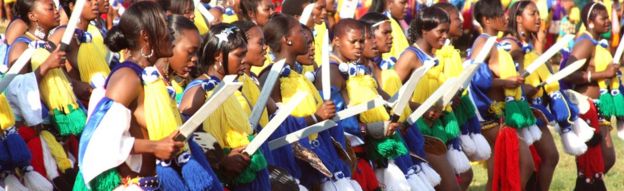
- The reed dance, or Umhlanga, celebrates chastity and virginity
- Every year about 40,000 girls and young women take part in the ceremony, during which King Mswati can chose a new wife
- The eight-day event, which sees the women parade semi-naked in front of the royal residence, has been heavily criticised by rights groups who say it is outdated and sexist.
After the Mail and Guardian article was published, a spokesperson for YouTube told the BBC that reed dance videos were not against their policy, and that they were happy to rectify the error and apologise.
YouTube has been criticised for how it moderates content, and earlier this year pledged to do more to prevent the spread of terror-related material in particular.
More 400 hours of content is uploaded to YouTube per minute.
In most cases, YouTube relies on inappropriate content being flagged by users, which it then investigates.
Latest Stories
-
Ghana needs emergency health fund to respond swiftly to outbreaks – SEND Ghana
6 minutes -
Yellow fever outbreak: Gov’t must prioritise local vaccine manufacturing – SEND Ghana
7 minutes -
Fumigation must begin immediately to contain suspected yellow fever – SEND Ghana
14 minutes -
Yellow fever response too slow; govt must cut bureaucracy – SEND Ghana
16 minutes -
National Security Implications of the Security and Intelligence Agencies Act, 2026 (Act 1168) of Ghana
23 minutes -
NACOC, INL deepen cooperation to combat drug trafficking and organised crime
58 minutes -
GEPA CEO calls for investment to transform Ghana’s economic opportunities
1 hour -
Photos: Antoine Semenyo says ‘I do’ to longtime partner Jordeen Buckley
1 hour -
Gender Minister visits Nana Akua Addo, assures family of support
1 hour -
You need to fake it sometimes to make it fun – Stephanie Benson tells couples
2 hours -
Mahama Cares says political affiliation will not determine access to medical support
2 hours -
Government inherited GH¢111bn debt burden but continues infrastructure projects – Lands Minister
2 hours -
Mallam Atta traders urge government to speed up 24-hour market redevelopment
2 hours -
Catholic Church has a duty to speak on issues affecting human dignity – Bishop Gyamfi
2 hours -
KATH sickle cell, blood bank project stalled over $1.6m legal dispute – CEO
2 hours