

Audio By Carbonatix
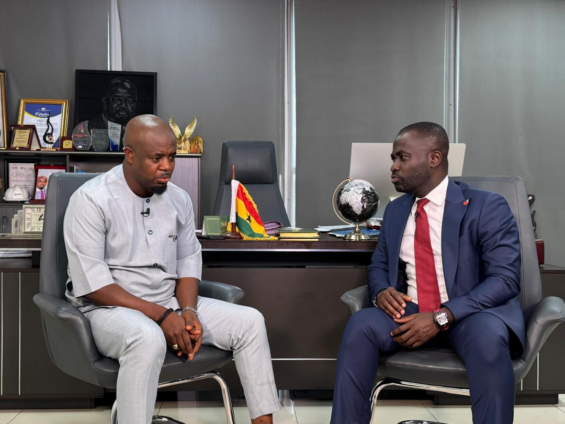
The Chief Executive of the National Petroleum Authority (NPA), Godwin Edudzi Tamakloe, says Ghana has enough petroleum products in stock to meet demand for at least the next six weeks.
According to him, the country currently has “not less than 6 weeks of cover” as concerns persist over global supply disruptions and possible export cuts by some oil-producing countries.
He said the number of fuel vessels currently on the high seas also provides additional assurance about Ghana’s supply position.
“And if you look at the number of vessels even on the high seas, it is significant. At this point, yes, I have some supply,” he said.
Asked whether he was worried about the supply outlook, Mr Tamakloe was categorical that his immediate concern was not the availability of fuel.
“No, my major concern now is price,” he said.
He also dismissed concerns that Ghana could face a fuel supply shortage within the next month, stressing "Dangote is here.”
His comments come as Ghana’s fuel market faces renewed price pressures. The NPA’s latest pricing window, which took effect on September 16, increased the minimum price floor for petrol to GH¢16 per litre and diesel to GH¢16.77.
The development follows sharp movements in international petroleum product prices amid disruptions to global oil supplies.
Ghana’s reliance on imported refined products also leaves domestic prices exposed to movements in international markets and the exchange rate.
Ghana’s 2026–2029 energy sector plan notes that supply security and fuel price stability remain challenges for the downstream petroleum sector.
Mr Tamakloe also addressed concerns about Ghana’s reliance on private-sector stocks and whether operators could potentially use their position to exert pressure on government.
He said the structure of Ghana’s downstream petroleum industry is deliberately led by the private sector under the NPA’s enabling law, Act 691.
“The agency that I’m the CEO of, the enabling law, that’s Act 691; if you look at the very ethos of the law, it is private sector led,” he said.
He explained that the law created different layers of private-sector participation, including Bulk Distribution Companies and Oil Marketing Companies, with limited direct state participation.
But he acknowledged concerns about the possibility of private operators gaining excessive leverage over government.
“I think there are some buffers that we put in place to ensure that the 2014-2015 events do not happen again,” he said.
“And as I said, that’s a particular concern, a great concern, to the President of the Republic, so we don’t get to a point where the private sector can effectively hold the whole country to ransom.”
Latest Stories
-
Daily Insight for CEOs: Building new revenue streams
4 minutes -
‘Save part of the cake for us’ – Ga Mantse asks Roads Ministry to create jobs quota for Ga indigenes
8 minutes -
COCOBOD raises GH¢3.4bn in first cocoa notes offer, 15% below indicative GH¢4bn target
11 minutes -
Dzata Cement proves Ghanaians can build large-scale businesses – Ibrahim Mahama
16 minutes -
The fallen noble profession: The sad tale of the Ghanaian teacher
19 minutes -
Cybersecurity compliance mandatory for critical infrastructure owners – Sam George
19 minutes -
Teachers’ strike: Final-year SHS students worry over lost learning time and WASSCE preparation
21 minutes -
The Bamba revolution and a maiden broadcast
26 minutes -
WAFU B U-17 Championship: Black Starlets’ road trip to Burkina Faso was planned – Joe Abu Salam
53 minutes -
South Korea recalls Ukraine envoy over prisoner-of-war row
54 minutes -
Caretaker killed and two teachers injured in knife attack at Poland school
57 minutes -
Adwoa Safo calls for unity, endorses brother as Kristo Asafo Church leader
1 hour -
Russian strike on buses kills 33, say officials, as deadly attacks on Ukraine surge
1 hour -
Group of 20 graduates rescued after being abducted in Nigeria
1 hour -
LA 2028: Black Queens set for first steps of Olympic Games against Mauritius
1 hour