

Audio By Carbonatix
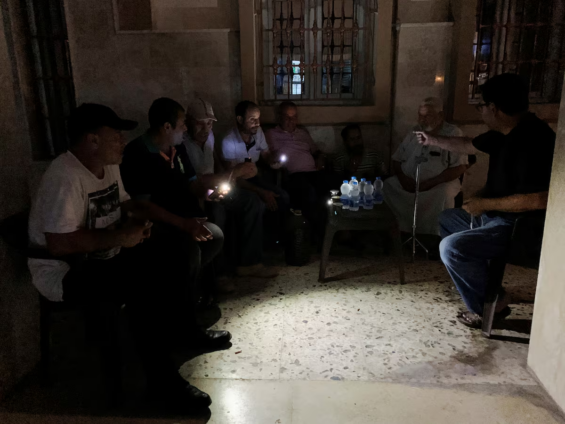
Power cuts have been a fact of life for years for Naseem Al-Akkari, who owns a chain of restaurants in Libya's capital, Tripoli.
But it was not until this summer's heatwaves that they began posing an existential threat to his business, inflicting an estimated $40,000 in losses in just a few months.
The Reuters Power Up newsletter by columnist Ron Bousso provides everything you need to know about the global energy industry. Sign up here.
"The generator has to run to prevent goods from spoiling. You have no choice but to buy diesel from the black market to keep going," he told Reuters during an interview in which the power went out more than 10 times.
Soaring temperatures and global energy disruptions have combined with a raft of domestic problems from ageing infrastructure to rampant fuel smuggling to create an acute electricity and fuel crisis in Libya, a major oil producer trying to boost gas exports to Europe.
Petrol queues in the country's east and west, under rival administrations since a 2014 civil war, can now stretch up to two kilometres. The black-market price of diesel has surged as high as 11 Libyan dinars per litre (about $1.70) compared with a subsidised price of 0.15 dinars.
That has inflicted severe, unexpected costs on businesses like Akkari's.
In Qasr Bin Ghashir, a southern district of Tripoli, outages can last up to 36 hours, Akkari said. That means spending about 10,000 dinars, nearly $1,600, a day on generators.
Sufian Boushaala, manager of a family-owned pastry shop in the eastern city of Benghazi, said power cuts had forced the business to lay off staff and sometimes close for entire days.
Water from Libya's Great Man-Made River Project, a network of pipelines carrying groundwater from the Sahara, was also cut off after the state-owned General Electricity Company of Libya (GECOL) declared a blackout.
GECOL did not respond to a request for an interview.
In an August briefing, U.N. Special Representative for Libya Hanna Tetteh described the outages as a "striking paradox" in a country that spends $1 billion a month on fuel imports.
HEATWAVES
The heatwaves were the immediate trigger, pushing up air conditioning usage and straining power lines, said Jalel Harchaoui, a contributor to Britain's Royal United Services Institute think tank.
That combined with a "convergence of factors" including shortfalls of natural gas production, pushing some electricity plants to switch to fuel, supplies of which have been strained by widespread smuggling, he added.
Despite having North Africa's largest proven crude reserves, Libya depends heavily on imported refined oil products which it sells at subsidised rates. Much has been illegally diverted for sale abroad for profit, according to analysts and U.N. experts.
U.S. watchdog group The Sentry estimated late last year that fuel smuggling costs Libyans about $6.7 billion a year, with "more than half of the imported fuel siphoned off by criminal networks".
Infrastructure problems also play a role. Nine storage tanks in Tripoli, destroyed during the 2014 war, have yet to be repaired, according to Ahmad al-Mesllati, spokesperson for Brega Petroleum Marketing, which oversees Libya's fuel supplies.
Libya's five main refineries can theoretically process about 380,000 barrels per day, but actual output is far lower, according to a June report by Libya's Audit Bureau and Anti-Corruption National Authority.
The situation worsened after a drone attack last month on an oil complex in Zawiya, a city west of Tripoli home to the country's main refinery.
Disruptions to shipping routes through the Strait of Hormuz have also delayed some fuel shipments by as much as 12 days, according to Mesllati.
The outages are "a perfect encapsulation of the country's problems", said Tim Eaton of Britain's Chatham House think tank.
While the country imports "more fuel than could possibly be required to generate electricity," much ends up leaving the system due to "politically sanctioned corruption, graft and institutional dysfunction," he said.
"The Libyan people foot the bill and get little in return."
To ease the crisis, Brega Petroleum Marketing established a mobile refuelling station with a limit of 300 litres per vehicle.
Even so, petrol queues can still last hours.
"We are living through a farce — an outrageous one," said Khaled al-Turki as he waited for fuel in central Tripoli.
"Is it conceivable that an oil-producing state cannot find a solution for the gasoline and diesel shortage? ... What kind of state is this?"
Latest Stories
-
Cyber Security Authority: Ghana led Operation Blackout, not FBI
4 minutes -
GH¢800,000 goods destroyed as fire engulfs Kia Rhino truck on Apedwa-Kibi Road
35 minutes -
Chief Justice calls for supportive workplaces to address mental health stigma
35 minutes -
NVI CEO defends GH¢13m spending on training, workshops and conferences
37 minutes -
Ghana targets first locally manufactured vaccine by 2027
39 minutes -
Teachers suspend strike after reaching agreement with government
50 minutes -
Council of State describes talks with striking teachers as fruitful
1 hour -
Adjaye Associates opens new Accra studio with public space for cultural exchange
1 hour -
BoG to issue new Credit Risk Directive as NPL ratio in the Savings and Loans sector deteriorates
1 hour -
You can preach in a stationary vehicle, but not when it’s moving – Mahama clarifies
1 hour -
Alhaji Iddrisu Mustapha: The educated professional seeking to bring experience to NDC Western Region leadership
2 hours -
Former Deputy Trade and Industry Minister Nana Ama Dokua called to Ghana Bar
2 hours -
Old Edubiase Methodist Basic School pupils turn traders, farmers as teachers’ strike bites harder
2 hours -
Prudential Bank secures GH¢1.13bn investment from Bloom Africa
2 hours -
Ernest Kwasi Okoh
2 hours