

Audio By Carbonatix
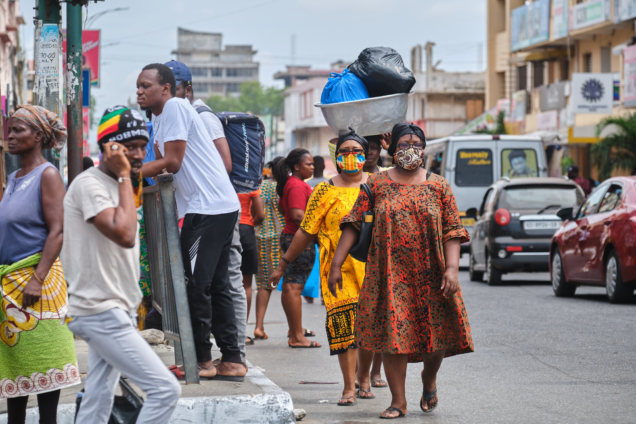
When it was announced on Sunday, April 19 that President Nana Akufo-Addo was to address the nation, few people imagined what they heard later in the evening: “I have taken the decision to lift the three-week-old restriction on movements…” That was it, no more lockdown in Ghana!
In fact, many expected an extension of the lockdown largely so because for the past few days we have seen an explosion in confirmed cases from less than 500 cases to about 1,042 cases.
Why would the government adopt a seemingly antithetical approach? It is either the government (1) has more information on a drug/vaccine in the treatment/prevention of the virus beside that given by the president or, (2) it is silently and brazenly adopting the “herd immunity” approach that has been globally criticised.
For the avoidance of doubt, this is what they president had to say as the basis for what will go down as the most audacious action in the fight against the pandemic in Africa:
“…our ability to undertake aggressive contact tracing of infected persons, the enhancement of our capacity to test, the expansion in the number of treatment and isolation centres, our better understanding of the dynamism of the virus, the ramping up of our domestic capacity to produce our own personal protective equipment, sanitizers and medicines, the modest successes chalked at containing the spread of the virus in Accra and Kumasi, the severe impact on the poor and vulnerable..”
Unless there is more information which isn’t available to the public, I doubt this can suffice as a significant breakthrough to warrant such bravado.
Herd Immunity
Herd immunity has gained popularity in the fight against covid-19, but what is it? Professors of Epidemiology at the Bloomberg School of Public Health, John Hopkins University, Gypsyamber D’Souza and David Dowdy explained it as follows:
“When most of a population is immune to an infectious disease, this provides indirect protection or herd immunity to those who are not immune to the disease. For example, if 80% of a population is immune to a virus, four out of every five people who encounter someone with the disease won’t get sick (and won’t spread the disease any further). In this way, the spread of infectious diseases is kept under control. Depending on how contagious an infection is, usually 70% to 90% of a population needs immunity to achieve herd immunity.”
They further state that there are two ways to achieve herd immunity: either a large population gets infected or gets vaccinated. This is what it means basically: (1) we either have a vaccine for the population say Ghana, or (2) we send them out to face the virus and hope that the majority (70%-90%) are immune to it.
Of course we know that at the moment no vaccine against covid-19 is available. So, unless there is more evidence provided to justify the claim of “…our better understanding of the dynamism of the virus” as the president put it, it appears to me that we are quietly but dangerously experimenting herd immunity.
Governments and medical experts are divided on the efficacy of herd immunity in this current crisis. Sweden’s herd immunity approach to covid-19 has been criticized by numerous scientists and ironically, by the ‘brave’ President Donald Trump. Mathematician at Lund University,
Marcus Carlsson insist that no evidence of “herd immunity approach in controlling virus outbreak exist anywhere in the world,” and that the Swedish government is conducting a “mad experiment with 10 million people.” In Australia where there has been a consistent fall in the case numbers, the government has refused to adopt herd immunity and instead, has extended restriction by four weeks. On whether herd immunity is any option now, another epidemiologist had this to say:
“To some herd immunity may still sound idyllic, but it requires us to sacrifice the vulnerable on the altar of the economy in truly vast numbers. I can’t speak for everyone, but personally I’d rather stay inside for a few more months and still see my parents next year.” (Gideon Meyerowitz-Katz).
For me and I guess, a majority of Ghanaians, we are not staying inside, we are going out but keeping in mind that it is every woman for herself, God for us all. There has been no better time in our history than now to say: “this is survival of the fittest and removal of the weakest.”
Latest Stories
-
Total expenditure as of July 2026 amounted to GH¢147.07bn, 16% below target – BoG
36 minutes -
Total revenue & grants stood at GH¢144.5bn in July 2026, slightly below target – BoG
52 minutes -
Ghana Sports Fund urges sports federations to submit credible proposals and measurable targets
56 minutes -
Sally Rooney books withdrawn in UK over Palestine Action support
1 hour -
Musk says US government may be behind slowdown of Ukraine drone speeds
1 hour -
Picking Chief Justices nearing retirement could give Mahama immense power – Bentil
1 hour -
Netflix to shed 1,000 jobs in steepest cuts since 2022
2 hours -
Burnham had two hospitality dinners with Man City chairman, deleted records show
2 hours -
Semenyo ‘froze’ after alleged racist abuse, court told
2 hours -
‘Shameless’ – Mourinho critical of Vinicius Jr ban timing
2 hours -
Loyalty can outweigh competence in Chief Justice selection – Bentil
2 hours -
Man City suffer as PSG masterclass sets up Champions League win
3 hours -
Customer Service Africa CEO urges business leaders to observe staff and customer interactions
3 hours -
On night of mayhem for Liverpool, Barcola arrives in style
3 hours -
Muzic Mensah finds healing and renewed love in new single ‘WayƐ Late’
3 hours