

Audio By Carbonatix
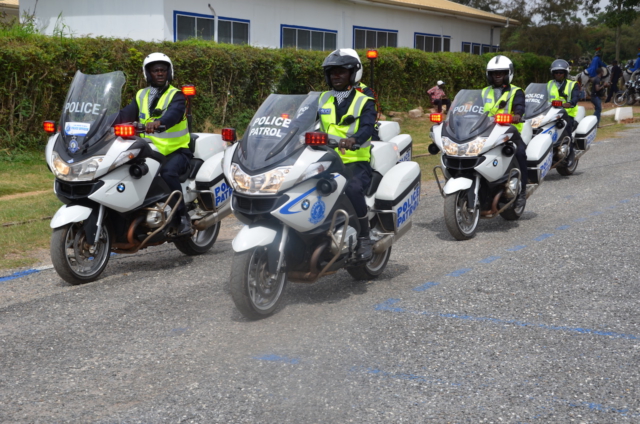
The Kumasi Divisional Police Command has announced plans to deploy personnel to the various churches and mosques within its jurisdiction as adherents are preparing to worship in their numbers in the coming days.
This is being done to ensure police presence at the places of worship, for effective enforcement of the COVID-19 preventive protocols, following the easing of some of the restrictions on public gatherings by the government.
“We are anticipating most of the churches and mosques would be preparing to re-open to their members very soon.
“Therefore, our decision is to patrol these facilities in making sure that the health and safety of the members were not compromised,” Chief Superintendent Frank Abrokwah, the Kumasi Divisional Police Commander, told the Ghana News Agency (GNA), Kumasi.
The President, Nana Addo Dankwa Akufo-Addo, in his recent address to lift the ban on church activities, said twenty-five per cent attendance with a maximum number of one hundred (100) congregants, could worship at a time in church or at the mosque.
This was to be done with a mandatory one metre rule of social distancing between congregants, with a maximum duration of one-hour for each service.
In addition to the mandatory wearing of nose masks, all persons at all times in churches and mosques, must also register their names and contact details, while hand-washing facilities and sanitizers are to be provided for their use.
Chief Superintendent Abrokwah said churches and mosques were expected to hold limited services, and reminded Christians and Muslims of their obligation to be law-abiding to mitigate the spread of the novel coronavirus.
He commended some churches and mosques in the Metropolis for living up to expectation by doing the right thing on the first day of their service, after the ban was lifted.
Greater Kumasi has recorded the second highest confirmed cases of COVID-19 in the country, with a total case count of 1,735 and 19 deaths, as of June 08, this year.
Chief Superintendent Abrokwah said everybody was at risk.
Consequently, there was the need for the people to take the required precautions in their lives to avoid contracting the disease and spreading the virus.
Latest Stories
-
Oil hits over 1-week low on hopes of boost to diplomacy in Iran war
1 hour -
They take GH¢100, sometimes GH¢200 – Okada riders allege police extortion in Accra
2 hours -
NACOC: We’ve found no presidential escort among suspects in €225m France cocaine case
2 hours -
Don’t turn students away over trunks and chop boxes – GES
2 hours -
Italian Apple store employees strike on iPhone 18 Pro launch day
2 hours -
Apple’s Tim Cook sees Australia’s social media curbs as ‘world-leading’, PM says
2 hours -
Amazon raises minimum hourly pay by $1 to $20 for US operations workers
2 hours -
Insurance cost has largely remained stable – NPA boss on transport fare pressure
3 hours -
Multiple unions threaten strikes at Barrick’s flagship Mali gold mine, documents show
3 hours -
Infantino invited to African summit as he faces challenge to FIFA leadership
3 hours -
NPA boss flags ‘recalcitrant’ transport operators raising fares arbitrarily
3 hours -
GPRTU fare hike put on ice after talks with government – NPA boss reveals
4 hours -
I’m greatly worried – NPA boss on threat of higher transport fares
4 hours -
We are largely import-dependent – NPA boss on Ghana’s fuel vulnerability
4 hours -
Ghana’s fuel market is built for turbulence – NPA’s Edudzi Tamakloe explains why
5 hours