

Audio By Carbonatix
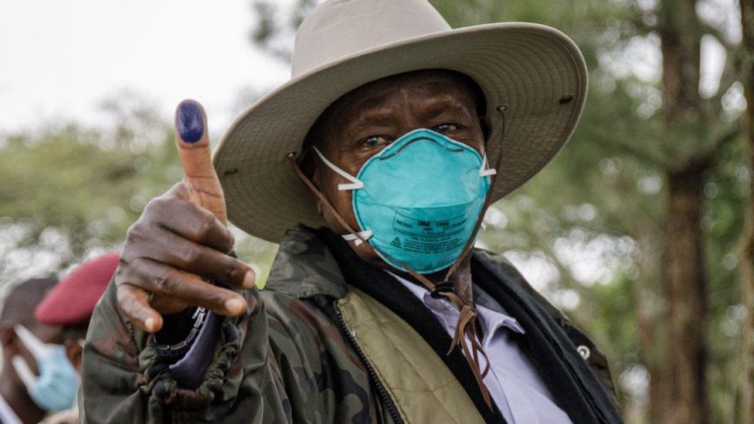
Uganda's long-time President Yoweri Museveni has been re-elected, electoral officials say, amid accusations of vote-rigging by his main rival Bobi Wine.
Mr Museveni won almost 59% of the vote, with Mr Wine trailing with about 35%, the Electoral Commission said.
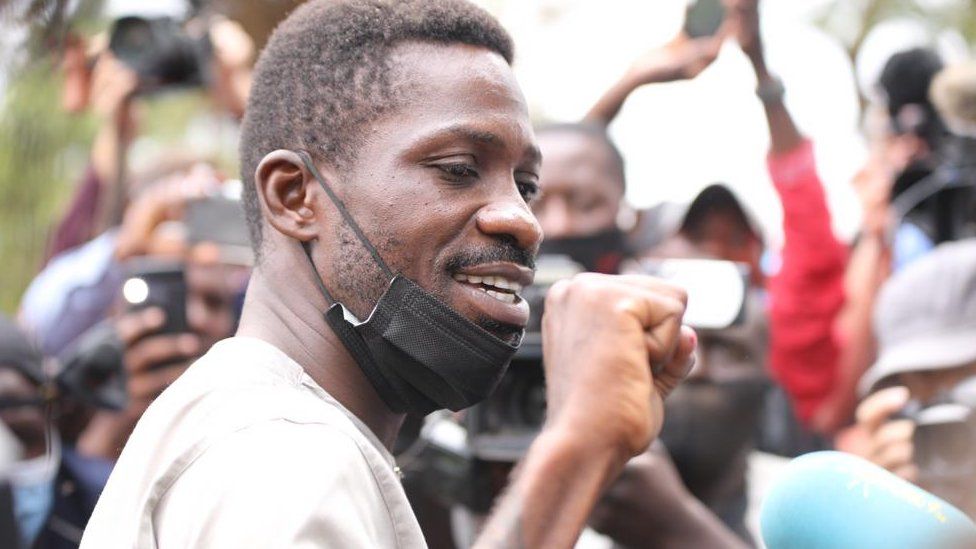
Mr Wine, a former pop star, earlier vowed to provide evidence of fraud. The Electoral Commission denies there was vote-rigging in Thursday's poll.
Poll monitors have criticised the government closure of internet access.
The say this undermined confidence. Mr Wine said he would provide evidence of fraud once the internet was restored.
Dozens of people were killed during violence in the run-up to the election. Opposition politicians have also accused the government of harassment.
The result gives President Museveni a sixth term in office.
The 76-year-old - who has been in power since 1986 - says he represents stability in the country.
Meanwhile, Bobi Wine - the stage name for 38-year-old Robert Kyagulanyi - says he has the backing of the youth in one of the world's youngest nations, where the median age is 16.
On Friday, as the results came in, Mr Wine said that Ugandan soldiers had surrounded and breached his home.
But a government spokesman accused him of "dramatising" the incident "to seek sympathy".
What's the latest on the election results?
"The electoral commission declares Yoweri Museveni... elected President of the Republic of Uganda," election commission chairman Justice Simon Mugenyi Byabakama said on Saturday.
He said turnout was 57% of the almost 18 million registered voters.
Earlier, Mr Byabakama said the vote had been peaceful, and called on Bobi Wine, who said some of his polling agents were arrested on Thursday, to make public the evidence for his fraud allegations.
The opposition candidate believes the internet shutdown is being used to block communication and as a way of compromising the vote.
"I will be happy to share the videos of all the fraud and irregularities as soon as the internet is restored," Bobi Wine said.
Meanwhile, Mr Wanyama, who is a spokesperson for President Museveni, hit back at Bobi Wine's claims of vote rigging.
"He came short of the expectation of Ugandans," he said in an earlier interview with the BBC. "He had no message and Ugandans have told him he has to wait a little longer."
Mr Wanyama added: "We have challenged him to provide proof for his claims, he has not a single iota of evidence."
The EU, United Nations and several rights groups have previously raised concerns about the integrity of Uganda's election.
But, aside from an African Union mission, there is currently no major international group monitoring the vote. Earlier this week the US - a major aid donor to Uganda - cancelled its diplomatic observer mission to the country, saying that the majority of its staff had been denied permission to monitor polling sites.
How bad was the violence during the campaign?
Violence reached an unprecedented level in the build-up to the race, and dozens have died during crackdowns by security forces.
Bobi Wine and other opposition candidates have been arrested on several occasions, and during protests that followed one arrest in November, more than 50 people were killed.
Who is Yoweri Museveni?
Mr Museveni, who came to power on the back of an armed uprising in 1986, stood as leader of the National Resistance Movement (NRM).
He has long been depicted to Ugandans as a liberator and peace bringer.
But he has managed to maintain his grip on power through a mixture of encouraging a personality cult, employing patronage, compromising independent institutions and sidelining opponents, says the BBC's Patience Atuhaire.
Who is Bobi Wine?
The reggae star is known by his supporters as the ghetto president.
His party, the National Unity Platform (NUP), campaigns for basic needs like improving access to healthcare, education, clean water and justice.
Over the last two decades Bobi Wine's musical output has been filled with songs about these issues and they have inspired a fervent following.
He grew up in Kampala's Kamwokya slum where he went on to build his now world-famous recording studio.
Latest Stories
-
GEXIM Bank grows loan portfolio to GH¢1.56bn as equity hits GH¢2.1bn in 2025 – SIGA Report
17 minutes -
Ghana Shippers’ Authority grows surplus by 272% as assets reach GH¢979.92m
25 minutes -
Government designates 13 blocked-out areas for small-scale mining to curb illegal mining
25 minutes -
Number of advertised jobs increased significantly in half-year 2026 – BoG
26 minutes -
GAFM demands retraction from GTEC over ‘unrecognised universities’ listing
32 minutes -
Saltpond residents renew call for return of Founders’ Day celebrations
35 minutes -
Consumer spending records mixed performance in 5-months of 2026, but manufacturing activities improved – BoG
38 minutes -
Passenger arrivals at airport increased by 3.7% in 5 months of 2026
43 minutes -
NSMQ 2026: St. Augustine’s College reach third straight semifinal after seeing off Aburi Girls, St. John’s Grammar
46 minutes -
Re: Mahama backs crackdown on airport workers begging visitors for tips
47 minutes -
Photos: 6th Akwasidae Festival in the U celebrates Asante heritage and Ghanaian unity
48 minutes -
Ghana, India explore armwrestling collaboration as Golden Arms prepare for World Armwrestling Championship in New Delhi
56 minutes -
What Is Wrong With Us: We sign off on value for money before we have even defined it
1 hour -
2026 U20 WWC: Black Princesses final squad for tournament revealed
1 hour -
ECG liabilities hit GH¢82.31bn as SIGA flags persistent financial risks
1 hour