

Audio By Carbonatix
“The oldest and the strongest emotion of mankind is fear and the oldest and strongest kind of fear is fear of the unknown” (H.P LOVECRAFT)
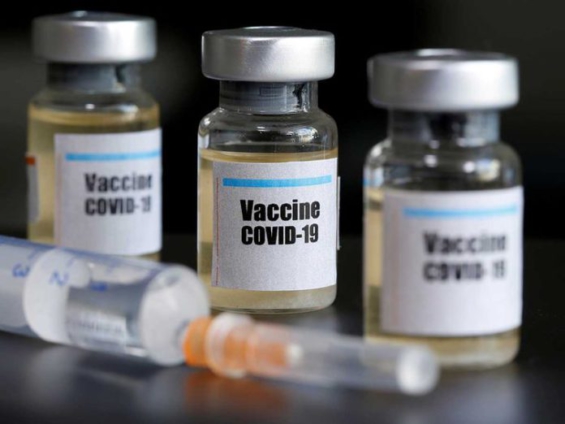
The above sums up the atmosphere in Ghana before the arrival of the COVAX–sponsored AstraZeneca COVID–19 vaccines. The much-anticipated vaccines were welcomed, on 24 February 2021, amidst mixed feelings.
Social media platforms were rife with excitement, speculations and fear-mongering alike among Ghanaian users.
Concerns about the safety and efficacy of the vaccines persist despite the assurances of President Akufo–Addo and campaigns by medical professionals across the country to debunk conspiracy theories surrounding the vaccines.
Whiles the SARS-CoV-2 virus which caused the Covid-19 pandemic may be novel, conspiracy theories surrounding the virus are not. Indeed, the earlier months of the pandemic were dominated by speculation about the origins of the virus.
Rumours that bat consumption caused the virus led to a spike in Sinophobic attacks in the United States and several European countries.
The proliferation of misinformation did not abate and with time the enduring myth of the pandemic developed - the claim that Covid-19 is linked to 5G.
This claim was ushered into mainstream discourse via social media by celebrities such as Amir Khan and Woody Harrelson.
It is therefore imperative that the efforts to encourage vaccination are well executed.
In West Africa, this conspiracy theory was peddled by the renowned preacher, Pastor Chris Oyakhilome who dedicated sermons to propagating the myth.
Extant research has debunked any connection between 5G frequencies and the virus and has shown, contrariwise, that 5G may be instrumental in the fight against the virus.
Nonetheless, a deficit of merit has unfortunately not been any impediment to the propagation of these conspiracy theories which have spurred attacks on cell towers and telecommunications engineers, especially in the Western world.
The introduction of vaccines late last year was met with more speculation.
There were claims that the vaccine would alter the DNA of recipients or even infect them with the virus itself and a revised version of the 5G theory claimed that the vaccines contained a microchip, sponsored by Bill Gates and linked to cell towers via 5G technologies as a means of population surveillance.
The result of these conspiracy theories is a high rate of vaccine scepticism.
In Wisconsin for instance, a pharmacist purposely sabotaged 57 vials over the holidays because he thought the vaccine would change people’s DNA.
In Ghana, vaccine scepticism is mainly linked to a belief that the COVAX facility is a trial version and Ghanaians are going to be used as guinea pigs.
These reservations are not wholly unfounded as there exists a precedent for unlawful trials in the sub-region in the 1996 Kano trovafloxacin trial which caused 5 deaths and several injuries which Pfizer finally settled out-of-court for USD 75 million in 2009.
Ironically, some Ghanaians are sceptical of the AstraZeneca vaccines as they have not been approved in the United States which opted for the Pfizer and Moderna vaccines.
These concerns have produced a suboptimal vaccination rate with only 0.11 vaccines administered per 100 people since vaccination started on 3rd March.
A lot has to be done to convince the citizens to patronize the vaccination, thus, live broadcast of the vaccinations of the president, politicians and some religious figures is a welcome step.
These efforts could be further strengthened by a concerted government effort, through the National Commission for Civic Education (NCCE), to address misinformation concerning the vaccines via new and traditional media thus ensuring that correct information on the side effects and other relevant information about the vaccine permeate all spheres of Ghanaian society.
Further, influential persons who have taken the first dose of the vaccine should be encouraged to share their experience after taking the vaccine through videos and voice notes on Social Media platforms thereby reclaiming an avenue through which misinformation on the vaccines is spread.
Additionally, large social media platforms should be persuaded to rapidly take down accounts that amplify fake news on their sites to check the spread of misinformation.
The government may explore legislation that imposes fines on influential people who create fake news regarding the vaccine or amplify existing conspiracy theories.
****
The author, Rockson Obeng is a student at Simon Fraser University, Canada
Latest Stories
-
Photos: Ghana Immigration Service removes 1,055 street beggars from Accra, Kumasi streets
1 minute -
‘He always comes to our aid’ – Fr. Campbell recounts Bawumia’s support for Church, poor
11 minutes -
Remittances drop marginally year-on-year to US$3.65bn in half-year 2026
29 minutes -
T-bills: Government exceeds target by 139%, interest rates tumble
32 minutes -
Why Chelsea need more than a new goalkeeper to be title challengers
37 minutes -
Outlook of Ghana’s external sector remains positive for second-half of 2026 – BoG
39 minutes -
Prisoners freed early are returning to jail at rapid rate, governors tell BBC
41 minutes -
Two charged after €2.3 million worth of drugs seized in Dublin
47 minutes -
Head teacher evacuated 900 children minutes before Nepal floods hit school
47 minutes -
Chelsea beat Brithon in seven-goal thriller to maintain perfect start
54 minutes -
Fernandes hat-trick helps Man Utd recover to beat Ipswich
59 minutes -
Former Agriculture Minister Ibrahim Adam passes on
59 minutes -
“A giant leap forward”: Nasa launches powerful new space telescope to explore mysteries of the Universe
1 hour -
Eight killed and others missing after ferry capsizes off northern Cyprus
1 hour -
Education Ministry reschedules 2026/27 CSSPS results to September 4
1 hour