

Audio By Carbonatix
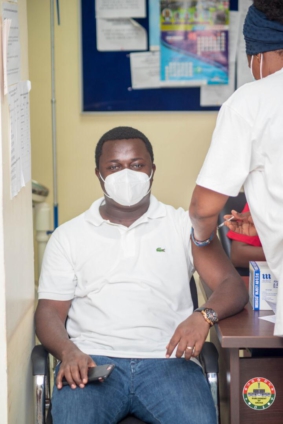
The Ghana Health Service (GHS) has urged Ghanaians to participate actively in the second phase of the roll-out of the Covid-19 vaccine.
Speaking to the media, Ashanti Regional Health Director, Emmanuel Tinkorang stressed that the vaccines procured by the government are safe and would ensure immunity against the Coronavirus disease.
“The vaccines are safe and protective despite the negative things you have heard about it. One thing we can assure you as a health system is that, we will make sure we give you a vaccine that is safe and protective and will help you so that you won't die from Covid-19.
“Once you are given your second dose, it means that you have completed your vaccination and as far as your immunity is concerned, it will be high enough to prevent you from the mortality that is associated with Covid-19.” he said.
Ghana is expected to commence its second phase of inoculation on Wednesday, May 19.
The Ashanti Region, he says has received 153,000 doses of AstraZeneca vaccine out of the 350,000 procured by the government for its vaccination exercise.
Although 250,000 persons received their first jab in the region, Mr Tinkorang noted that only persons who were vaccinated between March 2 and 9 would be permitted to receive the second dose this week.
He also stressed that, without vaccination identification cards, persons who arrive at the health facilities would not be attended to.
“If you were vaccinated between March 2 and to 9, it means that you are due for your second dose and whereever you are located, try as much as possible to go to the facility where you were given the first dose to have your second jab.
“The data has been provided to these facilities so when you go, you will be identified. You will have to go with your vaccination cards. Without your vaccination cards, you will not be immunized because your special ID is on the card and that is what we can retrieve,” he stated.
He also used the opportunity to dismiss claims that the AstraZeneca vaccines lead to blood clot.
According to Mr Tinkorang, records in the Ashanti Region do not show reports of such cases. He therefore urged persons to refrain from comparing incidents from other countries to those in Ghana.
“In Ghana, we have not recorded any blood clots. As far as I am concerned, in Ashanti Region, most of them were fever, body pains and others. Those who died, their death cannot be attributed to the vaccine.
“So what is happening in other countries, you cannot use it to describe what is happening in Ghana,” he said.
He further revealed that data from all 16 regions would be analysed by the Pharmaco Vigilance Unit of the Food and Drugs Authority (FDA) and “we will come out with what we call Ghana's situation.
Latest Stories
-
A rising number of women have never been screened for cervical cancer. Here are the risks
12 minutes -
Ghanaian youngster Sam Amo-Ameyaw scores brace in Strasbourg’s big win
18 minutes -
2026 U-20 WWC: ‘We have a chance to recover from opening defeat’ – Charles Sampson
18 minutes -
‘Social media language’ in classrooms not on our blind side – Education Ministry
19 minutes -
Republic Bank, UPSA sign MOU to strengthen staff skills and industry-academia collaboration
21 minutes -
World Literacy Day: Literacy doesn’t develop in isolation – JustED Foundation
26 minutes -
Kwadwo Opoku announces arrival in Greece with debut brace
34 minutes -
Kurt Okraku vs Kwame Nkrumah: Time is the author of legacy
36 minutes -
Post-results school selection policy caused placement crisis – Kingsley Agyemang
37 minutes -
Chalé Day mixer sets tone for bigger December celebration
39 minutes -
Executive Women Network celebrates a decade of leadership, sets sights on next generation of impact
46 minutes -
“I’m happy to have scored” – Ernest Nuamah ends long Ligue 1 goal drought
49 minutes -
52-year-old spiritualist and farmer found dead at Assin Amoabeng
50 minutes -
Tensions rise at GNAT hall as parents seek solutions to CSSPS challenges
51 minutes -
Belgian FA still wants Balogun ban answers
57 minutes