

Audio By Carbonatix
The Deputy Director of Prisons (DDP) Joseph Asabre, the Central Regional Commander of the Ghana Prisons Service, has advocated the inclusion of prison schools in the national school feeding programme.
He explained that access to adequate nutrition would help inmates concentrate better in class and fully participate in vocational training, while supporting rehabilitation and reintegration efforts.
According to him, feeding inmates properly was essential not only for their health and dignity, but also for effective learning and training within the prison system.

He said prison education remained a critical tool for reform, as it equipped inmates with literacy, numeracy, and practical skills needed to reduce recidivism and improve their socioeconomic prospects after incarceration.
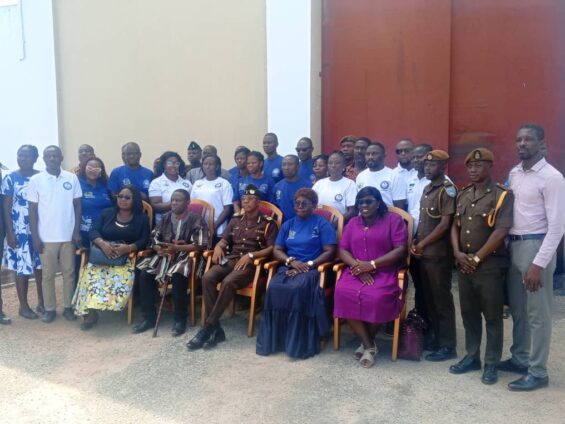
DDP Asabre made the appeal when Mr Daniel Kwasi Ahiamah, Executive Director of the Complementary Education Agency (CEA), and his staff presented quantities of assorted drinks, teaching and learning materials to the Ankaful Maximum Security Prison in the Komenda-Edina-Eguafo-Abrem Municipality of the Central Region.
The delegation also interacted with some inmates who had taken up formal education while in prison to build their capacity to live dignified lives after incarceration.
DDP Asabre commended the government for increasing the feeding grant for inmates from 1.8 pesewas to GH¢5 per inmate per day.
However, he said the amount remained woefully inadequate to meaningfully provide sufficient meals for inmates.
Lamenting other challenges, DDP Asabre expressed concern that the lack of furniture had forced inmates seeking formal education to study in uncomfortable conditions, causing physical discomfort, poor concentration, fatigue, reduced participation, lower academic performance, and discouragement from education.
Another pressing issue, according to him, was the lack of teaching and learning materials, particularly books, notebooks, pens, charts, and other basic classroom resources.
The situation, he said, hindered effective teaching, independent study, and lesson revision, leading to weak understanding, poor knowledge retention, low examination performance, and frustration for both teachers and inmates.
He said the facility also lacked a modern library with reading materials and computers for ICT training, denying inmates access to textbooks, reference resources, and essential digital skills, leaving students disadvantaged in examinations.
According to him, many inmates produced art and crafts to stay productive and build post-release skills, but the items often remained unsold due to low patronage, despite the time and effort invested in producing them.
The situation, he said, had led to discouragement, lost motivation, reduced interest in vocational training, limited self-reliance, and missed opportunities for income generation and personal support.
He made a strong appeal for support from government agencies, philanthropists, civil society organisations, churches, businesses, and the public.
Supporting the purchase and promotion of inmates’ crafts, he said, would not only help them financially but also build their confidence and prepare them for productive lives after release.
“If given the right support, prison craft work can become a powerful tool for rehabilitation, empowerment, and reintegration,” he said.
He said the donation aimed to empower prisoners with knowledge and skills for rehabilitation and reintegration into society, fostering personal development and reducing recidivism.
He expressed the Agency’s firm commitment to supporting complementary education for inmates, in line with its mandate to provide non-formal education opportunities to out-of-school children, adolescents, and adults across the country who lacked access to mainstream schooling.
Latest Stories
-
NPP national elections: 3,000–4,000 police to handle security, traffic in Kumasi – Karbo
37 minutes -
Atta Akyea fumes as Manhyia MP is to spend another night in EOCO custody
1 hour -
SSNIT says La Beach clearance was to protect hotel investments, beaches to remain public
2 hours -
APSU congratulates St Augustine’s College after back-to-back National Investment Quiz wins
2 hours -
Renewed flood intervention at Mallam Junction raises hopes among residents, businesses
3 hours -
St Augustine’s College retain National Investment Quiz title after nail-biting grand finale
3 hours -
Education infrastructure investment will drive Banda’s development – Ahmed Ibrahim
3 hours -
Teacher unions strike: Gov’t presents fresh proposals as talks end inconclusively
4 hours -
51,000 teachers’ promotion arrears to be validated for October payment – Education Minister
4 hours -
Kwabena Boamah appointed Board Chair for Impact Investing Ghana
4 hours -
Striking teacher unions to meet Fair Wages and Salaries Commission on October 6
5 hours -
EOCO working with AG to arraign Nana Baffour Awuah before weekend court
5 hours -
Duraplast reassures customers after fire, announces October 5 reopening
5 hours -
Call off strike, gov’t will not renege on promotion arrears pledge – Haruna Iddrisu to teacher unions
5 hours -
Committee set up to validate teachers eligible for 20% deprived-area allowance – Education Minister
5 hours