

Audio By Carbonatix
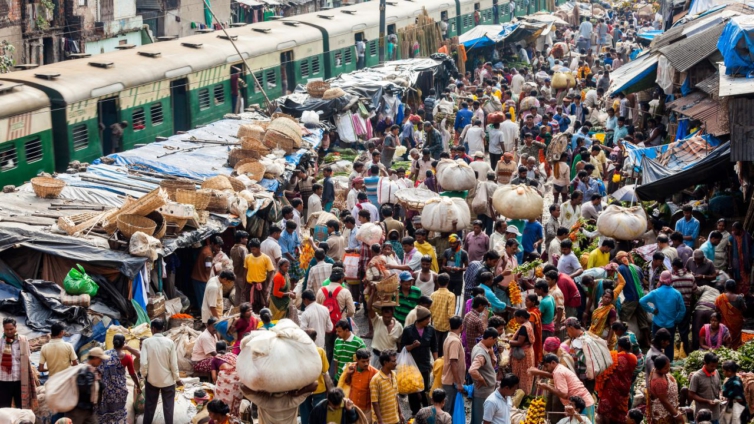
The world’s population will reach 8 billion people on Tuesday, representing a “milestone in human development” before birth rates start to slow, according to a projection from the United Nations.
In a statement, the UN said the figure meant 1 billion people had been added to the global population in just 12 years.
“This unprecedented growth is due to the gradual increase in human lifespan owing to improvements in public health, nutrition, personal hygiene and medicine. It is also the result of high and persistent levels of fertility in some countries,” the UN statement read.
Middle-income countries, mostly in Asia, accounted for most of the growth over the past decade, gaining some 700 million people since 2011. India added about 180 million people, and is set to surpass China as the world’s most populous nation next year.
But even while the global population reaches new highs, demographers note the growth rate has fallen steadily to less than 1% per year. This should keep the world from reaching 9 billion people until 2037. The UN projects the global population will peak at around 10.4 billion people in the 2080s and remain at that level until 2100.
Most of the 2.4 billion people to be added before the global population peaks will be born in sub-Saharan Africa, according to the UN, marking a shift away from China and India.
Environmental impact
Reaching an 8 billion global population “is an occasion to celebrate diversity and advancements while considering humanity’s shared responsibility for the planet,” UN Secretary General António Guterres said in the UN statement.
Having more people on Earth puts more pressure on nature, as people compete with wildlife for water, food and space. Meanwhile, rapid population growth combined with climate change is also likely to cause mass migration and conflict in coming decades, experts say.
And whether it’s food or water, batteries or gasoline, there will be less to go around as the global population grows. But how much they consume is equally important, suggesting policymakers can make a big difference by mandating a shift in consumption patterns.
Carbon emissions of the richest 1%, or about 63 million people, were more than double the emissions of the poorest half of humanity between 1990 and 2015, according to a 2020 analysis by the Stockholm Environment Institute and non-profit Oxfam International.
Resource pressure will be especially daunting in African nations, where populations are expected to boom, experts say. These are also among the countries most vulnerable to climate impacts, and most in need of climate finance.
Latest Stories
-
Opplift Youth Entrepreneurs Summit 2026 equips entrepreneurs with skills, mentorship and support
3 minutes -
Rival clubs want range of punishments for Man City
14 minutes -
Tear gas in Paris and Marseille as school protests grow across France
25 minutes -
Kane inspires England to win over Czech Republic in UEFA Nations League
34 minutes -
Finland orders halt to work on two Google data centres
42 minutes -
Substitute Merino scores twice as Spain win in Croatia
52 minutes -
Ronaldo wants Portugal ‘punishment’ but not retiring
60 minutes -
White House defends Trump comment to let Iran ‘take out’ LA and San Diego
1 hour -
Asos confirms hackers sent ‘unauthorised’ notification to app users
1 hour -
US televangelist Jim Bakker, disgraced from sex scandal and fraud, dies at 86
1 hour -
Congolese-born golfer to represent Ghana at Turkish Airlines World Cup grand final
1 hour -
Amazon wins global rights to stream Emmys in six-year deal
1 hour -
European Film Festival returns to Ghana after a 5-year break
2 hours -
PTA backs teachers’ strike, threatens street protest if gov’t misses October 30 deadline
2 hours -
Paramount takes over Warner Bros in $110bn Hollywood merger
2 hours