

Audio By Carbonatix
A recent study has pointed out that Ghana's population could double in approximately 30 years if the current annual growth rate of 2.1% continues.
The study, which is part of the 2022 Social Development Outlook Projects that the population could reach 61.6 million by 2051.
Ghana’s population is currently dominated by females, accounting for 50.7% of the total population.
One notable trend indicated by the study is the decline in the proportion of children in the population. The percentage of children aged 0-14 years has reduced from 41.3% in 2000 to 35.3% in 2021.
Additionally, the Greater Accra Region has surpassed the Ashanti Region as the most populous region in the country in 2021.
The Total Fertility Rate (TFR) has also shown a decline from 6.4 in 1988 to an estimated 3.7 children per woman in 2021. Moreover, life expectancy at birth has increased over the years, rising from 57 years in 2000 to 64 years in 2020.
The report indicates that the implications of Ghana's population growth for development planning are significant. The changing population structure alongside aging becoming more prominent, necessitate careful consideration in policy decision-making while addressing the needs of the youthful population, the well-being of the elderly should not be overlooked.
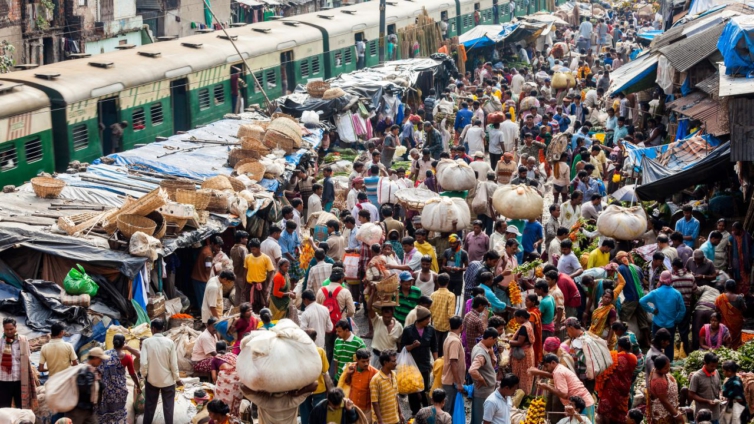
The concentration of the population in certain regions, particularly in cities like Accra, Tema, and Ashaiman, poses challenges in areas such as housing, sanitation, road traffic management, food security, and national security.
To mitigate these issues, there is a need to redirect population movements from heavily congested cities to areas with lower population density, while implementing strategies to create job opportunities in those regions.
The study makes several policy recommendations. Strengthening the provision of the new pension scheme for individuals working in the informal sector through public education is suggested to attract more participation. Spatial economies of scale should be considered to steer migration away from highly populated cities.
This requires effective implementation of the decentralization policy, supported by efficient planning, resource mobilization, prudent financial management, and program monitoring and evaluation.
Another concern highlighted in the study is the influx of young migrants from the West African sub-region into Ghana.
To address potential national security risks, the Ministry of Interior, national security agencies, and the Ghana Immigration Service are urged to collaborate on a study to document these immigrants, determine their status based on the ECOWAS Protocol, and take appropriate action.
Latest Stories
-
Ghana House launch will promote trade, investment and culture at Commonwealth Games – High Commissioner
11 minutes -
Minerals Commission pledges stronger mineral governance partnership with UMaT’s IMRIG
17 minutes -
Parents urged to create safe spaces for children to express emotions
20 minutes -
Child protection requires long-term investment beyond legislation – Gender Minister
22 minutes -
GH¢34 million of GARID funds spent on training, workshops and meetings, expenditure records show
24 minutes -
Ghana House reflects government’s economic diplomacy agenda ahead of Commonwealth Games – CGA President
30 minutes -
Denying suspects access to legal counsel is unconstitutional – Security Agencies must STOP the Lawlessness!
31 minutes -
Ghana AIDS Commission confirms ARV stock challenges, expects new supplies in three weeks
37 minutes -
Archaeology is Not a Useless Course
37 minutes -
Not every staff implicated in fraud steals money – Bank of Ghana
39 minutes -
NACOC trains SHS Guidance and Counselling Coordinators on drug prevention strategies
53 minutes -
The fraudsters don’t use hacking, they play on our minds – BoG’s Cab-Beyuo on Mobile Money Fraud
55 minutes -
The currency politics: Is it new?
60 minutes -
NADMO receives relief items from Latter-day Saints Church for flood victims
1 hour -
NPP directs members to join national clean-up exercise after constituency elections
1 hour