

Audio By Carbonatix
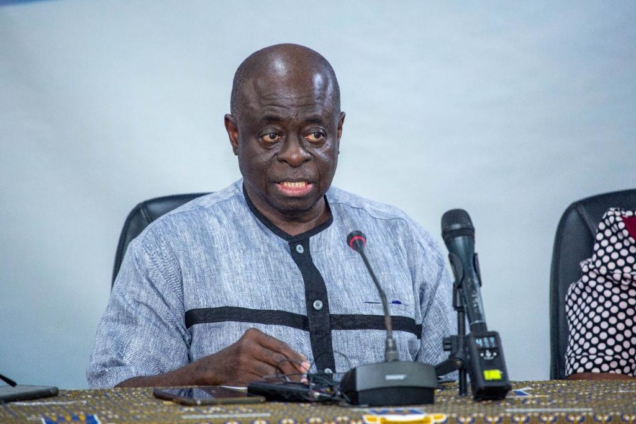
Democratic governance in Africa is facing severe headwinds, particularly at the level of supply,” Afrobarometer board chair E. Gyimah-Boadi warned at a conference in Accra organised by the Deutsche Gesellschaft für Internationale Zusammenarbeit (GIZ).
Themed "African governance futures: Strengthening democratic resilience amid disruption,” the conference brought together more than 80 governance experts from across the African continent to discuss the latest developments in the governance sector.
Speaking on “The future Africans want,” Gyimah-Boadi shed light on the aspirations of African citizens as well as challenges and their implications for democratic governance on the continent.
Sharing insights from the latest Afrobarometer data, based on surveys in 36 African countries in 2021/2022, he noted that a majority of Africans prefer democracy over any other system of government and endorse democratic norms, institutions, and practices such as multiparty competition, constitutional limits on presidential tenure, and free media.
However, while the desire to live under governments that are democratic and accountable remains fairly strong among Africans, some worrying trends have emerged as a popular subscription to democratic norms and institutions has waned in several countries.
“Between 2014/2015 and 2021/2022, support for democracy has steeply dropped in several countries: Mali, Burkina Faso, South Africa, and Guinea, respectively by 36, 26, 21, and 15 percentage points,” Gyimah-Boadi said.
He also highlighted a softening stance toward the role of the military in national politics.
While a solid majority still reject military rule, the level of opposition has declined significantly over the past decade.
Only three of the 30 countries surveyed consistently between 2014 and 2022 show increases in popular rejection of military rule, and a slim majority (53%) are willing to countenance military intervention if elected officials abuse their power.
Tolerance for military intervention is higher among young people (56% of those aged 18-36 years) than among older citizens (46% of those aged 56 years and above).
“Distressingly, this pro-military-intervention sentiment is a clear majority opinion in 22 out of the 36 countries surveyed, and this view is highly pronounced in Mali, Tunisia, Guinea, Tanzania, Côte d’Ivoire,” he said.
“Given their numerical superiority across the continent, it must be deeply concerning that younger Africans are more likely than their elders to express their readiness for military intervention – if need be.”
Highlighting the disparity between citizen aspirations and the supply of democratic governance, Gyimah-Boadi stressed that levels of satisfaction with the functioning of democracy have declined drastically in many countries.
He emphasised the urgent need for governments to bridge this gap, deliver accountable governance, and address the concerns of their citizens.
"The wind of democratic decline appears to be gathering momentum across Africa," he warned.
"The ability of governments to deliver democracy and accountable governance continues to lag behind the expectations of their citizens, setting the scene for confrontations between ordinary Africans and their domestic political authorities in the coming years.
"It is crucial for governments to prioritise democratic values, strengthen institutions, and meet the expectations of their people."
Latest Stories
-
‘Who did this to you and what was your crime?’ – Father grives over late Ivan Baidoo
2 minutes -
Israeli strikes kill three people in Gaza, medics say
4 minutes -
Tribute, tears flow as family bids farewell to 20-year-old law student
31 minutes -
2026 World Cup: Why pay a purse holder $10,000? – Assafuah questions Black Stars spending
48 minutes -
Stakeholders call for coordinated response to adolescent health challenges
60 minutes -
CNN and MS NOW say reporters denied White House access after Trump banned some media outlets
1 hour -
Mahama directs AMA, sister assemblies to prevent renewed dumping at Agbogbloshie
1 hour -
Deputy Health Minister charges military nurses to uphold compassion, excellence
1 hour -
Deputy Health Minister charges military nurses, midwives to remain dedicated to service
2 hours -
Three suspected robbers killed as police dismantle gang in Upper East
2 hours -
EU Ambassador pays courtesy call on IGP to strengthen security cooperation
2 hours -
Africa’s dependence on foreign powers betrays Nkrumah’s unfinished vision – P.L.O. Lumumba
2 hours -
3 suspects shot dead, 2 officers injured in Tilly Forest robbery follow-up operation
2 hours -
Nkrumah’s unfinished Pan-African project must be completed – P.L.O. Lumumba
2 hours -
Mysterious illness leaves children struggling to walk, hear as Mafi Kope community appeals for urgent medical help
3 hours