

Audio By Carbonatix
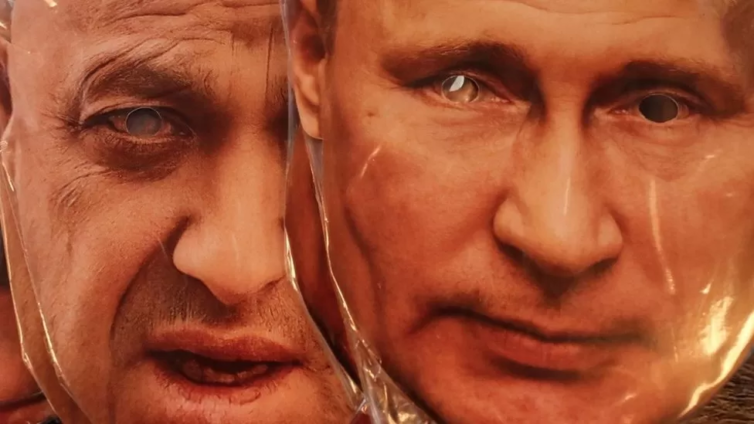
Wagner mercenary group head Yevgeniy Prigozhin has rejected an offer to his fighters to serve as a unit in Russia's army, President Vladimir Putin says.
He told Kommersant newspaper that many group commanders had backed the plan to be led by a senior Wagner figure during recent talks in Moscow.
He said Prigozhin's reply was "the guys do not agree with this decision".
The talks were held just days after Wagner's aborted mutiny on 23-24 June that challenged Mr Putin's authority.
Under the deal that ended the short-lived rebellion, the mercenaries were told they could join the regular Russian army or head to Belarus, a close ally of Russia.
Wagner has fought some of the bloodiest battles since Russia launched its full-scale invasion of Ukraine in February 2022.
However, the US military now assesses that the group is no longer "participating in any significant capacity in support of combat operations in Ukraine".
The comments were made on Thursday by Pentagon spokesman Pat Ryder, who also said that "the majority" of Wagner fighters were believed to still be in areas of Russian-occupied Ukraine.
In his Thursday's interview with Kommersant business daily, President Putin said that 35 Wagner commanders, including Prigozhin, had been present at the Kremlin meeting on 29 June.
Mr Putin said he had offered them several "employment options", including continued service under the command of a senior Wagner commander known by his nom de guerre Sedoi - Grey Hair.
"Many [Wagner fighters] were nodding when I was saying this," Mr Putin said.
"And Prigozhin, who was sitting in front and didn't see all this, said after listening: 'No, the guys do not agree with this decision,'" the president added.
He also said that "Wagner does not exist" when asked whether the group would be preserved as a fighting unit. "There is no law on private military organisations. It just doesn't exist."
This "difficult issue" of how to legalise Wagner fighters should be discussed in parliament, Mr Putin suggested.
The Kremlin appears to want to differentiate between the Wagner chief and regular Wagner fighters, driving a wedge between them, says the BBC's Russia editor Steve Rosenberg in Moscow.
He adds that this would explain the attempts in Russia's state media to discredit Prigozhin.
The current whereabouts of Prigozhin, a former Putin loyalist, are unknown.
Also on Thursday, US President Joe Biden said Prighozin should be careful of poisoning following the mutiny.
"God only knows what he's likely to do. We're not even sure where he is and what relationship he has [with Mr Putin]. If I were he, I'd be careful what I ate. I'd keep my eye on my menu," Mr Biden said.
Speaking after a summit with Nordic leaders in Helsinki, he also said there was no possibility of Mr Putin winning the war in Ukraine.
"He's already lost that war," the president said.
Mr Biden suggested that the Russian president would eventually "decide it's not in the interest of Russia, economically, politically or otherwise to continue this war. But I can't predict exactly how that happens."
He also expressed the "hope and expectation" that Ukraine would make enough progress in its current counter-offensive for there to be a negotiated peace settlement.
But more than a month into the long-planned Ukrainian counter-offensive, some Ukrainians and their allies are expressing concerns over the slow progress of Kyiv's troops.
Others believe that Russia's defences will eventually shatter, allowing Ukraine to seize strategically significant territory and to advance towards Crimea, Ukraine's southern peninsula annexed by Russia in 2014.
Ukraine has long asked Western allies to provide more military assistance to help it fight back against the Russian invasion.
Although it did not get a solid timeframe for Nato membership at this week's summit in Lithuania, it did receive from G7 members a long-term security framework to help guard against Russian aggression.
On Thursday, Ukrainian army commander Oleksandr Tarnavskyi told US broadcaster CNN that the military had received the first consignment of cluster munitions promised by the US in a controversial move.
He stressed that they would make a difference to Ukraine's fortunes on the front line. "We just got them, we haven't used them yet, but they can radically change [the battlefield]," Mr Tarnavskyi said.
Latest Stories
-
Fuel prices set to rise again from Sept 1; petrol could hit GH¢16.21 – COPEC
19 minutes -
REGSEC restricts Akwasidae celebrations in Denkyira amid security concerns
24 minutes -
Eric Adjei distributes free fertiliser to farmers in Jaman North
31 minutes -
Akufo-Addo urges NPP factions to unite behind Bawumia for 2028 victory
42 minutes -
NDC mourns Western Regional Elections Director Papa Assan
49 minutes -
Minerals Commission warns against fake job recruitment schemes
56 minutes -
10 recruits dismissed for defying phone ban – Interior Minister
1 hour -
IEAG commends GoldBod, BoG for improving forex stability
1 hour -
Bawumia donates GH¢50,000 to St Jude Catholic Church at Weija
1 hour -
Mahama calls for faster mobilisation of AU Peace Fund resources
1 hour -
Improved roads bring new vehicle options to Tumu-Bolga, Tumu-Tamale, Tumu-Wa routes
2 hours -
Cedi records 7.9% depreciation against US dollar in first half of 2026
2 hours -
GIS launches operation on anti-human trafficking and exploitative street begging
2 hours -
Awutu-Senya District Assembly organises clean-up ahead of Awubia Festival
2 hours -
Vice President Opoku-Agyemang receives Democracy Cup
2 hours