

Audio By Carbonatix
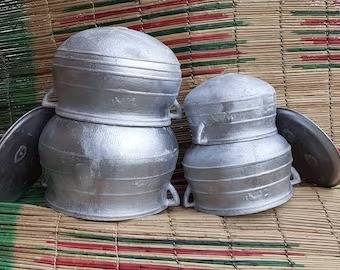
A new study on nearly 200 consumer products and food samples across four regions in Ghana has revealed worrying levels of lead contamination in the popular metal cookware, 'dades3n'.
The Global Rapid Market screening study which happens to be the largest of its kind highlights alarming levels of lead in consumer goods and food produced in low and middle-income countries including Ghana with far-reaching global consequences.
The study conducted by the environmental NGO, Pure Earth’s Blacksmith Initiative revealed that there are high levels of lead contamination in the following: Metal cookware (Dades3n) is 55%, ceramic cookware has 18%, toys for kids has 14%, and cosmetics (local mascara) has 7% of lead.
According to a report launched by the World Bank recently, the levels of lead exposure are extremely high which leads to a decrease in IQ.
“Children under 5 years old worldwide lost 765 million IQ points, those living in low and middle-income countries lost 729 million IQ points.”
“There is an average loss of 5.9 IQ points per child and this IQ points loss is 80% greater than the previous estimate,” the report stated.
Country Director for Pure Earth, Esmond Wisdom Quansah also reiterated that eating from these metallic cookwares puts individuals at a high risk of lead poisoning.
According to him, the experiment was conducted six times and the results were the same hence the institution wants to create public awareness so that other alternatives may be considered to avoid further damage.

“What this points to is that we are not safe, if you happen to be eating from any of these metallic or ‘dades3n’ cookware we are at risk of lead poisoning.”
“We’ve grown a step further, our scientists have conducted what we call the leach test to determine the percentage of leach of this lead concentration in this metallic or aluminium cooking pot into the food and we were surprised by the findings of the scientists.”
"52% of the pots tested leached lead in concentrations greater than our reference level of 10 ug/L. The repeated leaching “boils” in pots in general resulted in lower lead in leachate, although lead remained above the 10 ug/L reference level in most cases, so that is a cause for concern for everyone and that is why we are putting this information in the public,” he explained.
Latest Stories
-
Who is Attijariwafa Bank, the Moroccan Group set to take over majority stake in SG Ghana?
2 minutes -
University Librarians Ghana honours past leaders for distinguished service
8 minutes -
Seychelles President leads high-level dialogue on Africa’s digital future at FALS Global Conversations in New York
9 minutes -
24-hour economy requires faster justice for commercial cases – Chief of Staff
16 minutes -
Five Agric Colleges receive digital tools to drive climate-smart farming
20 minutes -
GPL 2026/27: Kotoko face Karela test as Hamza Obeng takes temporary charge
40 minutes -
Morocco strike late to overcome 10-man Black Starlets
58 minutes -
Nyaho-Tamakloe calls on Kurt Okraku to resign amid Black Stars struggles
1 hour -
Societe Generale Group agrees to sell Ghana subsidiary to Attijariwafa Bank
1 hour -
Accra: Fire breaks out in North Industrial Area at Avenor
1 hour -
Measure food systems progress not only by productivity but also ability to deliver healthy diets – AGRA
2 hours -
Black Stars: Seven years of decline while hashtagging love
2 hours -
Today’s front pages: Thursday, October 1, 2026
2 hours -
Gov’t to suspend GH¢1 D-Levy on diesel for October and November
2 hours -
Fire destroys belongings in Akweteyman apartment
3 hours