

Audio By Carbonatix
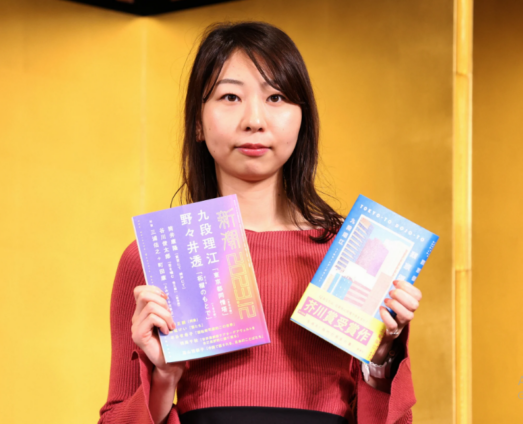
After Japanese author Rie Kudan won one of the country’s most prestigious literary awards, she admitted she’d had help from an unusual source — ChatGPT.
“I plan to continue to profit from the use of AI in the writing of my novels, while letting my creativity express itself to the fullest,” said the 33-year-old, who was awarded the Akutagawa Prize for the best work of fiction by a promising new writer on Wednesday.
The author then confirmed at a press conference that around 5% of her book “The Tokyo Tower of Sympathy” — which was lauded by committee members as “practically flawless” — was word-for-word generated by AI.
The novel centers around the dilemmas of an architect tasked with building a comfortable high-rise prison in Tokyo where law breakers are rehabilitated, and features AI as a theme.
Kudan said that, in her own life, she would consult ChatGPT about problems she felt she couldn’t tell anyone. “When the AI did not say what I expected,” she said, “I sometimes reflected my feelings in the lines of the main character.”
The author is not the first artist to generate controversy by using artificial intelligence, at a time where many creatives feel their livelihoods are threatened by the technology.
Last year, Berlin-based photographer Boris Eldagsen withdrew from the Sony World Photography Awards after revealing his winning entry in the creative photo category was created using the technology.
Meanwhile, authors like George R. R. Martin, Jodi Picoult and John Grisham joined a class action lawsuit against OpenAI, the company behind ChatGPT, last year, saying it used copyrighted work while training its systems to create more human-like responses.
And more than 10,000 authors, including James Patterson, Roxane Gay and Margaret Atwood, signed an open letter calling on AI industry leaders to obtain consent from authors when using their work to train large language models — and to compensate them fairly when they do.
Writer and prize committee member Keiichiro Hirano took to X, the social media company formerly known as Twitter, to say the selection committee did not see Kudan’s use of AI as a problem.
“It seems that the story that Rie Kudan’s award-winning work was written using generative AI is misunderstood… If you read it, you will see that the generative AI was mentioned in the work,” he wrote. “There will be problems with that kind of usage in the future, but that is not the case with ‘Tokyo Sympathy Tower.’”
But while some on social media expressed interest in Kudan’s creative use of AI and said they were now more interested in her work, others called it “disrespectful” to other authors who wrote without the help of the technology.
Latest Stories
-
‘It’s not a matter of evidence; it was a metaphor’ – Afenyo-Markin defends ‘drug lab’ comment
5 minutes -
Borrowing costs cut by more than half – Finance Minister
9 minutes -
KNUST students urged to look beyond Ghana for AI and robotics opportunities
11 minutes -
Odeibea Foundation extends energy equity initiative with solar streetlights in Akpato and Worwonyo
12 minutes -
Customs increases surveillance at ports, warns importers against concealing restricted items
15 minutes -
WERise urges women entrepreneurs to scale businesses, increase revenue and create jobs
16 minutes -
POWA calls for end to gendered attacks on Lordina Mahama, Samira Bawumia
21 minutes -
Zigx Foundation supports 50 vulnerable mothers in Akwapim North
21 minutes -
Nhyiramma Foundation calls for greater support for widows and single mothers
23 minutes -
Ghana must stop turning rivers into gutters through encroachment – Kwadwo Poku
25 minutes -
‘We’ll never compromise on quality’ – Agbodza tells Accra-Kumasi bypass supervisors
31 minutes -
Roads Minister urges motorists to drive cautiously on Accra-Kumasi Highway
31 minutes -
Hohoe MCE appeals for more relief supplies as flooding displaces residents
32 minutes -
‘Free Salomey now!’ – Women march to EOCO over Salomey Awitey Baffoe’s continued detention
34 minutes -
GES appeals to teachers to rescind strike and return to class as efforts to resolve concerns intensify
34 minutes