

Audio By Carbonatix
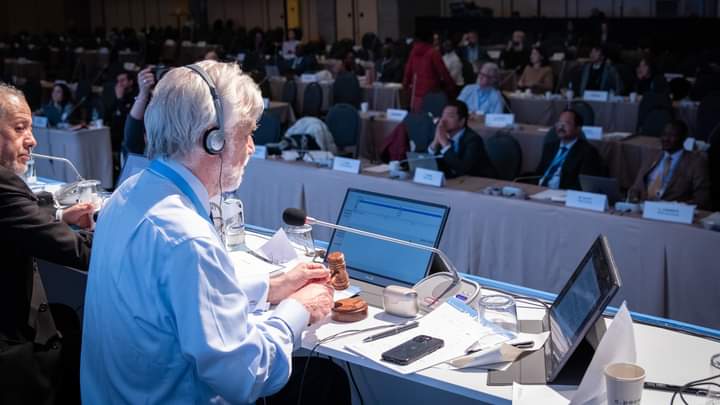
The Intergovernmental Panel on Climate Change (IPCC) has outlined its comprehensive plan for the seventh assessment cycle during the 60th Plenary session in Istanbul, Türkiye.
Over 300 delegates from 120 governments reached a consensus on the scientific structure of work, paving the way for essential reports on climate change science.
During the four-day meeting, governments committed to producing three crucial Working Group contributions to the Seventh Assessment Report: the Working Group I report on the Physical Science Basis, the Working Group II report on Impacts, Adaptation, and Vulnerability, and the Working Group III report on Mitigation of Climate Change. The Synthesis Report, summarizing the findings, is expected to be released by late 2029 after the completion of the Working Group reports.
Notably, the IPCC had previously decided to generate a Special Report on Climate Change and Cities and a Methodology Report on Short-lived Climate Forcers. Additional tasks for scientists include delivering a Methodology Report on Carbon Dioxide Removal Technologies, Carbon Capture Utilization, and Storage.
In a significant move, a revision of the 1994 IPCC Technical Guidelines on impacts and adaptation, along with the development of adaptation indicators, metrics, and guidelines, will accompany the Working Group II report as a separate product.
IPCC Chair Jim Skea highlighted the importance of these decisions, stating, "The Panel has taken a critical step in plotting the course for the entire cycle."
He said their decisions reflect the interest of member governments in getting policy-relevant, timely, and actionable scientific information as soon as possible and providing input to the 2028 second Global Stocktake, adding that, there is a notable emphasis on adaptation to climate change.
This decision signals the commencement of intensive scientific work for the new assessments of climate change science. It sets the tone for the organization's dedication to delivering crucial information for effective policy-making. Delegates also addressed budgetary matters and expanded the participation of observer organizations in the IPCC's activities, underlining this strategic roadmap's collaborative and inclusive nature.
Latest Stories
-
Amazon raises minimum hourly pay by $1 to $20 for US operations workers
5 minutes -
Insurance cost has largely remained stable – NPA boss on transport fare pressure
16 minutes -
Multiple unions threaten strikes at Barrick’s flagship Mali gold mine, documents show
35 minutes -
Infantino invited to African summit as he faces challenge to FIFA leadership
46 minutes -
NPA boss flags ‘recalcitrant’ transport operators raising fares arbitrarily
54 minutes -
GPRTU fare hike put on ice after talks with government – NPA boss reveals
1 hour -
I’m greatly worried – NPA boss on threat of higher transport fares
2 hours -
We are largely import-dependent – NPA boss on Ghana’s fuel vulnerability
2 hours -
Ghana’s fuel market is built for turbulence – NPA’s Edudzi Tamakloe explains why
2 hours -
Postponement not an option as Kenya races to be ready for Afcon 2027
2 hours -
ICE agent shoots and wounds man in Texas as locals demand answers
3 hours -
Ed Sheeran admits ‘mistakes’ at first show since Macklemore controversy
3 hours -
We are ready for the turbulence – NPA boss on Ghana’s fuel crisis
4 hours -
Lady I wanted serious relationship with said she’s not ready – Rema
4 hours -
I’ll never discuss my finances with man, even if he’s my husband – Nancy Isime
4 hours