

Audio By Carbonatix
The US has imposed its first nationwide limits on several harmful chemicals found in tap water across the country.
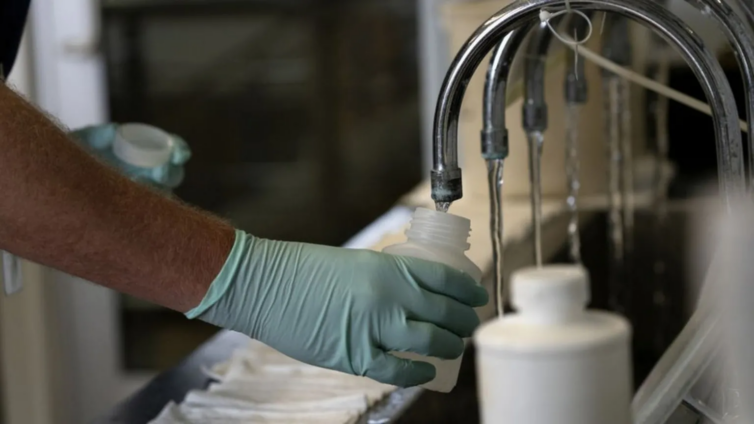
Research suggests millions of Americans likely drink water contaminated with PFAS chemicals, which are linked to a host of health issues including cancer.
On Wednesday, officials finalised a rule that requires local governments to remove six versions of the chemicals from water systems.
The government has allocated an extra $1bn (£794m) to help cover the costs.
In a statement, the US Environmental Protection Agency (EPA) said the new rule would provide long-lasting health benefits for Americans.
"Drinking water contaminated with PFAS has plagued communities across this country for too long," said EPA administrator Michael Regan. "Today, I am proud to finalise this critical piece of our roadmap, and in doing so, save thousands of lives and help ensure our children grow up healthier."
The new regulations give local municipalities three years to monitor for the chemicals in their water systems. If harmful levels of the so-called forever chemicals are found, governments have five years to reduce the amount of PFAS in the water supply.
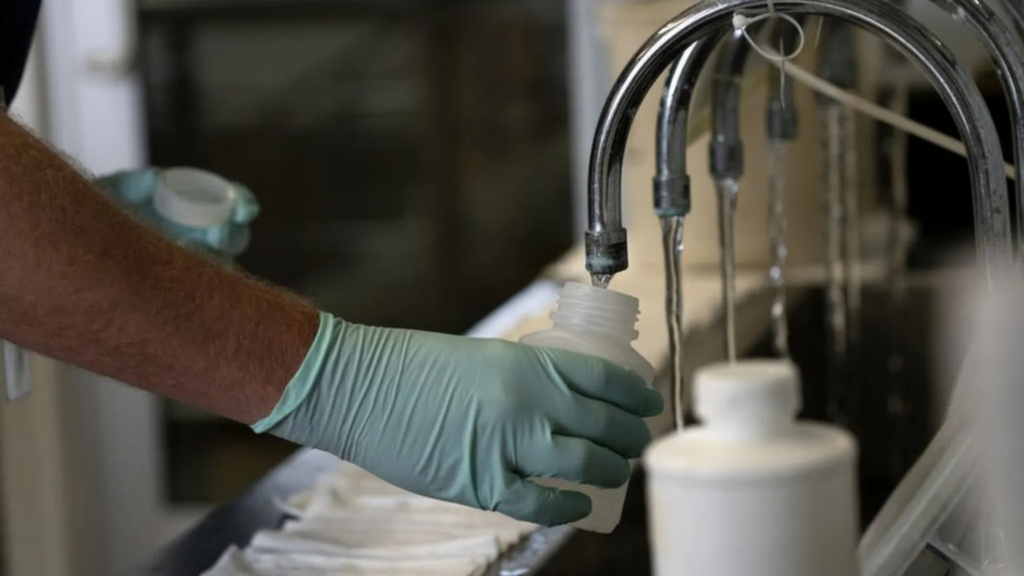
The EPA says between 6% to 10% of 66,000 public drinking water systems across the US may have harmful levels of pollutants.
PFAS, which stands for per- and polyfluoroalkyl substances, are a class of thousands of chemicals. The pollutants, which repel water, oil and grease, are used in hundreds of everyday products from dental floss to cookware to firefighting foams.
They are called "forever chemicals" because they remain widespread in the environment due to their lack of degradation, despite the fact most US companies have phased out manufacturing of the most well-studied types.
Common household filters - such as those made by Brita - are not designed to remove PFAS from drinking water, though more expensive systems that go under the sink, such as reverse osmosis filters, have been shown to reduce PFAS levels.
The EPA has found that almost no level of exposure to PFAS is safe. As well as cancer, the chemicals have been linked to reproductive issues, decreased immune function, thyroid disease and asthma.
Experts previously told the BBC that communities with poor drinking water systems stand to reap the most benefits from the new limits, but could also struggle to pay for the new treatment systems, which can cost millions of dollars for smaller towns.
The Biden administration says $9bn is available through the Bipartisan Infrastructure Law - passed in 2021 - to help communities address PFAS, as well as $12bn for general drinking water improvements.
Latest Stories
-
Ericsson celebrates 150 years of global innovation, 30 years of partnership and digital transformation in Ghana
28 minutes -
Ghana’s Ambassador to Serbia hosts African ambassadors’ September meeting in Belgrade
46 minutes -
Ghana closer to terrorism threat than ever before – WACCE
1 hour -
Gov’t must focus on quality everywhere, not categorisation of public schools – Ben Boakye
1 hour -
Tanko Computer backs comprehensive review of 1992 Constitution
1 hour -
2026 SHS placement crisis was caused by changes to established model – Former Dept. GES Director
1 hour -
GMet forecasts thunderstorms, rain across parts of Ghana tonight
1 hour -
GETFund to allocate GH¢250m to expand Category A SHS infrastructure
1 hour -
From dream homes to mortgage plans: JoyNews-Repubic Bank Habitat Fair closes Day 2 on a high
1 hour -
Afoko: Women’s inclusion key to NPP’s electoral comeback
1 hour -
2026 U-20 WWC: Black Princesses suffer another group stage exit after defeat to France
2 hours -
No policy to teach Arabic, Chinese in all public schools – Mahama
2 hours -
Students’ academic freedom central to Africa’s democratic future – Prof Appiagyei-Atua
2 hours -
Ɔdadeɛ Global Executives congratulate PRESEC on historic 9th NSMQ trophy
2 hours -
Mahama announces maize processing plant for Sissala area to tackle glut
2 hours