

Audio By Carbonatix
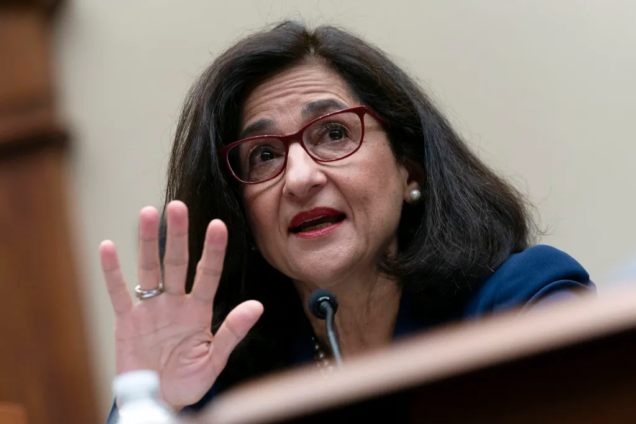
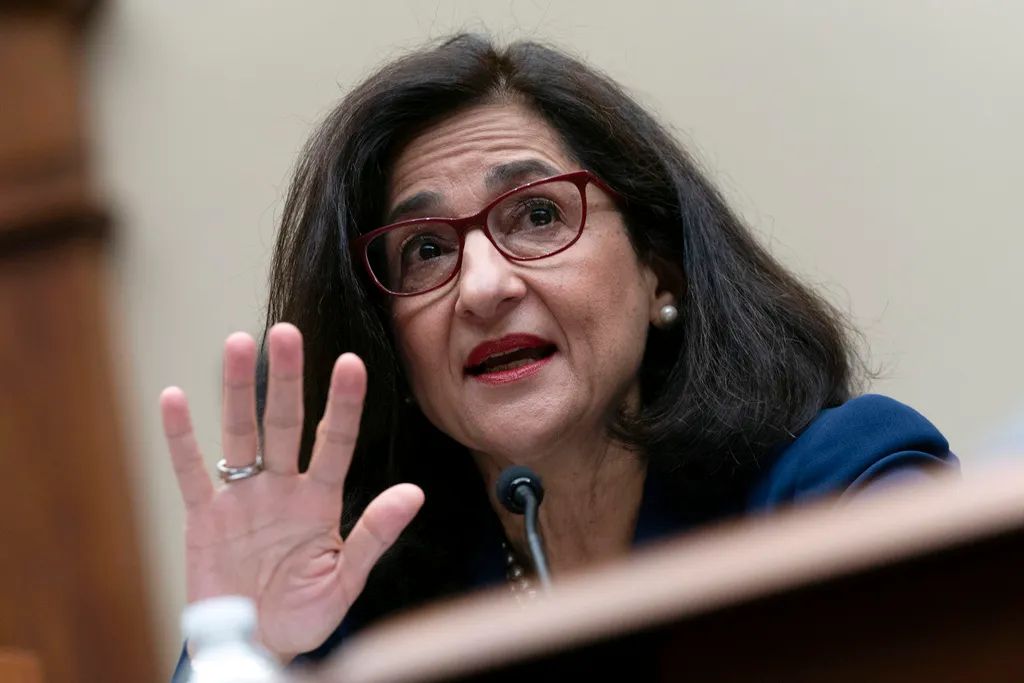
Columbia University President Minouche Shafik resigned effective immediately, the head of the prestigious New York university announced in a message to the university community on Wednesday.
Columbia’s upper Manhattan campus was at the center of a protest movement connected to the Israel-Hamas war that swept college campuses nationwide with thousands arrested and end-of-year graduation ceremonies disrupted. In her statement, she acknowledged those protests factored into her decision.
“This period has taken a considerable toll on my family, as it has for others in the community,” Shafik wrote. “Over the summer, I have been able to reflect and have decided that my moving on at this point would best enable Columbia to traverse the challenges ahead.”
In addition to the protests, the school in July removed three deans, who have since resigned, after officials said they exchanged disparaging texts during a campus discussion about Jewish life and antisemitism.
Shafik said in a July 8 letter to the school community that the messages were unprofessional and “disturbingly touched on ancient antisemitic tropes.”
Shafik said in her letter that she will return to the United Kingdom to lead an effort by the foreign secretary’s office reviewing the government’s approach to international development and how to improve capability.
“I am very pleased and appreciative that this will afford me the opportunity to return to work on fighting global poverty and promoting sustainable development, areas of lifelong interest to me,” she wrote. “It also enables me to return to the House of Lords to reengage with the important legislative agenda put forth by the new UK government.”
Shafik was named president of the university last year and was the first woman to take on the role, and she was one of several women newly appointed to take the reins at Ivy League institutions.
She had previously led the London School of Economics and before that worked at the World Bank, where she rose through the ranks to become the bank’s youngest-ever vice president.
Shafik also worked at the United Kingdom’s Department for International Development, followed by stints at the International Monetary Fund and the Bank of England.
She earned her master’s degree at the London School of Economics and earned a doctorate at Oxford University.
At the time of Shafik’s appointment, Columbia Board of Trustees chair Jonathan Lavine described her as a leader who deeply understood “the academy and the world beyond it.”
“What set Minouche apart as a candidate,” Lavine had said in a statement, “is her unshakable confidence in the vital role institutions of higher education can and must play in solving the world’s most complex problems.”
Latest Stories
-
GBA condemns attempted arrest of Manhyia South MP at Accra High Court
2 minutes -
Richmond Amoateng Foundation drives youth development and community unity in Juaben
7 minutes -
AFCON 2027Q: ‘Why don’t we have VAR in Africa?’ – Queiroz reacts to controversial penalty
7 minutes -
Safe NCD care needs leadership, investment and patient involvement – PharmAccess
11 minutes -
Pope warns a ‘paradise of machines’ could undermine humanity as he opens France trip
13 minutes -
AFCON 2027Q: Hervé Renard declines to respond to Queiroz over controversial penalty
18 minutes -
Teacher unions declare nationwide strike over unpaid promotion arrears and delayed negotiations
48 minutes -
Engage Now Africa and LDS church commission boreholes for five communities in Upper East
1 hour -
GPL 2026/27: Karela United bank on home form against Hearts of Oak
1 hour -
NPLs declined to 15.7% in August 2026
2 hours -
Existing Cedi notes to remain legal tender alongside Heritage Series – BoG
2 hours -
Consumer, business sentiments positive – BoG
2 hours -
There’ll be no GH¢500 Cedi note as part of Heritage Series issuance – BoG
2 hours -
Heritage Series Cedi notes to modernise cedi while preserving national identity – BoG
2 hours -
Ghana’s business environment at ‘Inflection Point’ as private Sector takes greater lead — Vish Ashiagbor
2 hours