

Audio By Carbonatix
A typical day on the bustling streets of Accra is filled with exhaust fumes and the noise of roaring engines. These are not just markers of a vibrant, dynamic city but also symptoms of a growing environmental challenge.
The transport sector is a significant contributor to Ghana's energy-related emissions, accounting for approximately 47.7% of the total. Urban areas, particularly the Accra Metropolitan Area (AMA), bear the brunt of this impact, hosting more than half of the country's total vehicle population.

This density exacerbates air pollution, compromising public health and environmental sustainability. Compounding the challenge, approximately 70% of daily commuters rely on privately run minibuses known as 'Tro-tros.' While essential for affordable public transport, these older vehicles often have higher emissions, contributing disproportionately to urban air pollution.
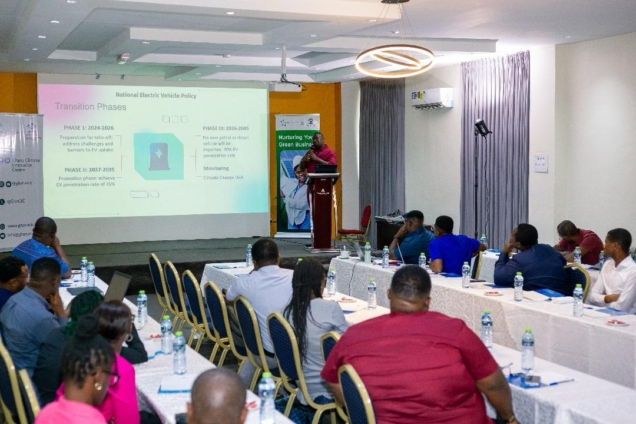
This pressing issue underpins the Ghana Climate Innovation Centre's recent policy roundtable event held on January 15, 2025, to launch the policy paper on "Enhancing Ghana’s E-Mobility Industry – Opportunities for Green SMEs and Essential Policy Reforms”.
This brought together researchers, policymakers, industry leaders, entrepreneurs, and development partners to chart a course for the growth of Ghana’s e-mobility sector while addressing its challenges.

The Policy paper was prepared by Dr. Godwin Kafui Ayetor, Chair of New Energy Vehicles and Sustainable Transport, and Prof. David Ato Quansah, Director of The Brew-Hammond Energy Centre (TBHEC) at KNUST. The keynote presentation delivered by Dr Ayetor provided a data-driven analysis of Ghana’s e-mobility landscape, outlining opportunities for green SMEs and essential policy reforms as detailed in their GCIC-commissioned policy brief.
The discussion underscored the transformative potential of e-mobility in Ghana’s transition to a low-carbon economy. Currently, electric vehicles (EVs) account for less than 1% of the vehicles on Ghana’s roads. However, with a projected 72% reduction in transport-related carbon emissions and the potential to avoid 2,900 premature deaths annually, a rapid shift to e-mobility is critical. The electrification of the transport sector could also create 84,000 direct jobs through investments in EV charging and hydrogen fueling infrastructure, as highlighted in GCIC’s Policy Paper.
Challenges and Opportunities for SMEs
While the opportunities are immense, Dr Ayetor highlighted significant challenges faced by SMEs in the e-mobility sector. These include the high cost of electric vehicles, insufficient charging infrastructure, limited financing, and a lack of technical expertise. For instance, Ghana currently has only seven public charging stations, with a vehicle-to-charging-station ratio of 2,428:1, far exceeding the recommended 10:1 ratio. Additionally, the purchase cost of EVs in Ghana remains prohibitively high—on average, three times that of conventional vehicles.
Despite these barriers, SMEs have the potential to drive innovation and scalability in e-mobility solutions. Entrepreneurs in areas such as micromobility, battery swapping, and EV assembly have already begun paving the way for growth. Companies like Solar Taxi, Wahu Mobility, and Kofa Technologies are leading the charge by introducing electric two- and three-wheelers, battery swap stations, and locally manufactured e-bikes tailored to the Ghanaian market.
Dr Ayetor stated that, ‘if we are switching to EV vehicles then it also means that we are transitioning the energy from petrol or diesel to electricity. You need to identify the viability of the electricity power generation sector for the government to champion such a transition.’
Consider the consequences of uploading the power generation pressure on the National grid, we must also look at the reliability indices to check the power quality. The system average interruption frequency measures the number of times the system experiences an outage during the year, Ghana’s index is not encouraging’.
Policy Recommendations
The roundtable discussion produced several actionable recommendations to address these challenges and accelerate e-mobility adoption in Ghana:
Incentives for EV Adoption: Reduce import duties on EVs and components while implementing tax rebates for local EV assembly and battery production.
Infrastructure Development: Expand charging infrastructure with a focus on renewable energy integration to ensure grid reliability and lower operational costs.
Financing for SMEs: Establish affordable green loan programs and concessional financing to help SMEs access the capital needed to scale operations.
Capacity Building: Provide technical training programs to address skill gaps in EV repair, maintenance, and charging infrastructure management.
The Role of Policy Advocacy
GCIC’s roundtable serves as a platform for policy advocacy, promoting evidence-based recommendations to transform Ghana’s e-mobility landscape. By leveraging insights from its Policy Papers, GCIC continues to lead efforts to create a supportive ecosystem for SMEs, attract investment, and drive sustainable economic growth.
As Ghana moves toward its 2045 target of achieving a 70% EV penetration rate, the outcomes of this roundtable discussion represent a significant step in building a resilient, inclusive, and low-carbon transport sector.
For more information on GCIC’s initiatives and policy advocacy, visit http://www.ghanacic.ashesi.edu.gh/impact/
Latest Stories
-
Zonda Tech expansion shows 24-hour economy taking shape – Mahama
1 minute -
US Embassy brings World Cup winner Amy Griffin, Kofi Sarkodie to empower Ghana’s female coaches
1 minute -
Sam Okudzeto faults AG for lack of consultation on proposed Standard Board Bill
2 minutes -
Report anyone demanding money for school placement – Education Ministry
5 minutes -
Over 100 CSOs, labour groups demand binding law and timelines for constitutional reforms
9 minutes -
Minister for Youth Development urges Russia to expand Ghana partnership to rural communities
20 minutes -
Mahama says 80% of DACF will go directly to district assemblies to accelerate development
24 minutes -
Adisadel College 2002 Year Group launches GH¢4.6m clean water legacy project
31 minutes -
GHIPO moves to secure global protection for Ghana’s Akpeteshie
40 minutes -
Zjili: Ghanaian Dagbani-language film premieres at Toronto International Film Festival
46 minutes -
Concerned Citizens of Yendi commend Farouk Aliu Mahama for supporting medical student
49 minutes -
NDC Youth Organiser aspirant Odarteifio pledges to tackle Northern Ghana’s irrigation crisis
50 minutes -
Daily Insight for CEOs: Attracting and retaining critical talent
60 minutes -
Ghana launches initiative to cut maternal deaths by 20% annually
1 hour -
Examination malpractice is rising, not declining – EduWatch
2 hours