

Audio By Carbonatix
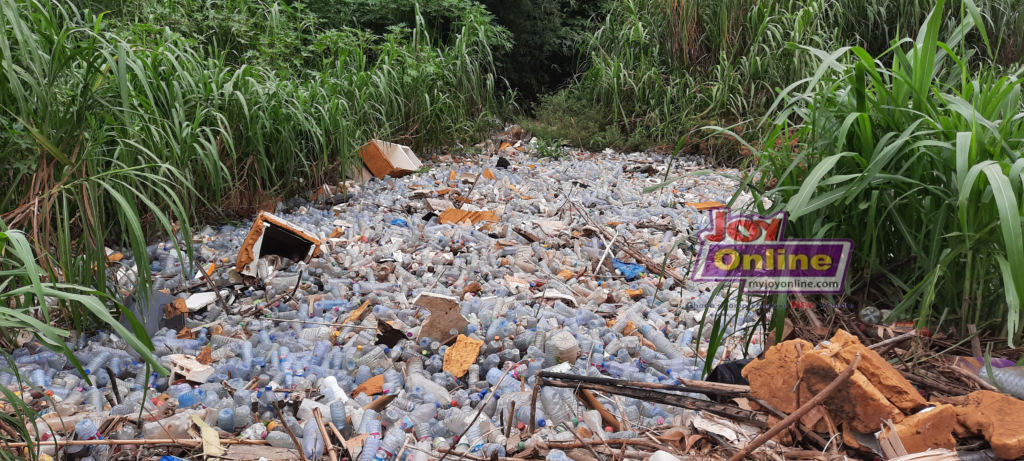
When I reported in 2018 that in Ghana, there were human beings who eat cooked food sold near public toilets overflowing with human excreta, someone replied. “The very thought of food close to putrefaction caused ‘my inside’ to heave. I threw up.” He described that sort of life as “sub-human”.
But it exists because Ghana is a democracy where election victory is determined by the mass of people for whom chaos and filth are normal.
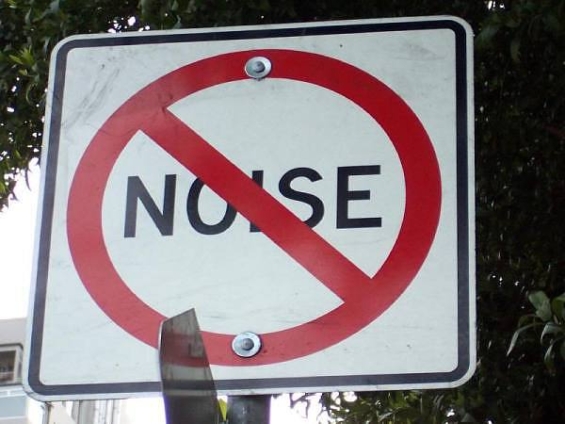
We have lost the war against noisy religiosity.
Let’s ask ourselves, “Why have our governments or city authorities lost the war against noise while it is so easy for Ga and Nzema traditional areas to enforce a ban on noise before Homowo and Kundum and in certain cases, a whole city, because a queenmother or a chief is to be buried?
I heard one Muslim ask on TV: “Without the call to prayer through loud speakers, how else can we gather and pray?” My reaction was a question: How are Muslims in Sweden, the UK, etc, called to pray?
A friend in the UK (a Ghanaian) says he has never heard the Muslim call to prayer ever since he entered that country 20-plus years ago.
In London, he says, neighbours would call in the police to measure noise levels from buildings being used for Christian services. If the unbearable noise persists, action follows.
Not in Ghana. My beef is the use of loud speakers in churches whose ‘auditoriums’ are no bigger than three metres square. The message seems to be: “The noisier the holier”.
See what elections have reduced us to!
I fear where Rwanda’s President Paul Kagame will be headed after death. Hell? On April 4, 2018, Kegame closed hundreds of churches and dozens of mosques for failing to comply with building controls and for noise pollution. Six Pentecostal pastors who protested the church closures were arrested and accused of “illegal meetings with bad intentions.”
In the same year (2018), Rwanda passed a law that required pastors to have a Theology degree before they start their churches “so that they teach correct doctrine.”
Drastic? I don’t think so. Ghana needs this law. We need to be protected against ourselves: our illiteracy has conspired too long with our inherent superstitious nature to render us too vulnerable.
The Rwandan government has also banned mosques from using loudspeakers during the call to prayer in the capital city, Kigali. There were initial noises against the ban, but by and large, the Muslims in the country have complied.
How do I recognise a democracy?
When government moves to ensure that the health of individuals, or the majority of the people, is protected against filth, that is democracy; when city guards are sent to rid the streets of hawkers, making it possible for the majority of citizens to enjoy unimpeded movement in the streets that is democracy; when squatters are cleared from sites meant for national structures to ensure the greater good of the greater majority of the people, that, too, is democracy.
In Singapore (a Third World country), people who put spent chewing gum anywhere other than in a bin are fined S$100 (100 Singapore dollars), and those who fail to flush a public lavatory are fined S$100. That is democracy.
In Rwanda, Paul Kagame has been criticized and insulted; his actions have been labeled authoritarian. That criticism is coming from the same people who did not see wisdom in his ban on plastic bags in 2008 but are today hailing Kigali for becoming the first city in Africa to be awarded the Habitat Scroll of Honor in recognition of its “cleanliness, security and urban conservation model.”
When Ban Ki-Moon, former UN Secretary General, visited Rwanda in 2014, he could not hold his tongue. He confessed openly that he had travelled to many places, “but Kigali is one of the cleanest cities in the world.” This was a country which, only 10 years earlier, was the dirtiest in Africa. It took leadership.
In 2015, Ghana was ranked the 7th dirtiest country in the world. It was the reason why on March 31, 2015, the World Bank, acting as administrator of the Global Partnership on Output-Based Aid (GPOBA), signed a $4.85 million grant agreement with the Government to provide sustainable toilet facilities in low income areas of Greater Accra. Justification for the grant was that “about 50 percent of households in the Accra metropolitan region”.
In 2017, Akufo-Addo promised to make Accra the cleanest city in Africa! Eight years have passed. He and two or more “successful” Ministers for Sanitation have left. We rank no better in noise and filth.
It takes leadership. I have seen governments in Ghana attempt to move against congestion and noise pollution. Fear of losing the election stopped them.
In Ghana, the only way to win this war is when sanitation and noise become election issues for Makola and Kejetia market women, trotro and taxi drivers, kayayei, etc.
Latest Stories
-
AFCON 2027Q: Somalia, Niger to play home matches at Accra Sports Stadium as CAF clears facility
2 minutes -
Opare Addo says youth programmes are preparing Ghanaians for global opportunities
6 minutes -
ADB Ghana Medicals leads engineering works, joins donor partners for $100m Otumfuo Cancer Centre
11 minutes -
Afenyo-Markin warns of NDC misinformation and disinformation strategy ahead of 2028 elections
15 minutes -
Rhythms on Da Runway returns on 28th November with 16th edition
31 minutes -
Zonda Tech expansion shows 24-hour economy taking shape – Mahama
41 minutes -
US Embassy brings World Cup winner Amy Griffin, Kofi Sarkodie to empower Ghana’s female coaches
41 minutes -
Sam Okudzeto faults AG for lack of consultation on proposed Standard Board Bill
42 minutes -
Report anyone demanding money for school placement – Education Ministry
45 minutes -
Over 100 CSOs, labour groups demand binding law and timelines for constitutional reforms
49 minutes -
Minister for Youth Development urges Russia to expand Ghana partnership to rural communities
1 hour -
Mahama says 80% of DACF will go directly to district assemblies to accelerate development
1 hour -
Adisadel College 2002 Year Group launches GH¢4.6m clean water legacy project
1 hour -
GHIPO moves to secure global protection for Ghana’s Akpeteshie
1 hour -
Zjili: Ghanaian Dagbani-language film premieres at Toronto International Film Festival
1 hour