

Audio By Carbonatix
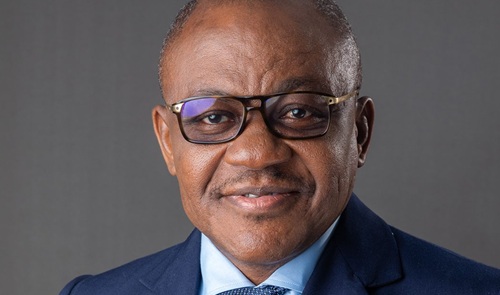
The Chief Executive Officer of the Fair Wages and Salaries Commission (FWSC), Dr George Smith-Graham, says the current impasse between the government and the Ghana Registered Nurses and Midwives Association (GRNMA) is not the fault of any one institution but rather legal and fiscal constraints.
Speaking on JoyNews’ The Pulse on Tuesday, June 10, Dr Smith-Graham appealed to the striking nurses and midwives to return to work to allow negotiations to continue.
According to him, the Fair Wages and Salary Commission is committed to resolving the dispute but needs cooperation from all parties involved.
“We have started engaging; it’s not difficult. The most important thing is for them to call off the strike. We have appealed to them to call off the strike, and once they do that, we will continue with our engagement,” he said.
Dr Smith-Graham explained that the collective agreement was signed in May 2024 and was immediately forwarded to the government for implementation.
However, implementation was halted due to a court injunction tied to a legal challenge against the government.
“It is no fault of anybody that we have not been able to implement the conditions of service up to today,” he explained.
“Just around that same time, the government was injuncted by a court injunction not to implement the signed conditions of service. So the government was injuncted and Fair Wages was injuncted, including all the institutions that were supposed to implement the conditions of service.”
The court process, he said, dragged on until January 2025, noting that after arbitration was concluded, the FWSC was directed to proceed with implementation.
However, he stated that because the national budget for 2025 had already been submitted to Parliament in advance, the agreed terms could not be captured.
Dr Smith-Graham further revealed that even the major teaching hospitals, which are typically autonomous in some of their budgetary planning, could not make provisions for the agreement in their internal budgets, compounding the challenge.
He proposed two pathways out of the deadlock.
“Our options on the table are two: Call off the strike, come back, and let’s continue with the engagement. The second is that these conditions of service were signed in May 2024, and if it was not budgeted for, our proposal is that let’s shift the period of the implementation to January 2026 so that the expiry date of the conditions of service can be shifted to December 2028. So you will enjoy the full two-year implementation of your conditions of service, and the government will also have the fiscal space.”
The strike by nurses and midwives, now in its second week, has had severe impacts on health service delivery nationwide.
Government negotiators are urging restraint and continued dialogue, while GRNMA has insisted that it will only return to work once implementation begins.
Latest Stories
-
NSMQ 2026: Holy Child School storms back from two-year NSMQ absence to book One-Eighth ticket
1 hour -
GNFS dismisses reports of unpaid 2025 rent allowance
2 hours -
Gordon Asare-Bediako steps down from NPP Communications Director race, backs Dennis Aboagye
2 hours -
GES dismisses requirement for newly promoted teachers to submit documents for salary adjustments
3 hours -
Meko Bono 2026: Vice President pledges agricultural revival as Atebubu hosts grand homecoming
4 hours -
Russian skydiver Sergey Boytcov sets world record with 11,551-metre stratosphere jump
4 hours -
Ablakwa-led committee submits five reports to Mahama ahead of 2027 AU chairmanship
4 hours -
Africa not seeking Western cash in reparations campaign – Ablakwa
4 hours -
Production decline, reserve depletion threaten Ghana’s upstream sector – Jinapor
4 hours -
Surveyors caution against treating compensation disputes as professional misconduct
4 hours -
Mahama calls for AU dialogue on migration after South Africa xenophobic tensions
4 hours -
I haven’t experienced any envy in the gospel music industry — Ohemaa Mercy
6 hours -
Prayer does not solve everything — Ohemaa Mercy
6 hours -
New PURC office symbolises stronger consumer protection – Dr Jinapor
6 hours -
Rev. Wengam re-elected Assemblies of God, Ghana General Superintendent
6 hours