

Audio By Carbonatix
Government spokesperson Felix Kwakye Ofosu says the Mahama administration intentionally excluded the implementation of nurses’ new conditions of service from the 2025 budget.
The Abura-Asebu-Kwamankese MP explained that this was because negotiations with the Ghana Registered Nurses and Midwives Association (GRNMA) had not yet concluded since the new administration took office.
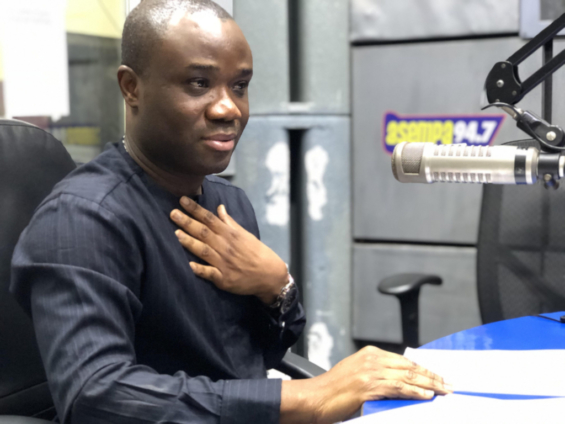
Speaking Tuesday night on PM Express, Mr. Kwakye Ofosu justified the omission at a time when a nationwide strike by nurses and midwives continues to cripple healthcare delivery.
The strike follows a failed emergency meeting with the Ministry of Health, where the GRNMA rejected government’s proposal to defer the implementation of their new conditions of service until 2026.
“We chose not to budget for it because negotiations were incomplete,” Mr Kwakye Ofosu stated.
“Given that discussions had not been concluded and we had not arrived at a place where we could comfortably add it to the national budget, it was necessary to hold further deliberations.”
He argued that including the nurses’ package without a final agreement could have destabilised the fiscal framework.
“You can’t put that quantum of unbudgeted expenditure on yourself,” he warned.
“Otherwise, you throw the whole budget off gear. We’ll be back to square one—the same place Ghanaians were, for which reason they called for a change of captain.”
Kwakye Ofosu acknowledged that government respects the critical role of nurses but maintained that economic prudence must guide all decisions.
“We take the view that the conditions of service must be the subject of further engagement between government and the nurses, so that whatever outcomes are reached are satisfactory to both parties.”
Pressed by host Evans Mensah on why the current administration would renege on an agreement by the previous government, Kwakye Ofosu replied,
“Government is a continuum, yes. But there’s a reason why governments change. Governance must be conducted responsibly. If you see that there’s a difficulty arising from an action taken by a previous government, you have a responsibility to take corrective measures.”
He said that fiscal slippages, especially those caused by unbudgeted spending, had significantly contributed to Ghana’s economic troubles in recent years.
“One of the reasons we got to a place where hardships became pervasive in this country was fiscal slippages, which arose mostly from unbudgeted expenditure.”
According to Kwakye Ofosu, the Finance Ministry estimates the annual cost of implementing the nurses’ full conditions of service at GH¢2 billion, but some figures suggest it could be even higher.
He questioned whether such a commitment could be met without jeopardising the government’s ability to cater to other public sector demands.
“There are other categories of public sector workers who also have needs that government must meet. These are considerations that were factored into the equation.”
When asked why the agreement wasn’t honoured as part of the transition process, despite being in the handing-over notes, Kwakye Ofosu responded:
“You don’t put something in a budget merely because you’ve met it. There were many things the previous government was doing that we have not continued because we found that continuing them would be more deleterious than beneficial.”
As the strike bites, the government says it is taking steps to mitigate its impact. Kwakye Ofosu revealed that alternative healthcare facilities—public, private, and institutional—have been identified where nurses are not participating in the strike.
“The duty of government is to direct patients in that way so that they don’t suffer unduly, even as we take urgent steps to address this.”
He reiterated government’s willingness to return to the negotiation table.
“We still retain hope that they [the nurses] will do so. It is regrettable that they have had to call this industrial action.”
Despite the stand-off, Mr Kwakye Ofosu insisted government cannot act unilaterally.
“We know we cannot take unilateral decisions. We need to engage our social partners, and in this particular instance, it’s the nurses.”
Latest Stories
-
LA 2028: Black Queens hold final training session ahead of second leg against Mauritius
12 minutes -
Standards are not Seasonal: What the EC appointments teach both sides
25 minutes -
King Mohammed VI urges private sector to create youth jobs and spread benefits of growth
26 minutes -
KGL U17 Colts 2026: Greater Accra win title after penalties win over Western Region
26 minutes -
UK Investment Roadshow opens in London to advance UK-Ghana growth partnership
37 minutes -
Assemblies of God requires pastors to resign before entering partisan politics – Rev. Wengam
47 minutes -
Ghana targets 20% annual reduction in maternal deaths – Health Minister
52 minutes -
Cyber attacks in Africa grow faster than global rate, report finds
54 minutes -
Ghana signs UAE deal to create 5,000 overseas jobs
1 hour -
One Million Coders Programme targets 100,000 digital jobs in two years – Sam George
1 hour -
John Jinapor, Italian Ambassador explore opportunities for energy sector investment
1 hour -
NHIA seeks legal reforms to support Free Primary Healthcare
1 hour -
Beatrice Annan defends Afi Agbenyo’s EC appointment, cites record of gender advocacy
1 hour -
Ghana seeks investment deals in Bangkok amid global economic crises
1 hour -
IMF raises Ghana’s 2026 growth forecast to 5.7%, sees inflation falling to 4.8%
1 hour