

Audio By Carbonatix
After six years of intensive research, grassroots engagement and capacity building, the European Union-funded Resilience Against Climate Change, Social Transformation Research and Policy Advocacy (REACH-STR) project has officially drawn to a close — but its impact on climate resilience and inclusive rural development in northern Ghana may echo for years to come.
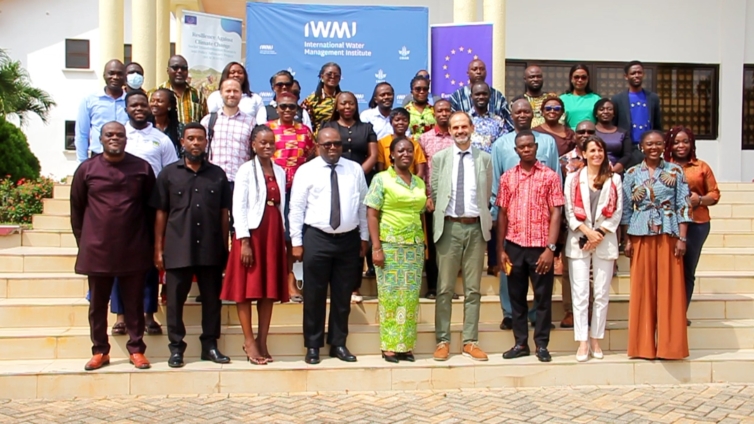
Under the theme “Enhancing Climate Resilience and Social Transformation: REACH-STR's Legacy,” stakeholders gathered in Accra to mark the successful conclusion of the initiative.
The event celebrated achievements that span transformative planning tools, academic research, and policy-level engagements aimed at addressing social vulnerability in the face of climate change, particularly in the Upper West and Savannah Regions.
The REACH-STR project forms part of the broader EU-Ghana Agriculture Programme (EU-GAP). It was implemented by the International Water Management Institute (IWMI) in partnership with the University of Ghana-Centre for Migration Studies (UG-CMS), SDD University of Business and Integrated Development Studies (SDD-UBIDS), and Council for Scientific and Industrial Research-Science and Technology Policy Research Institute (CSIR-STEPRI).
Head of Cooperation at the European Union Delegation to Ghana, Massimo Mina, praised the project for confronting some of the region’s most pressing development challenges.
“We particularly commend the project's focus on enhancing climate resilience and social transformation, especially within northern Ghana. This is crucial for achieving inclusive and sustainable economic growth,” Mina noted.
He also stressed the need to re-adapt economic structures in response to growing climate pressures.
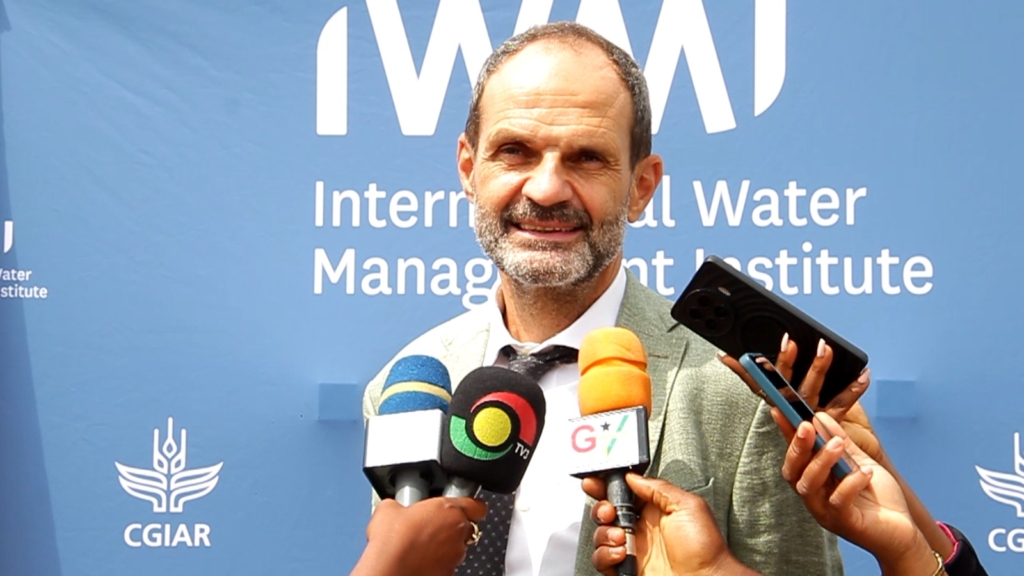
“Agriculture has a very key role in improving its resilience to face the consequences of climate change, and that's why the European Union is investing heavily in the agricultural sectors, in particular to promote some practices in the agriculture, which can help to improve their resilience, and the agriculture is actually one of the priority areas, we are focusing in particular in the north of the country, because that's where the consequences of climate change are stronger, and we do it with an integrated approach,” he added.
Over its six-year lifespan, REACH-STR developed a robust Social Transformation Research Framework to guide inclusive rural development.
It funded 19 Master’s and PhD students, produced evidence-based policy tools like gender and climate vulnerability hotspot maps, and convened high-level engagements, including dialogues ahead of global climate summits such as COP26 and beyond.
Director of Women in Agricultural Development (WIAD) at the Ministry of Food and Agriculture, Paulina Addy, urged for the project's momentum to be maintained.
“The legacy of the REACH-STR project, particularly in advancing our understanding and application of social transformation in enhancing climate resilience, must be sustained,” she said.
She also emphasised continued collaboration among stakeholders, noting that regular exchange of knowledge will be vital in ensuring the durability of the project’s outcomes.
The event highlighted that REACH-STR was not just a research exercise, but a policy-shaping catalyst. District-level development officers across the country were trained using practical tools to plan in ways that consider gender, migration, and environmental vulnerabilities.
A notable output is the interactive hotspot map covering all 261 districts in Ghana — a resource that provides disaggregated data across agriculture, energy, and water sectors.
According to IWMI and its academic collaborators, these tools offer a foundation for more responsive policymaking that can withstand the shocks of climate variability and better serve marginalized communities, especially women and youth in agriculture.
As the curtains fall on the REACH-STR project, partners are hopeful that the knowledge generated will be mainstreamed into Ghana’s development frameworks.
Latest Stories
-
Asante Kotoko management doesn’t involve me in supporters mobilization – McBrown
17 minutes -
Frustration builds in Indiana town struggling without power for 12 days
26 minutes -
‘Jesus was accused; he kept quiet’ – Afenyo-Markin softens stance on legal action against Gyamfi
37 minutes -
NSMQ 2026: Accra High steals one-eighth ticket from Sunyani SHS in stunning final-round twist
38 minutes -
Kejelcha breaks men’s half marathon world record by 29 seconds
39 minutes -
Nkoko Nkitinkiti programme has failed – Afenyo-Markin claims
1 hour -
NDC yet to deliver key 2024 campaign promises – Afenyo-Markin
1 hour -
Adamus welcomes 12-month roadmap to revive mine, restore investor confidence
2 hours -
T-bills: Government records 162% oversubscription, interest rates slump
2 hours -
UPSA moves to turn student research into market-ready solutions
2 hours -
Presby SHS, Suhum honour late coordinator with dominant One-Eighth qualification
3 hours -
NDC Volta team tracks development projects across four districts
3 hours -
NSMQ 2026: St. Monica’s SHS snatch one-eighth ticket from Amenfiman SHS in dramatic showdown
3 hours -
Why celebrate $2.62bn FDI while losing $1.7bn under the Domestic Gold Programme? IERPP asks
3 hours -
COKA urges NPP executives to return to party’s core values ahead of 2028
3 hours