

Audio By Carbonatix
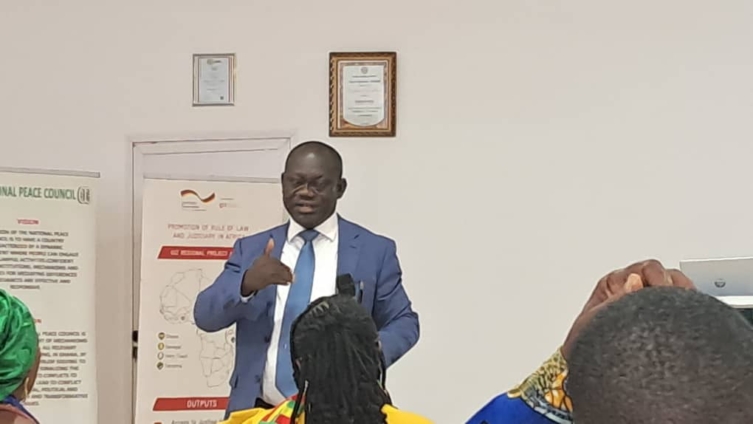
Private legal practitioner and lead facilitator for an Alternative Dispute Resolution (ADR) training for members of the Volta and Oti Regional Peace Councils, Esq. Alex Nartey, has emphasised that the Council’s strength lies in discreet engagement rather than issuing public condemnations when addressing sensitive conduct.
Speaking at the three-day workshop, organised by the Volta Regional Peace Council with support from GIZ, Esq. Nartey explained that measured and diplomatic approaches in political discourse are essential to safeguarding Ghana’s democracy.
“The Peace Council’s role is not to shame people publicly but to engage them privately, reason with them, and help them see the impact of their words or actions,” he said. “When individuals are approached in this manner, many reflect, acknowledge their excesses, and make positive changes.”
He further noted that partisan politics does not harm democracy unless it suppresses the rights of other political parties to operate freely. According to him, a vibrant democracy is one where multiple parties — beyond the NDC and NPP — contribute to the exchange of ideas for the benefit of all Ghanaians.
Esq. Nartey also highlighted the Peace Council’s most pressing needs: logistics and skilled human resources capable of applying interest-based approaches to manage crises. He stressed that much of the Council’s effectiveness is achieved behind the scenes, where dialogue and mediation yield more lasting results than public statements.
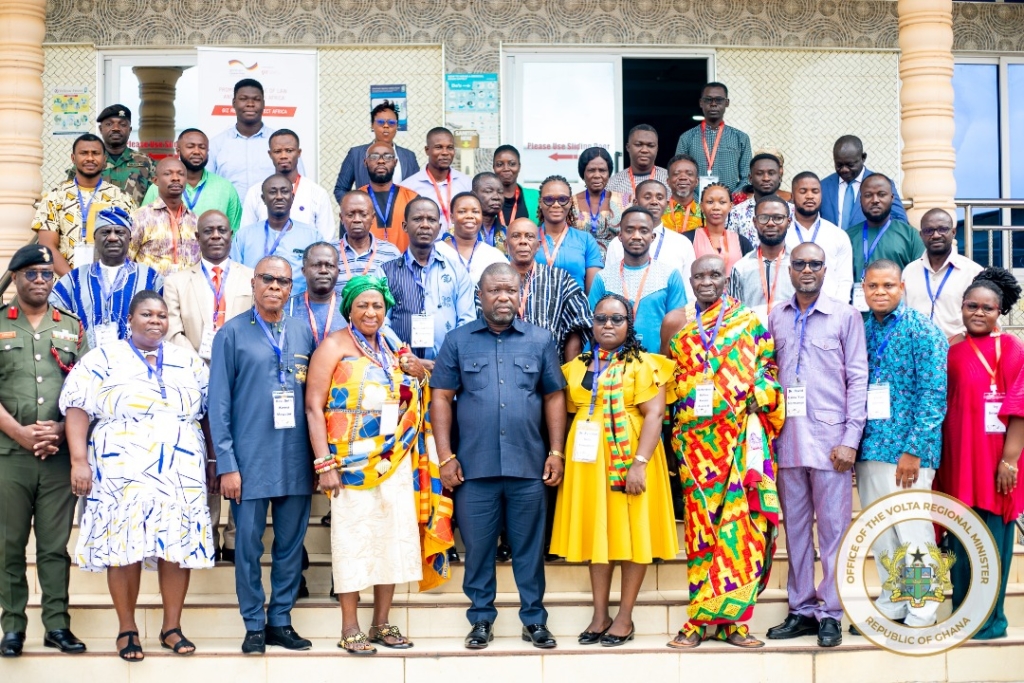
On the opening day of the training, participants were introduced to the legislative framework governing the Peace Council, its role as a neutral third party in conflict resolution, guidelines on hate speech and indecent expressions, as well as theories and principles of conflict.
Participants expressed enthusiasm about the training, pledging to use the knowledge acquired to promote peace, foster understanding, and make a meaningful difference in their communities.
The training also included practical ADR simulations and advanced conflict management techniques aimed at strengthening the Councils’ capacity to resolve disputes effectively.
Latest Stories
-
Fix Tema Port, roads to cut logistics costs and boost trade — Oro Oil CEO, Maxwell Commey
1 minute -
Undeclared forex undermines financial intelligence, formal market – BoG Governor
12 minutes -
GIPA CEO calls for stronger coordination to provide a clearer picture of investment activity
1 hour -
Afenyo-Markin’s lawyers reject claims he is avoiding service on Sammy Gyamfi
1 hour -
Photos: Mahama swears in Ayariga, Zanetor as new Ministers
1 hour -
Check out the list of 100 universities not recognised by GTEC as of August 2026
2 hours -
Mahama in Luanda for 21st AU Extraordinary Session on conflict resolution
2 hours -
Mahama tasks Zanetor with pursuing job creation without harming environment
2 hours -
We will deliver on government’s commitments to Ghanaians — Ayariga assures Mahama
2 hours -
Restore order to Ghana’s cities and stop encroachment on public spaces — Mahama to Ayariga
2 hours -
Ayuda CEO Benjamin Cyriaano, Vida Adotey Akweley shine at JoySports CEO penalty shootout
2 hours -
Mahama tasks Zanetor to put science, technology at the centre of national development
2 hours -
JoySports Invitational 2026: The Luckiest make a splash, sweep 1st and 2nd in swimming
3 hours -
Make decentralisation meaningful and assemblies accountable – Mahama charges Ayariga
3 hours -
Protect freedom of worship, prevent faith-based discrimination — Mahama charges Ayariga
3 hours