

Audio By Carbonatix
The US Chamber of Commerce has filed a lawsuit against the Trump administration's new $100,000 (£74,000) fee on H-1B visas for skilled foreign workers.
The fee "will make it cost-prohibitive" for US employers to use the programme, said Neil Bradley, Chief Policy Officer at the pro-business group.
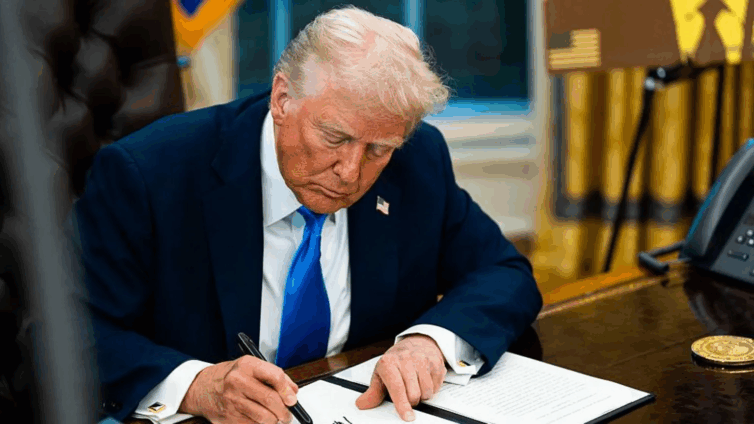
Trump signed an executive order last month instituting the fee, arguing the visa programme has been abused. Critics have said it undercuts the American workforce. It is used heavily by the US tech sector, both by major companies and small startups.
The White House responded to the suit by calling the fee lawful and a "necessary, initial, incremental step towards necessary reforms" to the programme.
Mr Trump's order only applies to new visa requests in the programme and vows to restrict entry unless a payment was made.
The move drew the ire of tech executives, including billionaire Elon Musk, who have argued that the H-1B programme enables the US to attract top talent from around the world.
Mr Musk, Microsoft's Satya Nadella, and Sundar Pichai, the CEO of Google-parent Alphabet, are among the executives who began their careers in the US on H-1B visas.
Mr Trump also set up a new "gold card" to fast-track visas for certain immigrants in exchange for fees starting at £1m.
The Chamber of Commerce argued in its complaint Tuesday that if implemented, "the fee would inflict significant harm on American businesses," forcing them to either dramatically increase their labour costs or hire fewer highly skilled employees."
But in a press release, the Chamber, which represents more than 3 million businesses, also praised Mr Trump for an agenda of "securing permanent pro-growth tax reforms, unleashing American energy, and unravelling the overregulation that has stifled growth."
US Commerce Secretary Howard Lutnick argued in support of Trump's order and said "all of the big companies" were on board with the fee.
"The company needs to decide... is the person valuable enough to have a $100,000-a-year payment to the government, or they should head home, and they should go hire an American," Lutnick has said.
Many H1-B visas holders come to the United States from India and China.
Tech companies argue that workers brought into the US cannot readily be replaced by American workers.
But White House spokesperson Taylor Rogers said the administration's action on H-1B visas discourages companies from "driving down American wages."
Latest Stories
-
Drug bust case: Only Customs officers, MPS officials in scanning room – NACOC
35 minutes -
I don’t mind being insulted; I have a crocodile skin – President Mahama
48 minutes -
Samson’s Take: Verify the badge – and verify the story
60 minutes -
President Mahama explains why Ghana must rethink regulation of TikTok, other new media platforms
1 hour -
Rule of law must be protected – GBA condemns EOCO action against Baffour Awuah
3 hours -
950,000 barrels of Sankofa crude head to TOR as GNPC deepens domestic refining
3 hours -
Scales of deception removed – Annoh-Dompreh attacks new cocoa price
3 hours -
Young Positivist Writes : My Experience with GCLP
4 hours -
Strong Day 1 turnout sets tone for Day 2 of Republic Bank-JoyNews Habitat Fair Clinic
5 hours -
Ghana Army warns new soldiers against social media misuse, uniform abuse
5 hours -
AMA calls for science-led action to tackle environmental health risks in Accra
5 hours -
NPP Canada Organizer BigMo urges Diaspora to support Kodua Frimpong
6 hours -
He entered at eight; he is now 16: Ghana’s children growing up in prayer camps
9 hours -
‘Development must not always begin from Accra’ — Anwelle Foundation launched in Jirapa
9 hours -
PKO trio eye victories at Odwira Festival
12 hours