

Audio By Carbonatix
Ghana has launched the Education Plus Initiative to strengthen education, health, protection, and empowerment systems for adolescents, particularly girls.
The initiative, on the theme “Moving forward together to empower every adolescent and transform every future,” seeks to ensure that young people complete secondary school safely, remain healthy, and transition into adulthood with confidence and opportunity.
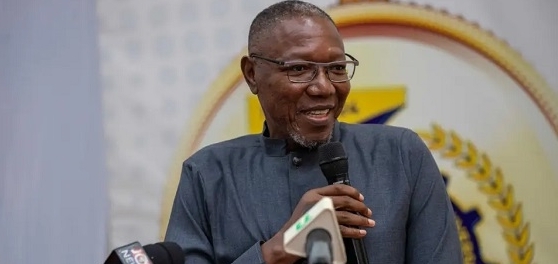
The Deputy Minister of Education, Clement Abas Apaak, described the initiative as “an important milestone in the country’s shared journey towards empowering every adolescent and transforming every future.”
He said Ghana had made significant progress in expanding access to education over the past two decades, achieving gender parity at the basic level and implementing interventions such as the Free Senior High School policy and the provision of sanitary pads for girls in junior and senior high schools.
“These measures,” he said, “are removing financial and social barriers that once limited girls’ access to education.”
Dr. Apaak cautioned that challenges remained, including lower transition rates for girls in some regions, uneven learning outcomes, early marriages, teenage pregnancies, gender-based violence, and harmful stereotypes.
He said the Education Plus Initiative “offers a transformative approach that ensures learners are not only in school but are also safe, healthy, informed, supported, and empowered.”
The Deputy Minister noted that the initiative brought together education, health, gender equality, youth development, and social protection in a coordinated effort to enable every adolescent, especially girls, to reach their full potential.
He said the initiative complemented Ghana’s Education Strategic Plan and aligns with the broader national development agenda, reinforcing multi-sector collaboration and meaningful engagement with young people.
Dr. Apaak urged renewed action to strengthen safe and inclusive school environments, expand essential services, and ensure that every girl completes her education and steps confidently into adulthood.
He reaffirmed the Ministry’s commitment to work with partners, including the Ghana AIDS Commission (GAC), UNAIDS, UNESCO, UNICEF, UNFPA, UNDP, WHO, UN Women, and other national institutions to translate the initiative into practice nationwide.
UN Resident Coordinator in Ghana, Zia Choudhury, said the launch represented “a significant milestone following more than a year of collaboration among government agencies, civil society, and youth groups.”
He said Education Plus was built on the conviction that “every adolescent girl and young woman should complete secondary school safe, healthy, and empowered to determine her own future.”
Mr. Choudhury noted that adolescent girls and young women in Ghana were three times more likely to acquire HIV than their male peers, and completing school reduces this risk by up to 50 per cent.
“Education is both a right and a proven investment in health, equality, and national development,” he said, adding that keeping girls in school required safety, protection, access to health services, economic opportunities, and mental well-being.
Mr. Choudhury said the Education Plus model in Ghana was anchored on five interconnected pillars aligned with national priorities and supported by a roadmap for large-scale impact.
He commended the Ministries of Education, Health, Gender, Youth, Finance, and the Ghana AIDS Commission for their leadership, and reaffirmed the UN’s commitment to supporting implementation.
On his part, the Director-General of the GAC, Dr Kharmacelle Prosper Akanbong, said the initiative reflects Ghana’s commitment to education, gender equality, and HIV prevention.
He said it would ensure adolescents remain in school, access essential services, and grow in communities that promote equality and positive values.
Dr Akanbong said the launch marked “the beginning of a coordinated national journey guided by a roadmap and investment case designed to mobilise resources, align policies, and highlight the voices of young people.”
He said that Ghana’s leadership on Education Plus aligned with continental commitments reaffirmed at the recent ICASA 2025 conference in Accra, and urged stakeholders to embrace the initiative with dedication and urgency, noting that “the future of Ghana’s adolescents depends on it.”
Latest Stories
-
Labour Minister wants SOEs to help shape new public pay system
43 minutes -
IPEC will ensure Equity and Sustainability in SOEs Compensation
1 hour -
White House bars CNN from travelling with Trump on Air Force One
2 hours -
Fennis wins second consecutive ITF J60 title in Accra
2 hours -
Spain beat England in thriller after Kane penalty miss
2 hours -
GPL 2026/27: Zaidan’s late goal ends Hearts of Oak unbeaten start
2 hours -
CEOs demand clarity on pay harmonisation, board autonomy as FWSC engages SOEs bosses over IPEC transition
2 hours -
2026 Women’s Super Cup: FC Savannah, Epiphany Warriors maintain top spots ahead of final group games
2 hours -
‘Is EOCO responsible for determining lawyers’ fees?’ – Baffour Awuah
2 hours -
David Beckles claims second J60 Accra title
3 hours -
No France cocaine suspect linked to Mahama, Vice President’s security details – NACOC
3 hours -
Anwelle Foundation launched in Jirapa to tackle poverty, youth unemployment
3 hours -
Joy Sports Editor Fentuo Tahiru Fentuo to moderate inaugural Music Meets Football Summit in Zambia
3 hours -
Court premises too volatile for Baffour Awuah’s attempted arrest by EOCO – Inusah Fuseini
3 hours -
Drug bust: Under no circumstances will NACOC leadership be compromised – Twum-Barimah
4 hours