

Audio By Carbonatix
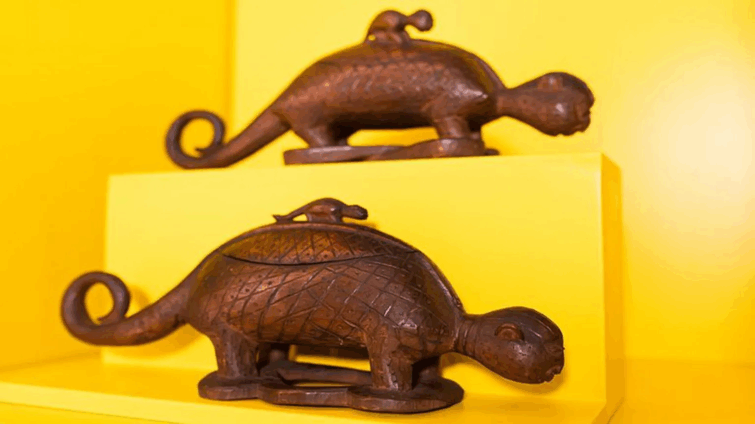
Thousands of African objects "given, stolen and forcefully taken" at the height of the British Empire have gone on display at a museum, and curators admit they have almost no record of where they came from.
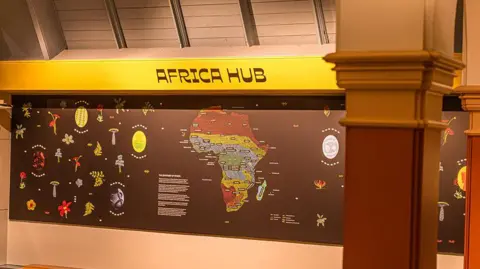
The items have been taken out of storage by Manchester Museum and placed in its Africa Hub to highlight "the gaps and silences" in its records.
In one case, all that is known about a figure of a horse with an ibis on its back is that it was donated by Mrs M. A. Bellhouse in 1976, with no information about its name, place of origin or traditional use.
The museum said it hopes the "honest approach" will provoke a conversation about how the items should be displayed, or even returned.
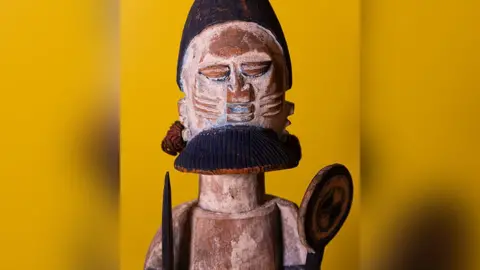
Curator Lucy Edematie said the Africa Hub gallery was unlike most others as it was "the beginning", rather than the culmination of years of research.
"It is a chance to do our thinking in public, with honesty and transparency, and to involve people in that process from the start," she said.
More than 40,000 objects from across Africa, many collected during the period of the British Empire, arrived in to the museum's collection.
Some were taken via trade, while others were taken through anthropology, confiscation and looting, a museum spokesman said.
Many of the objects have sat in storage for years, with key details absent from their object labels.
The museum, which is part of the University of Manchester, said the items could be returned to their place of origin, or the exhibition could lead to working with diaspora communities to develop ways of sharing and celebrating cultural heritage.
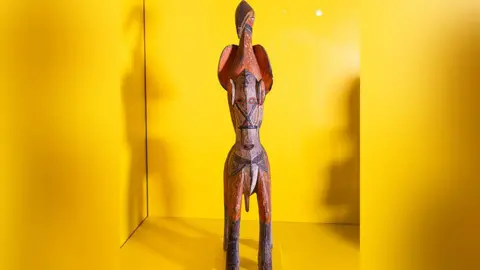
Other items on display include those from the Igbo people, one of the largest ethnic groups in West Africa.
It has been co-curated with Igbo Community Greater Manchester (ICM), whose vice-chairwoman, Sylvia Mgbeahurike, said it was important the items were brought to one place.
She said, "Some of these objects were given, some were stolen, some were taken forcefully out of conquest.
"It is important we start bringing them together again. It shows inclusiveness. It shows there is strength in diversity.
"It shows we are one people. Irrespective of our colour or where we are from. Something must hold us together."
Latest Stories
-
BoG flags external-sector pressures ahead of MPC decision
1 minute -
EducationUSA urges students to look beyond academic scholarships
7 minutes -
White House to roll out the red carpet for historic Xi Jinping visit
13 minutes -
Reports of violence against women in Gaza surge, UN agency finds
14 minutes -
Banks should mobilise $10bn for medium and large-scale farming – Kojo Akoto Boateng
15 minutes -
Trump administration accuses banned media outlets of ‘falsehoods’ ahead of court hearing
36 minutes -
US and Iran hold first talks since June after Trump’s ‘annihilation’ threat at UN
37 minutes -
More than 170,000 respiratory cases recorded in haze-choked Indonesia
42 minutes -
UK to review Chagos Islands deal over lack of US support, Streeting tells BBC
47 minutes -
BoG weighs on rising inflation risks as inflation climbs to 5%
49 minutes -
AFCON 2027Q: Kurt Okraku backs ‘good enough’ Black Stars to fight for Ghana
58 minutes -
Debt financing, expenditure are key risks to liquidity, exchange rate – BoG
1 hour -
BoG warns of pressure on reserves as GoldBod pauses exports
1 hour -
No player will intentionally decline national team call-up – Kurt Okraku
1 hour -
AFCON 2027Q: ‘No player deliberately turned down Ghana’ – Kurt defends injury withdrawals
2 hours