

Audio By Carbonatix
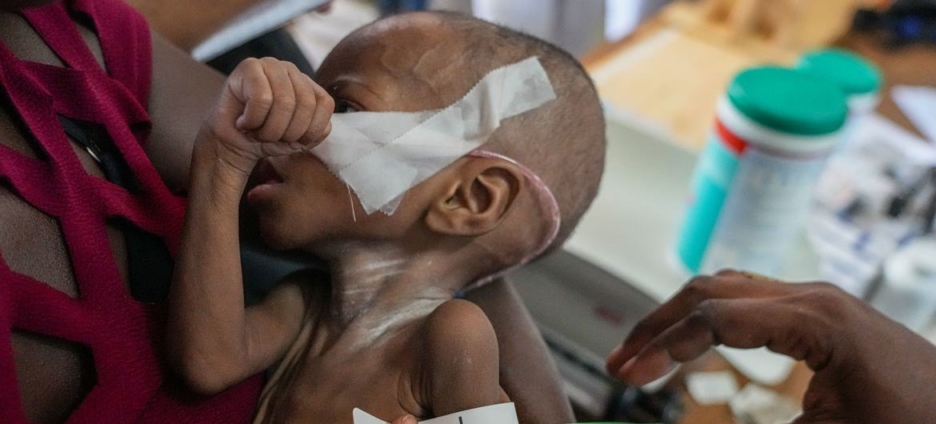
More than one billion people are still living with at least one Neglected Tropical Disease. In 2021 alone, these largely preventable illnesses claimed 119,000 lives. While 1.437 billion preventive treatments were administered globally in 2024, covering 864.6 million people, international funding for this fight has dropped by a staggering 41 percent in just five years, from $531 million in 2018 to $260 million in 2023.
Speaking at the REMAPSEN Media Forum, Dr. Maria Rebollo Polo, a leading World Health Organization expert, acknowledged that since 2010, the number of people needing intervention for Neglected Tropical Diseases has fallen by 695 million. Between 2020 and 2023 alone, 239 million people were reached.
"Since 2010, nearly 700 million fewer people require intervention for neglected tropical diseases, largely due to mass chemoprevention campaigns and coordinated global efforts," Dr. Rebollo said, noting that the gains were not accidental but the result of years of mass drug administration, community health campaigns and sustained advocacy.

In her opinion, the fear today is no longer only about disease; it is about abandonment. "The progress achieved over the years remains fragile and is now threatened by declining international funding," Dr. Rebollo warned. The withdrawal of major donor support, particularly programmes like USAID's Act to End NTDs, is already slowing down drug distribution campaigns and weakening national response systems in the very places that need them most.
Africa still bears the heaviest burden. While 58 countries have now eliminated at least one NTD, and nine new countries recorded elimination milestones in 2025 alone. These countries include, Senegal, Kenya, Egypt, Niger and Guinea. Millions across the continent are said to remain trapped in cycles of infection, disability and poverty.
"More than one billion people are still living with at least one neglected tropical disease, with the vast majority of the burden concentrated in Africa," Dr. Rebollo noted.
These diseases do not just attack the body; they quietly steal productivity, education and dignity. A trading woman unable to walk to her market stall because of elephantiasis. A schoolchild embarrassed by eye infections and forced to drop out. A farmer too weak to till his land because treatment never arrived on time.
"These diseases undermine education, productivity and economic development, trapping affected communities in cycles of poverty," she said.
Dr. Rebollo warned that the future of these communities now depends on choices being made today. With global funding shrinking, several African countries are being forced to innovate. Ethiopia, Kenya and Uganda are integrating NTD services into their primary healthcare systems.

Madagascar now combines NTD treatment with vaccination campaigns. Tanzania has linked the fight against these diseases to nutrition programmes. In Rwanda and Togo, health officials are working across sectors, connecting education, sanitation, water and health into one coordinated response.
“Integrating NTD interventions into primary health care systems and existing platforms such as immunisation, nutrition and school-based programmes is becoming essential as resources decline,” Dr. Rebollo explained.
She however emphasised that innovation alone is not enough. Political visibility remains low. Many programmes still depend almost entirely on donors. Health workers are overstretched. Water and sanitation systems remain fragile. Surveillance is weak in too many communities. “Innovation alone will not succeed without strong national leadership, dedicated domestic financing and full integration of NTDs into national policies,” she stressed.
The warning from the WHO expert was simple but urgent: the gains of the past decade are reversible. “Without sustained commitment, the hard-won progress of recent years could easily be lost,” Dr. Rebollo cautioned.
Embedded in that warning however, was a quiet optimism. Dr. Rebollo reminded participants that beating Neglected Tropical Diseases is not just a medical duty. “Combating neglected tropical diseases is not only a health intervention; it is an investment in equity, education, productivity and national sovereignty,” she said, stressing that Africa has the capacity to succeed if commitment is maintained.
Latest Stories
-
Kumasi Hospital removes 880-gram bladder stone in rare surgical case
3 minutes -
Ghana lacks sufficient power generation redundancy – Energy Minister
22 minutes -
CPA assures consumers of safety of registered sanitary towels on the Ghanaian market after complaints
34 minutes -
‘They all point decisively to guilt’ – AG urges court to reject Adu Boahene’s no-case submission
43 minutes -
Documents falsified to evade tax on Abramovich’s wealth, BBC finds
53 minutes -
Today’s front pages: Monday, October 12, 2026
1 hour -
BoG proposes new rules to ensure banks can always pay customers when they need their Money
2 hours -
Hotline Documentary: ‘Silent Football’ to air on JoyPrime and JoyNews today
3 hours -
NDPC examines how evidence shapes Ghana’s development planning and policy decisions
3 hours -
Education Ministry calls urgent talks to break GAUA strike deadlock
3 hours -
NCCE engages women in North East Gonja on rule of law, anti-corruption
3 hours -
NDPC reviews 2004 planning guidelines to reflect changes in decentralised system
3 hours -
Trade Ministry commends Prisons Service for using art to drive inmate rehabilitation
3 hours -
Books, brushes and second chances: Dr Abena Asomaning launches three titles to support prison outreach
3 hours -
Treasury bill auction oversubscribed by 53.5% as yields fall across maturities
3 hours