

Audio By Carbonatix
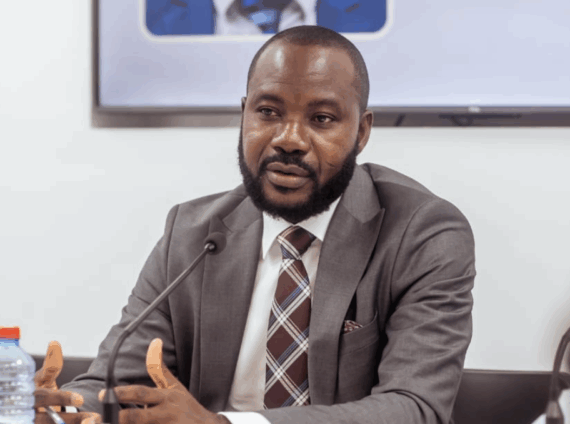
Economist Dr Adu Owusu Sarkodie has warned that Ghana’s heavy reliance on imports could threaten the country’s economic stability if the conflict in the Middle East escalates and drags on.
Speaking on Joy News’ PM Express Business Edition on Thursday, he said that while global tensions can sometimes create opportunities for oil-producing countries like Ghana, Ghana’s deep import dependence remains a major vulnerability.
“The war in the Middle East is somehow expected, but the war in Europe (Russia-Ukraine) is not.”
He explained that Ghana could benefit from rising global oil prices because it exports crude oil.
“I have already stated that Ghana also will export crude oil, so when the international crude oil price increases, Ghana stands a chance.”
“If we keep the quantity the same, then we stand a chance of getting more revenue than projected.”
According to him, any additional revenue generated from higher crude prices could be used to cushion vulnerable groups who may feel the effects of global price shocks.
“So we could use that difference that went for to cushion maybe they’re very vulnerable people in the society.”
He suggested targeted support for commercial drivers and transport operators who are often the first to feel the impact of fuel price increases.
“More like maybe provide coupons to trotro drivers and to taxi drivers, Uber drivers.”
“So as we are keeping them, we are cushioning them from a possible negative impact of this.”
Dr Sarkodie said Ghana has not yet felt the full economic impact of the Middle East tensions.
“We are also hoping that the war does not travel that far.”
“So far, so good, not good in terms of war, but so far, we haven’t felt the impact yet.”
However, he warned that the situation could become more challenging if the conflict lasts for a long time, as in the Russia–Ukraine war.
“So we are just praying that it doesn’t travel because if it travels for months and years, as the Russian-Ukraine one has been, then we need to really strengthen our economy.”
He stressed that strengthening the economy must go beyond stability and focus on building a real productive base.
“Not just the stability, but go deep down to the real economy in terms of production, agriculture production, in terms of industrial production and services.”
Dr Sarkodie recalled how the Russia–Ukraine war disrupted global supply chains and affected Ghana’s access to critical inputs.
“It will interest you to know that even when the war broke out in Russia, Ukraine, fertiliser was difficult to find, and prices were rising.”
“Even wheat, the wheat flour, which we used to bake bread, I remember you interviewed some of the biggest in the country.”
“And the question was, why don’t you use local wheat flour to bake the bread?”
According to him, consumer preference for imported wheat has made it difficult for local alternatives to gain ground.
“And the answer was that Ghanaians had developed a taste for the wheat from Ukraine, and that when they use their local wheat, the customers did not demand that much.”
For Dr Sarkodie, the ongoing geopolitical tensions should trigger a renewed push for domestic production.
“So I think this is the time to revisit the conversations of looking within and looking at the very things that we can really produce.”
He questioned why Ghana still depends heavily on imports for basic inputs such as fertiliser.
“What does it take to produce a fertiliser? Why should we depend on Ukraine, which is fighting a war for fertiliser and other countries?”
While acknowledging that Ghana’s economy is still evolving, he believes several sectors offer opportunities to expand local production.
“I know our economy is still in transition. Our economy is so young, but there are small, small items like poultry and sugar, small things that we can at least try to produce them in here.”
Latest Stories
-
Standards are not Seasonal: What the EC appointments teach both sides
5 minutes -
King Mohammed VI urges private sector to create youth jobs and spread benefits of growth
5 minutes -
UK Investment Roadshow opens in London to advance UK-Ghana growth partnership
17 minutes -
Assemblies of God requires pastors to resign before entering partisan politics – Rev. Wengam
26 minutes -
Ghana targets 20% annual reduction in maternal deaths – Health Minister
31 minutes -
Cyber attacks in Africa grow faster than global rate, report finds
33 minutes -
Ghana signs UAE deal to create 5,000 overseas jobs
40 minutes -
One Million Coders Programme targets 100,000 digital jobs in two years – Sam George
44 minutes -
John Jinapor, Italian Ambassador explore opportunities for energy sector investment
45 minutes -
NHIA seeks legal reforms to support Free Primary Healthcare
49 minutes -
Beatrice Annan defends Afi Agbenyo’s EC appointment, cites record of gender advocacy
52 minutes -
Ghana seeks investment deals in Bangkok amid global economic crises
56 minutes -
IMF raises Ghana’s 2026 growth forecast to 5.7%, sees inflation falling to 4.8%
58 minutes -
Ablakwa urges Africans not to view immigrants as threat to national progress
1 hour -
Mahama Cares must fund treatment, not looting – Asogli chiefs
1 hour