

Audio By Carbonatix
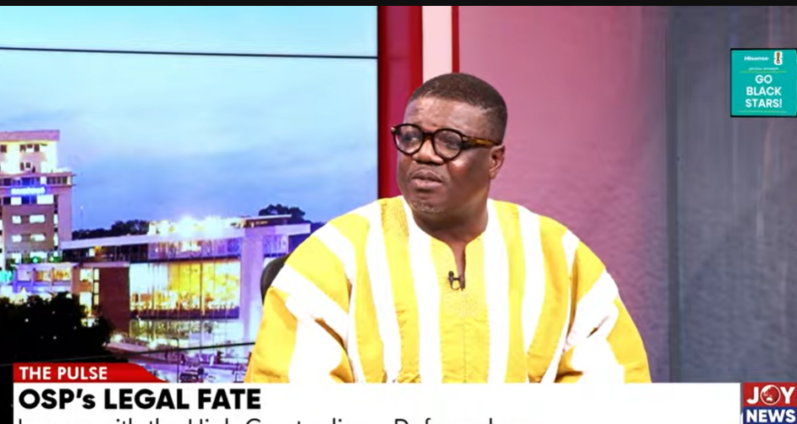
Majority Chief Whip and South Dayi MP Rockson-Nelson Dafeamekpor has called for a constitutional amendment to strengthen the Office of the Special Prosecutor (OSP), arguing that only entrenching the office in the 1992 Constitution can fully insulate it from political interference.
He said the current legal framework limits the OSP’s independence because prosecutorial powers are constitutionally vested in the Attorney General under Article 88, making it difficult for any statute to grant the anti-corruption body full autonomy.
Speaking in an interview with Joy News, Mr Dafeamekpor said a constitutional solution would be the most effective way forward.
“That would be the solution,” he stated. “So that it becomes a creature of the Constitution. Then it can be given similar rights as are given to the Attorney General in Article 88. So there’s no rivalry.”
His comments come amid ongoing national debate over the true independence and effectiveness of the OSP, an institution established under the Office of the Special Prosecutor Act, 2017 (Act 959) to investigate and prosecute corruption-related offences.
Mr Dafeamekpor explained that under the current constitutional arrangement, Parliament cannot enact laws that contradict Article 88, which grants prosecutorial authority to the Attorney General. Any such law, he warned, risks being struck down by the Supreme Court.
“Until we amend Article 88, there is nothing that any entity can do, including Parliament,” he said bluntly.
The Majority Chief Whip indicated that he personally supports elevating the OSP to a constitutionally protected body, a move he believes would eliminate institutional rivalry and clarify its mandate.
If implemented, the proposal would require a constitutional amendment process, including broad political consensus and potentially a national referendum — making it a significant and complex reform initiative.
His position marks a notable contribution to the evolving debate over Ghana’s anti-corruption architecture. The OSP has faced questions over its mandate and independence since its establishment, with critics and legal analysts frequently pointing to tensions between its powers and those of the Attorney General’s office.
The discussion has gained renewed attention in recent months following court challenges and public commentary on whether the OSP can effectively operate outside the Attorney General’s prosecutorial control.
Mr Dafeamekpor’s remarks suggest a shift toward structural reform rather than abolition or simple legislative adjustment, potentially setting the stage for a broader constitutional conversation on Ghana’s fight against corruption.
Latest Stories
-
“I enjoy your friendship despite our differences,” Ayariga tells Afenyo-Markin
27 seconds -
IEA calls for jobs-focused economic transformation
7 minutes -
GPHA demonstrates resilience, strategic vision in 40 years – Board Chairman
13 minutes -
Vice President calls for diversified funding for universities
19 minutes -
Institutionalise workplace HIV and Wellness Policy – GAC urges institutions
25 minutes -
Military steps up dredging, lagoon restoration efforts across Accra
31 minutes -
No cap on Supreme Court Justices for now -Anthony Forson Jr.
36 minutes -
Oil on track for weekly loss even as Iran tensions simmer
42 minutes -
Nigeria’s football leadership resigns amid governance concerns
47 minutes -
Mali music star Salif Keïta cancels South African concerts over ‘xenophobic violence’
57 minutes -
Thieves steal Bronze Age artefacts from Spanish museum in four-minute heist
1 hour -
Blake Lively awarded $400,000 of $8m she claimed for legal fees in Baldoni battle
1 hour -
We have been putting every effort into building a sustainable brand, says Petrosol’s Bozumbil
1 hour -
Ghana’s fuel deregulation begins to pay off as global oil prices fall
2 hours -
We are hopeful of a ratings upgrade in second half of 2026 – BoG Governor
2 hours