

Audio By Carbonatix
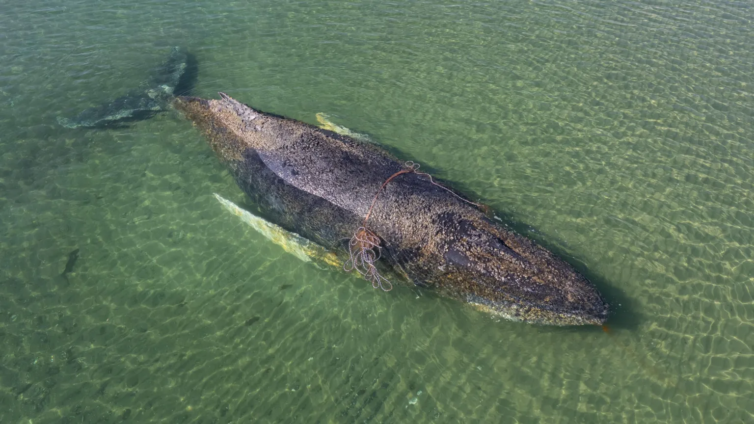
A humpback whale rescued after beaching itself in Germany has been found dead near a Danish island.
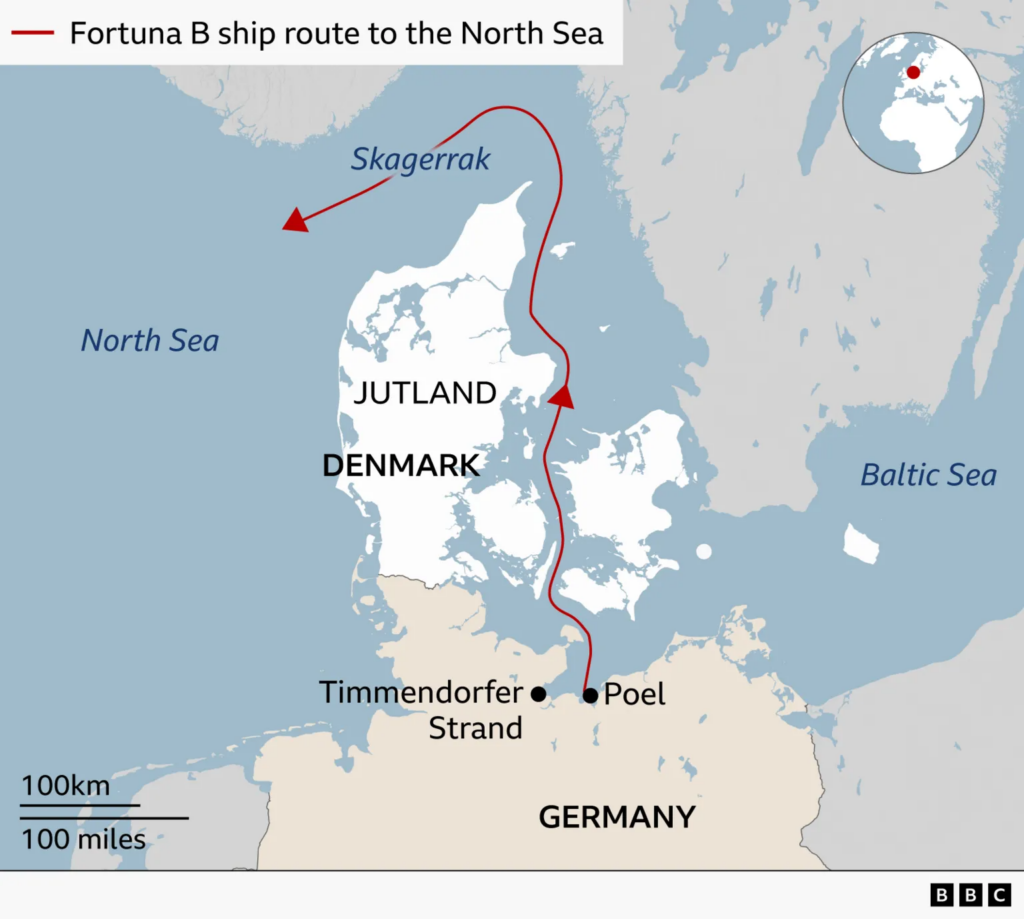
The whale was first spotted stuck on a sandbank on 23 March, off the island of Poel on Germany's Baltic coast.
It swam free in early May after a water-filled barge carried it into the North Sea.
The operation was privately funded by two German entrepreneurs and spurred intense public debate, with critics suggesting it would only cause the animal distress.
A whale carcass was reportedly spotted on Thursday off the Danish island of Anholt, located between Denmark and Sweden.
Authorities were not immediately able to confirm it was the same whale. In a statement the Danish Environmental Protection Agency said conditions on Saturday made it possible for the whale's identity to be verified, and its tracking device retrieved.
The agency told AFP "there are no concrete plans to remove the whale from the area or to perform a necropsy, and it is not currently considered to pose a problem in the area".
But it stressed that people should not approach the whale because it might carry diseases that can be transmitted to humans.
There may also be a risk of explosion, it added, because of large volumes of internal gas caused by decomposition.
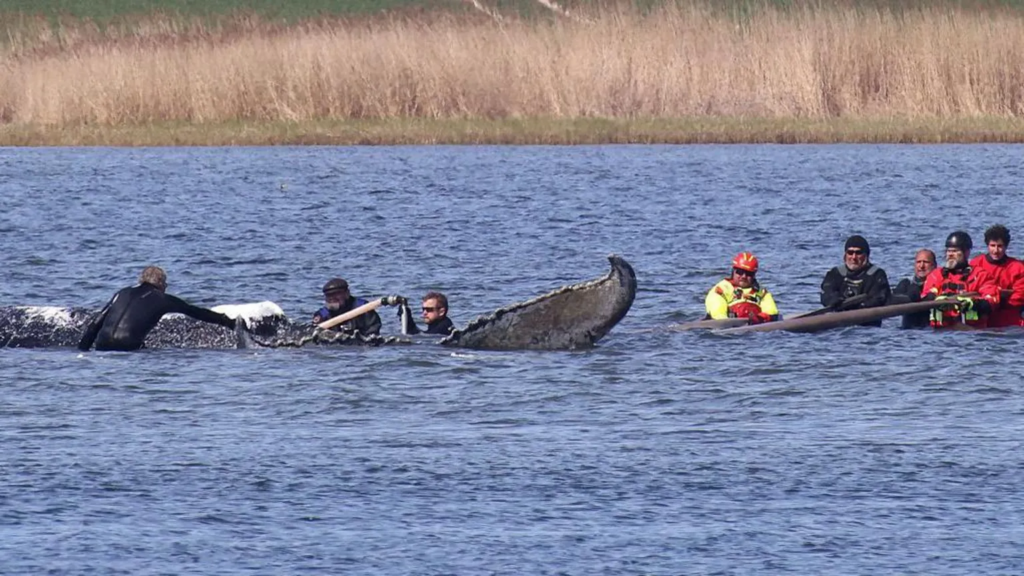
The whale, nicknamed "Timmy" or "Hope" by rescuers and German media, became stranded on Timmendorfer Beach in Lübeck Bay on 23 March.
At first it freed itself but became stuck again several times.
German authorities attempted a number of rescues before announcing they were giving up.
Entrepreneurs Karin Walter-Mommert and Walter Gunz later funded a private rescue, fitting the whale with a tracking device and coaxing it onto a water-filled transport ship called Fortuna B.
Till Backhaus, the environment minister in the northern state of Mecklenburg-Vorpommern, hailed the operation as a success and an "example for Germany of what can be done".
But wildlife groups have been sceptical about the whale's future after its release into the North Sea.
The German Oceanographic Museum warned that the whale was at risk of drowning because it was so weak.
Whale and Dolphin Conservation was especially downbeat, warning that the whale had no long-term chance of survival and had suffered skin damage because of the lack of salinity in the waters along Germany's Baltic Sea coast.
Latest Stories
-
EU is set to propose ban on social media and AI chatbots for under-15s
30 minutes -
No SHS space shortage – GES says 800,000 places available for just over 600,000 students
39 minutes -
Emmys 2026: The winners and nominees in full
56 minutes -
African banks’ foreign subsidiary contributions increasing; Access Bank records fastest cross-border growth
1 hour -
Food prices in Ghana remain largely stable – AGRA report
1 hour -
Fiscal economy to remain firm despite execution risks – Databank Research
1 hour -
China tightens travel restrictions for citizens
1 hour -
Welsh actor Matthew Rhys makes Emmy Awards history with double win
1 hour -
Bond market: Turnover nearly doubled by 94.65% to GH¢4.13bn
2 hours -
Israeli minister threatens to revoke filmmakers’ citizenship over Gaza documentary
2 hours -
Supreme Court blocks Trump’s plan to restrict mail-in ballots
2 hours -
In pictures: Stars on red carpet at Emmy Awards in LA
2 hours -
SHS Placement Pressure: Why Accra and Ashanti are creating a false national crisis – GES explains
2 hours -
Macklemore dropped from Ed Sheeran tour after ‘Free Palestine’ speech
2 hours -
Harry and Meghan to have security review and children change school
3 hours