

Audio By Carbonatix
Governance expert Kwaku Antwi-Boasiako has issued a stark warning that Ghana’s democracy faces a growing threat not from coups or violent uprisings, but from increasing citizen apathy fuelled by economic hardship, unemployment, corruption, and unmet expectations.
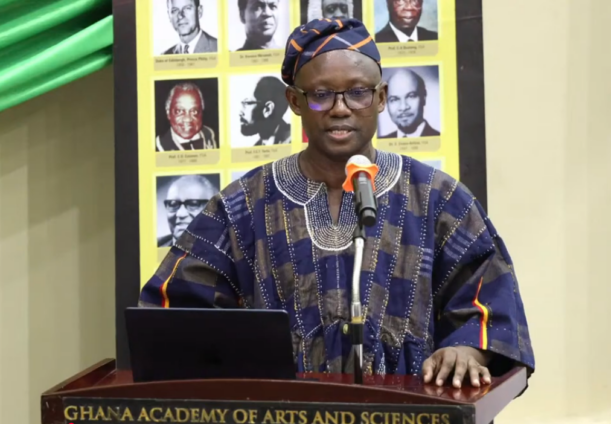
Speaking at a public forum organised by the Ghana Academy of Arts and Sciences on the theme “Democracy Without Dividends: Why Citizen Apathy Threatens Ghana’s Democratic Future,” Mr Antwi-Boasiako argued that democracy loses its strength when citizens no longer believe it improves their lives.
“Democracy does not suddenly collapse through coups or popular uprisings. It often decays quietly through citizen apathy,” he told participants at the June 3 event.
According to him, Ghana finds itself in a paradoxical position. While internationally recognised as one of Africa’s democratic success stories, many citizens are increasingly questioning whether democratic governance is delivering meaningful benefits.
Mr Antwi-Boasiako said democracy should not be measured solely by the conduct of elections, the existence of institutions, or constitutional governance.
Rather, he described democracy as a promise that citizens will have a voice, leaders will remain accountable, opportunities will be fairly distributed, and living conditions will improve over time.
“Citizens do not eat elections,” he noted. “They experience outcomes.”
Those outcomes, he explained, include access to jobs, affordable food, quality healthcare, reliable infrastructure, quality education, and a fair justice system.
“When these outcomes fail, democracy begins to lose meaning,” he warned.
Rising youth frustration
Drawing on findings from the Afrobarometer surveys and the World Bank’s 2025 Ghana Economic Update, the governance expert painted a troubling picture of growing economic frustration among young people.
He cited unemployment levels of between 19 and 20 per cent nationally, with youth unemployment estimated at nearly 30 per cent and as high as 34 per cent according to figures referenced during the 2026 May Day celebrations.
He further noted that a significant majority of young Ghanaians believe economic conditions are poor and worsening.
According to him, these realities have contributed to a growing desire among many young people to leave the country in search of better opportunities abroad.
He pointed to reports of increasing migration and referenced statements by Ghana’s Foreign Affairs Ministry indicating that dozens of Ghanaians had died fighting in the Russia-Ukraine conflict after being recruited into military service abroad.
“That is not a democratic dividend,” he said. “That is economic desperation with deadly consequences.”
A substantial portion of the lecture focused on corruption and its impact on public confidence in governance.
Mr Antwi-Boasiako questioned the management of major public projects, including the stalled Pwalugu Multipurpose Dam project and concerns raised about some Agenda 111 hospital contracts.
He challenged public officials to explain how mobilisation payments could be made to contractors who later abandoned projects without adequate safeguards.
“If there was no Advance Payment Security, why is no Ghanaian official being held accountable?” he asked.
Citing Transparency International’s 2025 Corruption Perceptions Index, he noted that Ghana scored 43 out of 100 and was ranked 76th globally.
He argued that corruption goes beyond financial losses and directly affects citizens’ access to opportunities.
“When people believe that success depends on knowing someone or paying bribes, democracy becomes exclusionary,” he said.
Mr Antwi-Boasiako expressed concern over what he described as the growing belief among citizens that changing governments produces little meaningful difference.
Across the country, he said, many voters have become convinced that politicians only engage them during election periods before disappearing once power is secured.
He warned that such sentiments represent more than ordinary complaints.
“These are warning signals,” he stressed.
The governance expert said citizen apathy weakens accountability, reduces civic participation, encourages vote-buying, and can eventually increase public acceptance of authoritarian alternatives.
He cited examples from Afrobarometer findings and pointed to public admiration shown by some Ghanaians towards military leaders in neighbouring countries as evidence of a worrying shift in attitudes.
“When apathy sets in, citizens stop defending democracy,” he warned.
Lessons from Abroad
Mr Antwi-Boasiako drew parallels between current developments in Ghana and experiences elsewhere in the world.
He referenced the Arab Spring uprisings, the political crisis in Sri Lanka, and democratic instability in several Latin American countries, arguing that economic hardship, corruption, inequality, and declining trust in institutions have historically undermined democratic systems.
“The lesson is clear,” he said. “When democracy does not deliver, citizens will either withdraw or eventually revolt.”
He cautioned that many of the warning signs seen in those countries are emerging in Ghana, including youth disillusionment, perceived corruption, economic frustration, inequality, and declining confidence in institutions.
Five recommendations to restore confidence
To strengthen Ghana’s democracy and restore citizen trust, Mr Antwi-Boasiako proposed five major reforms.
1. Treat youth unemployment as a national emergency
He called for urgent measures to align education with labour market needs, expand opportunities in agribusiness and technology, and create sustainable private-sector jobs.
He welcomed initiatives such as the government’s proposed AI Centre and digital skills programmes but stressed that implementation would be key.
2. Fight corruption with visible consequences
The governance expert urged authorities to prosecute corrupt officials, enforce sanctions, protect whistleblowers, and accelerate digital governance reforms.
He highlighted Estonia’s digital governance model as an example Ghana could emulate to improve transparency and reduce opportunities for corruption.
He also advocated limits on large cash transactions and broader use of electronic payment systems to improve financial traceability and accountability.
3. Deepen decentralisation
Mr Antwi-Boasiako called for greater fiscal and administrative autonomy for local governments and urged implementation of recommendations made by the Constitution Review Committee.
He argued that communities should directly benefit from resources generated within their localities.
4. Institutionalise citizen participation
The governance expert proposed participatory budgeting, regular town hall meetings, citizen assemblies, and permanent platforms for public engagement in governance.
5. Deliver quick and visible results
According to him, democracy gains legitimacy when citizens can see tangible improvements in their daily lives.
He cited Rwanda’s emphasis on performance monitoring and service delivery as an example of how governments can sustain public confidence.
A defining question for Ghana
Concluding his address, Mr Antwi-Boasiako posed what he described as the defining question facing Ghana’s democratic future:
“Will citizens defend Ghana’s democracy if they do not benefit from it?”
He argued that citizens defend systems that work for them and warned that continued failure to deliver economic opportunities, quality public services, and accountable leadership could deepen disillusionment.
“Ghana stands at a crossroads,” he said. “We can either continue with a democracy that exists but does not deliver, or we can build a democracy that works for everyone and inspires commitment from citizens.”
He ended with a cautionary message that drew sustained attention from the audience.
“If democracy does not deliver for the ordinary Ghanaian, the ordinary Ghanaian will not defend democracy—and when citizens stop defending democracy, history shows us exactly what comes next.”
Latest Stories
-
Police cannot access suspect’s phone without court order – Kofi Bentil
9 minutes -
Insults are not crimes; we must distinguish them from criminal offences – Kofi Bentil
17 minutes -
‘Ghana Jollof’ case: Why continue to use remand to punish people? – Vera Addo
19 minutes -
Ntim Fordjour accuses gov’t of selective enforcement in ‘Ghana Jollof’ case
24 minutes -
Barker-Vormawor urges courts to scrutinise rights violations in ‘Ghana Jollof’ case
26 minutes -
Ghana Jollof Case: Does section 208 of criminal code only apply to NPP? – Ntim Fordjour questions
31 minutes -
Defence Committee to haul CID boss before Parliament over social media cases – Ntim Fordjour
32 minutes -
Ntim Fordjour calls on clergy, civil society to rise against perceived selective application of law
32 minutes -
‘Insult culture has become increasingly attractive’ – Rev. Ntim Fordjour
45 minutes -
Samson’s Take: Mr President, let the court speak before the bulldozer
50 minutes -
Inconsistency in applying laws on false publication problematic – Barker-Vormawor
54 minutes -
Ghana Jollof: If police have established other people are involved, why haven’t they arrested them? – Barker-Vormawor
1 hour -
Commissioner-General calls for stronger tax cooperation to boost regional revenue mobilisation
1 hour -
Ghana Jollof: Police must distinguish criminal speech from unpleasant content – Barker-Vormawor
1 hour -
If it was wrong under NPP, it cannot be right under NDC – Barker-Vormawor
1 hour