

Audio By Carbonatix
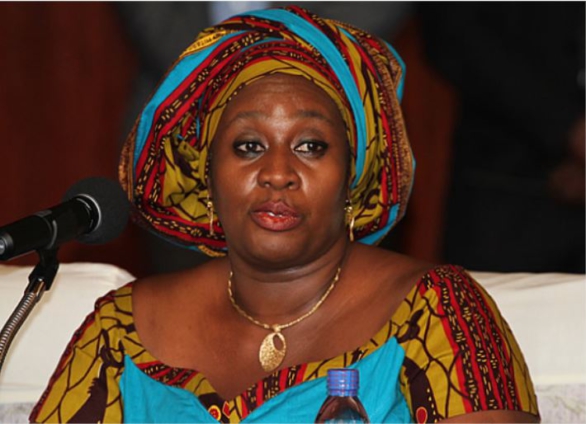
Professor of International Law and Human Rights at the University of Ghana School of Law has indicated that former MASLOC Chief Executive, Sedina Tamakloe-Attionu, still has available legal remedies within Ghana’s domestic legal system despite her extradition from the United States.
Speaking in an interview on JoyNews' The Pulse on Tuesday, June 9, Prof Kwadwo Appiagyei-Atua explained that although international legal processes related to her extradition have effectively concluded, she may still pursue several legal options in Ghana upon her return.
Responding to a question on whether Madam Tamakloe-Attionu has any remaining legal remedies after extradition, he said:
“...Within the domestic laws, I think, yes, there are some processes that Sedina Tamakloe can take. For example, if it means that we have to come back to the question of trial in absentia and whether, even though the constitutionality of the trial in absentia will come in here, truly what transpired with trial in absentia meets the constitutional test,” he explained.
He further stated that she retains the right to appeal the conviction or sentence if there are valid grounds.
“I think the other issue will be to demonstrate that every person has a right to appeal. So even if it's not the absentia issue and it's about maybe the sentence or something, then she can also appeal based on that,” he said.
However, the law lecturer cautioned that timing is crucial in appeal processes, stressing that delays could affect admissibility.
He also highlighted ongoing legal debates regarding when a sentence officially begins, particularly in cases involving trials in absentia.
“And then I think that also the issue about when the sentence begins to run, there is some debate as to when sentence begins and some of the views that it begins immediately that it is pronounced, others have the view that there can be some exceptions and of course there are some exceptions, but it seems not to be very clear in the case of trial in absentia,” he noted.
Professor Appiagyei-Atua concluded that these issues remain open for consideration under Ghana’s domestic legal framework following her extradition.
Latest Stories
-
Tarkwa court jails labourer for three years over GH¢123,000 theft
38 minutes -
GAEC must retain nuclear scientists for Ghana’s nuclear ambitions – Minister
1 hour -
Man reportedly mistaken for game and shot by hunter dead in forest
1 hour -
19-year-old mason jailed 15 years for defiling seven-year-old pupil
1 hour -
Ghana’s banking sector assets rise 20.47% to GH¢500.2bn – BoG Governor
1 hour -
22 injured as Sprinter bus overturns at Sege after tyre burst
1 hour -
UN housing expert urges Ghana to strengthen Rent Control Department amid housing affordability concerns
2 hours -
Delta-BCI partnership reaches 166,000 people with breast cancer education
2 hours -
Power restoration fault suspected in Kumasi Central Market fire
7 hours -
The 7-foot giant of Ngleshie Amanfro: Seven-foot Ghanaian Ephraim Saawa dreams of joining the national basketball team
7 hours -
Government promises support for Kumasi Central Market fire victims
8 hours -
Vibes The Movie: Big Ghun’s Ghanaian film earns five nominations at 2026 REFFA
8 hours -
‘I’m a fulfilled man’—Justice Korbieh on missing out on Supreme Court despite two nominations
8 hours -
MamaCare CEO warns unresolved conflicts among health workers could undermine maternal and neonatal care
9 hours -
Health professionals urged to translate medical knowledge into practice to save mothers
9 hours